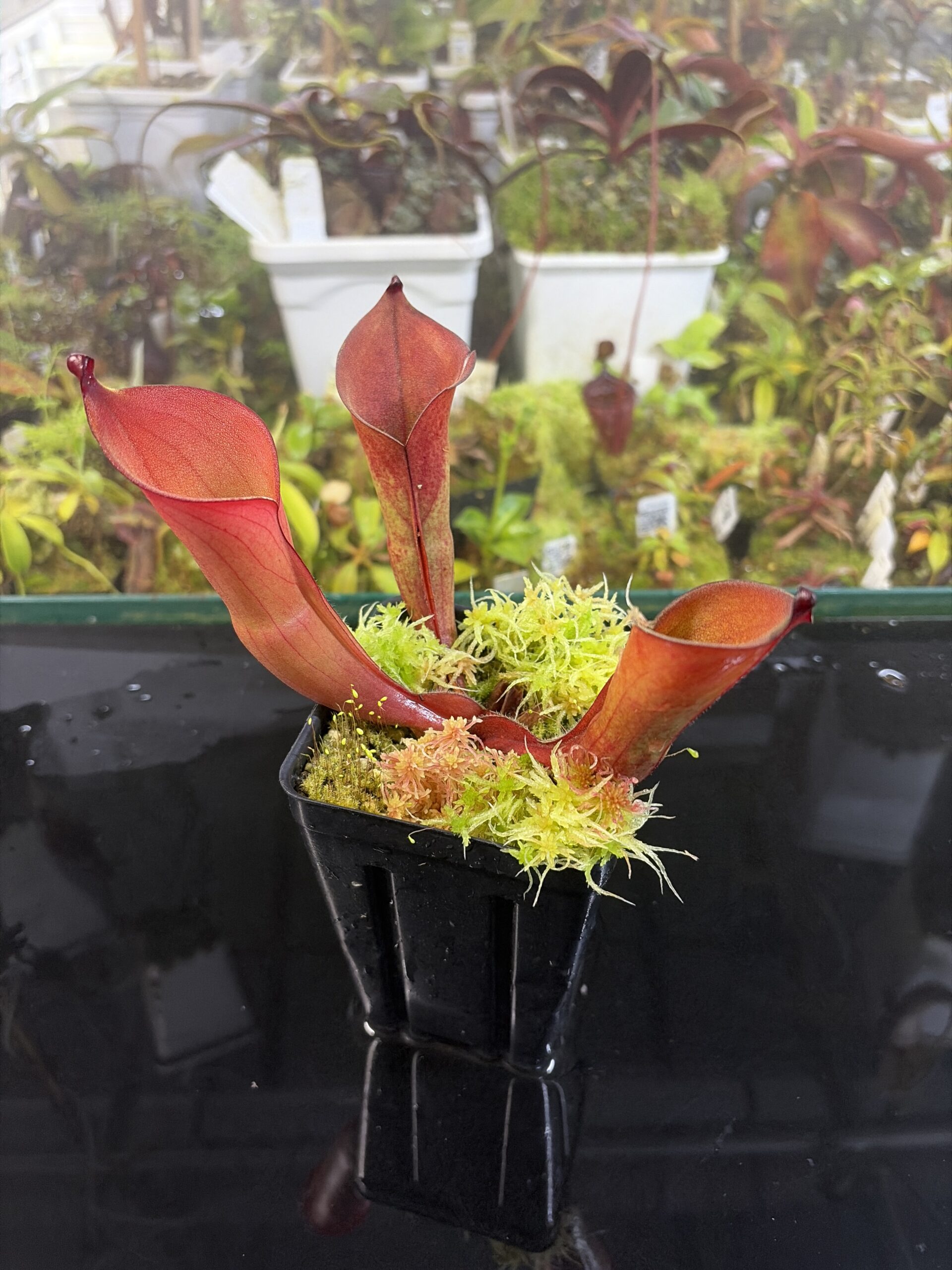
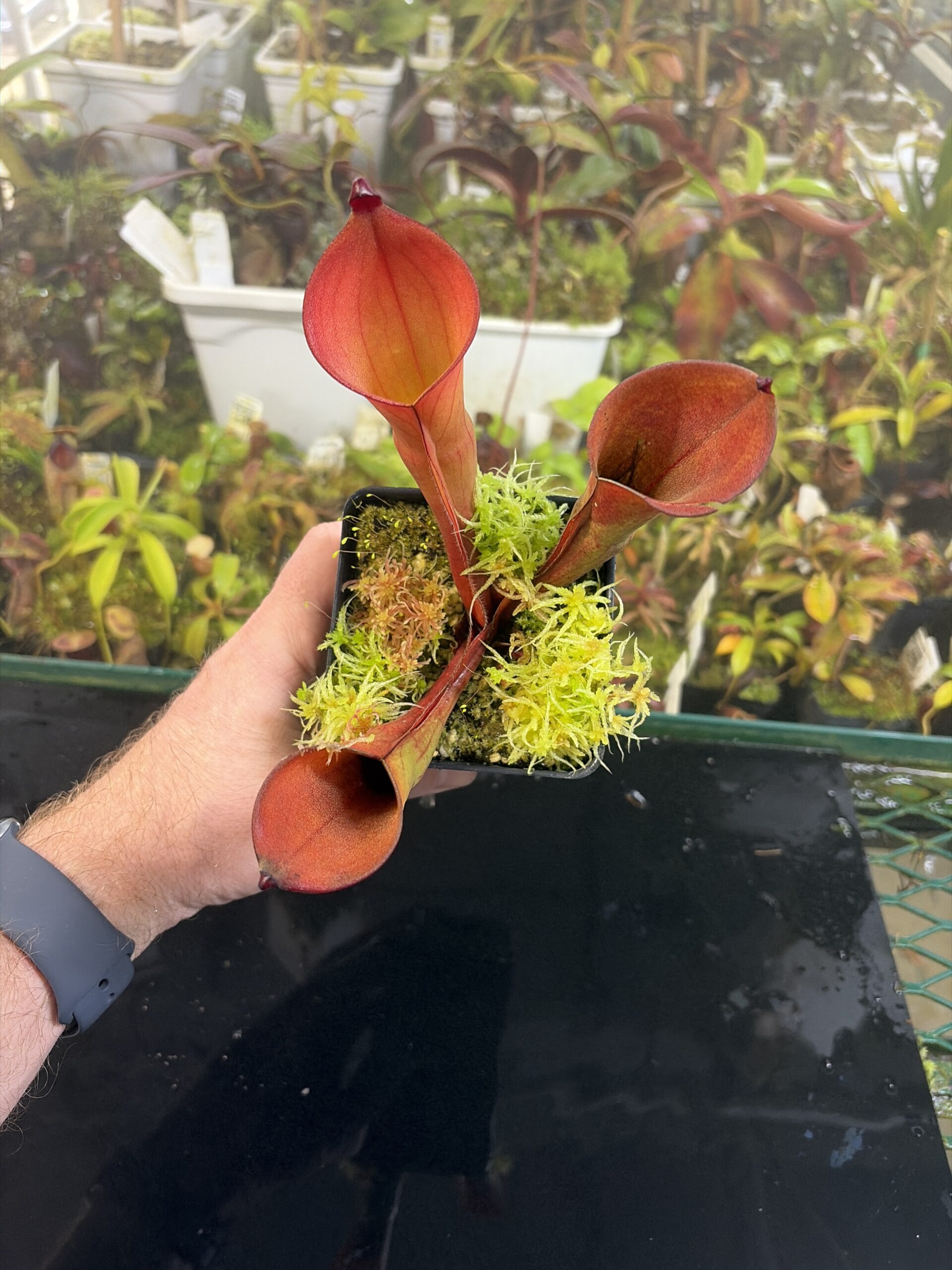
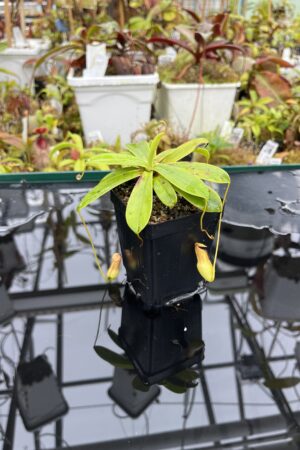
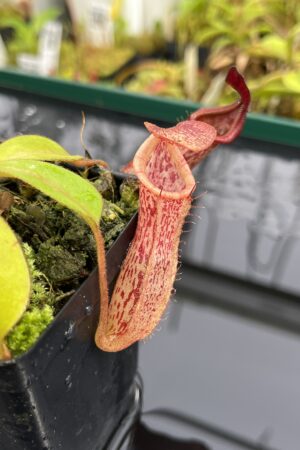
Heliamphora electrum | Clone 01 | Andreas Wistuba | AW-01 | H28018

Starting bid: $ 1.00

Item condition: New

Time left:

Auction ends: November 29, 2026 6:30 pm
Timezone: America/New_York

Propagation Method Tissue Culture
Size Large
Specimen Number H28018
SKU: HEP-0247 Categories: , Tag:

Plant Type

Growth Condtions

Description

The plant in the photo is the exact plant you will receive. Our auction guidelines can be found here.

We offer a Live Plant Guarantee and ship all of our plants potted.

Purchasing this plant supports the planet! 1% of all revenue is donated to environmental conservation in partnership with 1% for the Planet.

See also:

Auction History

November 23, 2026 8:00 amAuction started

Learn more about this plant

Heliamphora electrum

A sun pitcher from the Sierra de Lema in Venezuela, described in 2024 and known with certainty from only three sites. Inside, its pitchers carry hairs of two different lengths.

Heliamphora electrum grows in the Sierra de Lema of south-eastern Venezuela, in marshy forest clearings dominated by Stegolepis, Bonnetia and Brocchinia reducta. It is known with certainty from only three localities, including Cerro Venamo and neighbouring Cerro Uei. Julian Steyermark and the Dunstervilles collected the type specimen in the early 1960s. Steyermark first recorded it as an undetermined Heliamphora and later added "aff. nutans", and confused place names around Cerro Venamo left its exact origin in debate for decades. Michal Golos, Joachim Nerz, François Mey and Andreas Wistuba described it as a new species in the Carnivorous Plant Newsletter in 2024. They provisionally assessed it as Endangered, while noting that its range may prove wider.

The clearest mark of the species is inside the pitcher: the retentive hairs come in two lengths, longer hairs with dense white micro-hairs between them. Its nectar spoon also differs from those of its closest relatives, H. collina, H. heterodoxa and H. ionasi. The plant itself varies a lot. In the wild the pitchers are generally light in colour, and one clump can carry pitchers with a well-developed nectar spoon next to pitchers with almost none. Under strong light in cultivation it can grow large nectar spoons and deep colour.

Breeders

Andreas Wistuba

German botanist and nurseryman who has described more than half of all known Heliamphora and many Nepenthes.

Andreas Wistuba is a German botanist from Maselheim who specializes in carnivorous plants. He is credited with describing more than half of all known Heliamphora species, among them H. hispida, H. folliculata and H. chimantensis, and in 2024 he co-described H. electrum. With Joachim Nerz and others he co-described Nepenthes including N. talangensis, N. flava and N. undulatifolia.

His nursery says that it has been in business for more than 25 years. It runs its own propagation laboratory and keeps a gene bank of rare species and forms.

Care

Growing highland Heliamphora

Very bright light, cool roots and high humidity: the sun pitchers of the South American tepui summits.

Heliamphora, the sun pitchers, come from the tepui summits of the Guiana Highlands in Venezuela, Guyana and Brazil, mostly at 4,000 to 9,200 ft (1,200 to 2,800 m). Grow them highland: nights about 50 to 55 F (10 to 13 C), days no warmer than about 79 F (26 C), humidity above 70 percent, gentle air movement and very bright light, from the sides as well as above.

Use an open mix such as long-fiber sphagnum with perlite and never let it dry out. Water at the soil, not over the plant, with pure water (distilled or reverse osmosis).

Heat is the main risk. Long warm spells can kill large plants, and cool roots matter more than a cool night. Heliamphora need feeding to grow well: feed adult pitchers about once a month with dilute orchid fertilizer, and keep it out of the soil, where too much is a quick way to lose a plant.