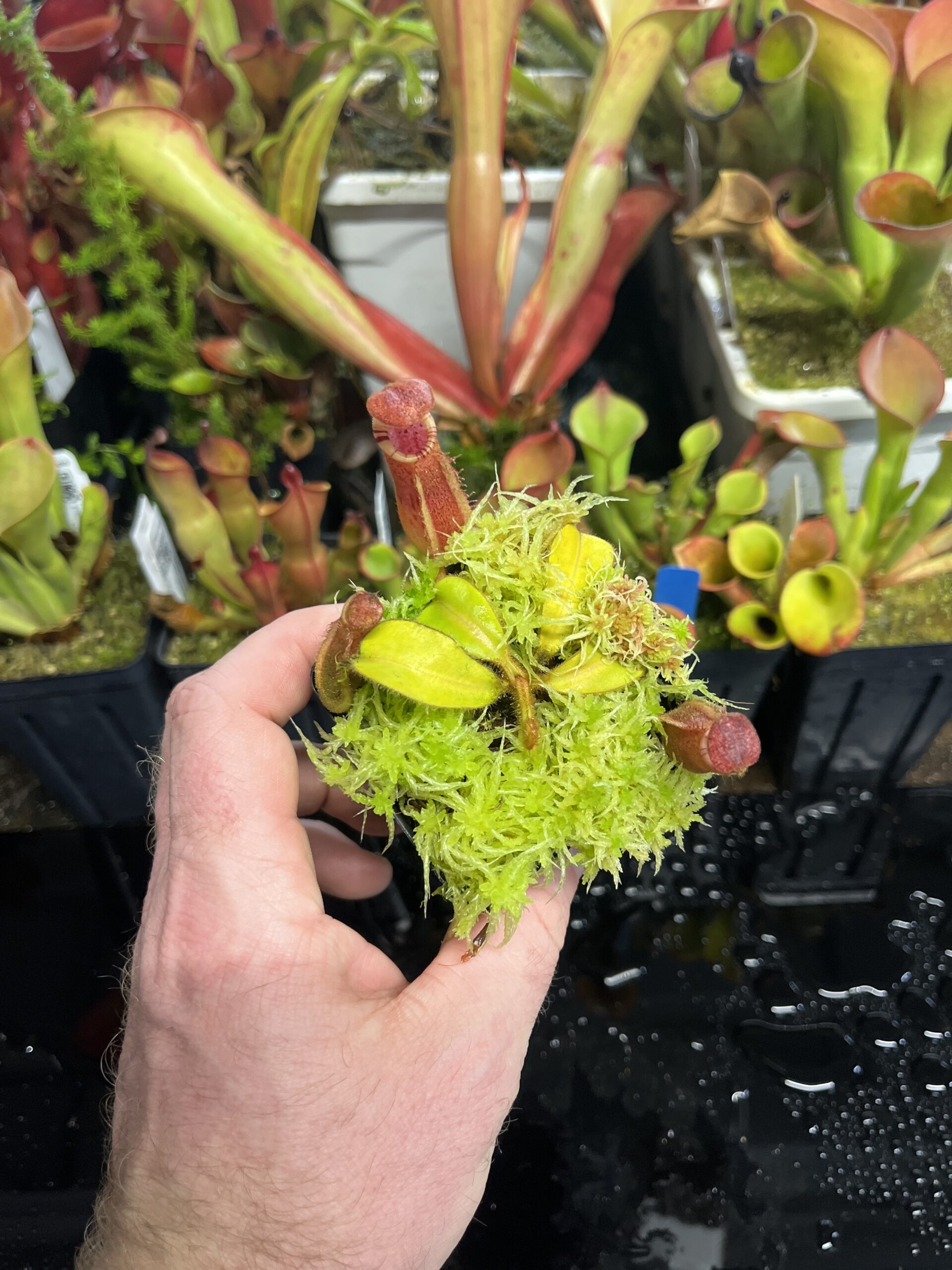
Nepenthes (veitchii x lowii) – BE x (veitchii x mollis) – CK | Florae Collaborative | FC-725.00 | IN28044

Starting bid: $ 1.00

Item condition: New

Time left:

Auction ends: November 29, 2026 6:30 pm
Timezone: America/New_York

Propagation Method Seed Grown
Size Small
Specimen Number IN28044
SKU: NEP-2351 Categories: , Tag:

Plant Type

Growth Condtions

Description

The plant in the photo is the exact plant you will receive. Our auction guidelines can be found here.

We offer a Live Plant Guarantee and ship all of our plants potted.

Purchasing this plant supports the planet! 1% of all revenue is donated to environmental conservation in partnership with 1% for the Planet.

See also:

Auction History

November 23, 2026 8:00 amAuction started

Learn more about this plant

Nepenthes (veitchii × lowii) × (veitchii × mollis)

Half N. veitchii, with N. lowii and the hairy N. mollis on the other quarters: a Florae cross of three Bornean species.

N. veitchii is on both sides of this cross, so it makes up half the plant on paper. It is widespread in north-western Borneo from sea level to about 1,600 m, mostly as an epiphyte, with a wide, flared peristome. Nepenthes lowii grows across the upper montane zone of northern Borneo at 1,650 to 2,600 m. Nepenthes mollis was collected once, in 1925, in East Kalimantan, and was described without pitchers. Its pitchers stayed unknown until a 2018 expedition matched it to the plant that growers knew as N. hurrelliana.

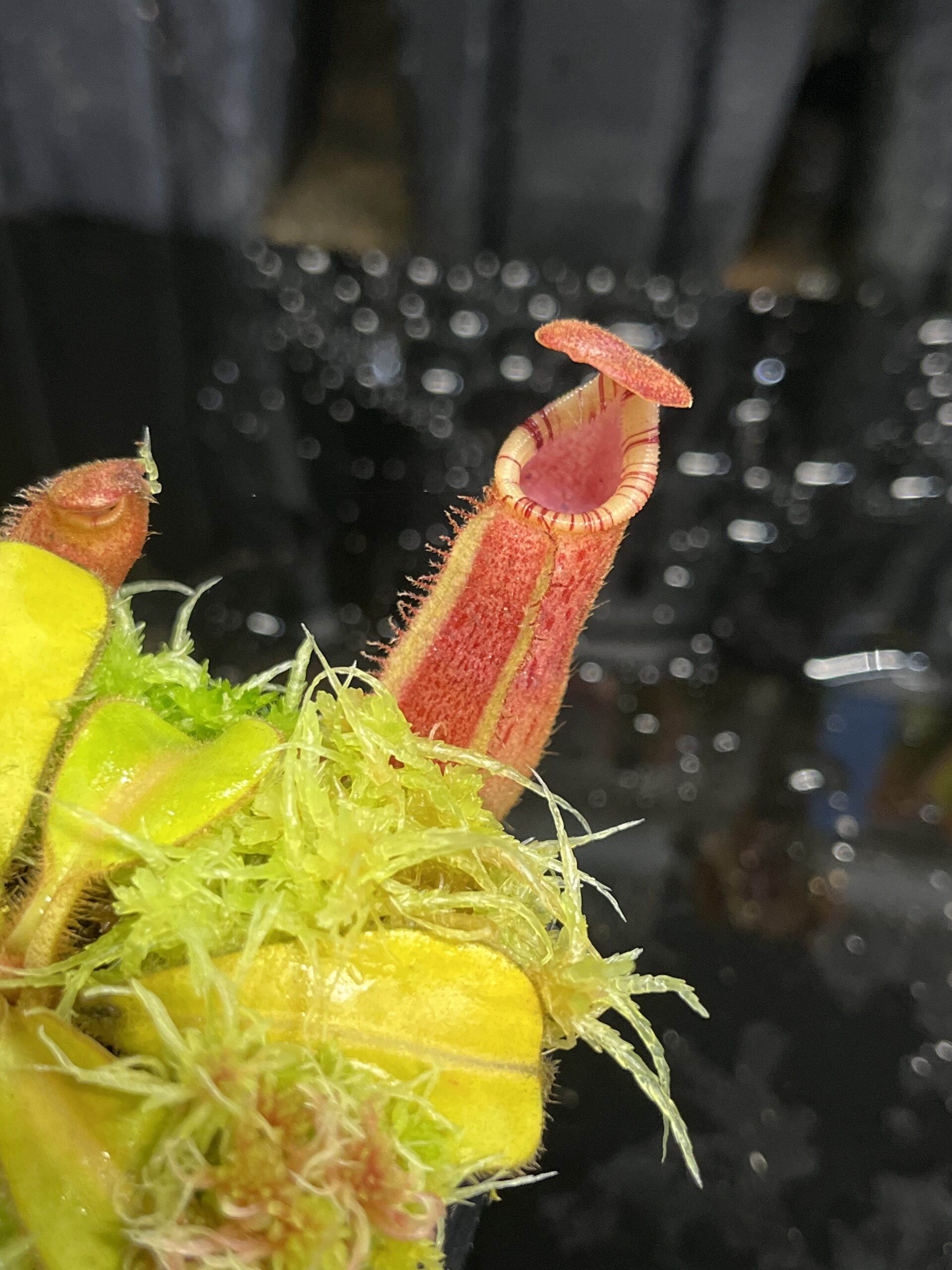
From the parents, one would expect the wide peristome of N. veitchii, the waisted, flaring upper pitchers of N. lowii and some of the dense red-brown hair of N. mollis. Documentation on this cross is limited, so expect individual character.

Care

Growing intermediate Nepenthes

Warm days, mild nights and high humidity: forgiving conditions that suit hybrids with both highland and lowland parents.

Intermediate Nepenthes sit between the cool highland and the warm lowland plants, and many hybrids with parents from both are happiest here. Aim for days about 70 to 80 F (21 to 27 C) and nights about 55 to 65 F (13 to 18 C), with humidity above 70 percent, bright filtered light and good airflow. A modest drop at night helps, but these plants tolerate more warmth than strict highlanders.

Use an open mix that drains fast, such as long-fiber sphagnum with perlite or bark, and keep it evenly moist with pure water (rain, distilled or reverse osmosis).

Give larger plants room to climb or trail as they mature. The pitchers feed the plant; fertilizer, if any, should be light and occasional.