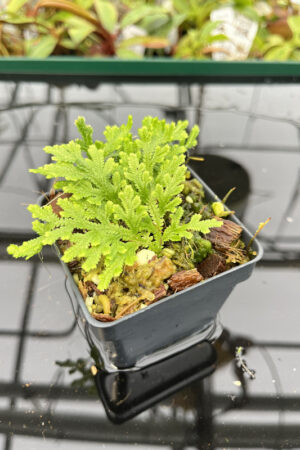
Begonia quadrialata (Africa) | Florae Collaborative | IN28031

Starting bid: $ 1.00

Item condition: New

Time left:

Auction ends: November 29, 2026 6:30 pm
Timezone: America/New_York

Propagation Method Rooted Cutting
Size Large
Specimen Number IN28031
SKU: BEG-0003 Categories: , Tag:

Plant Type

Growth Condtions

Description

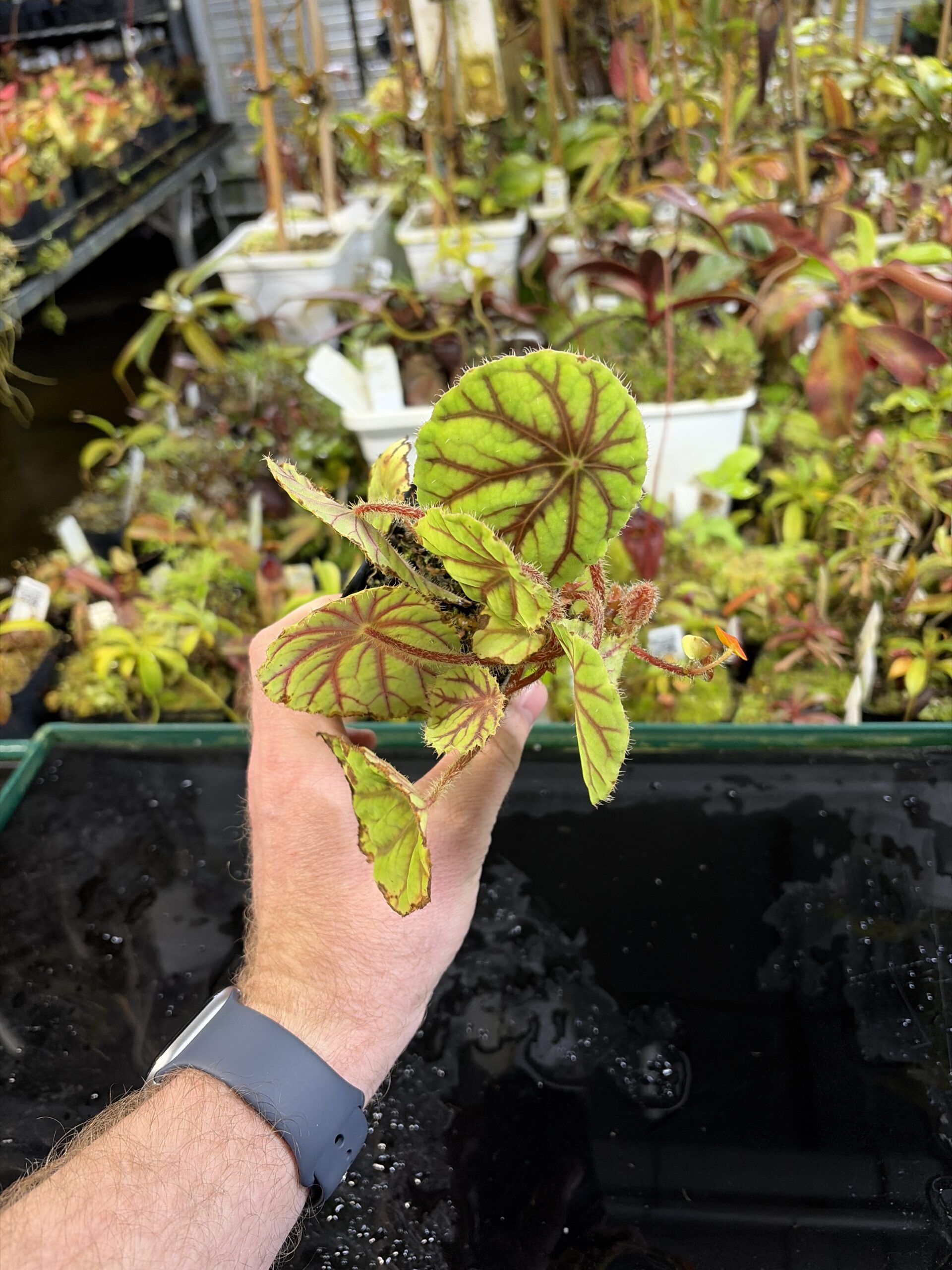
The plant in the photo is the exact plant you will receive. Our auction guidelines can be found here.

We offer a Live Plant Guarantee and ship all of our plants potted.

Purchasing this plant supports the planet! 1% of all revenue is donated to environmental conservation in partnership with 1% for the Planet.

See also:

Auction History

November 23, 2026 8:00 amAuction started

Learn more about this plant

Begonia quadrialata

An African Begonia of rain forest streamsides, with lime-green leaves and yellow flowers.

Begonia quadrialata is an African species, recorded from Sierra Leone, Guinea and Liberia east through Côte d'Ivoire, Ghana, Togo and Nigeria to Cameroon, Gabon, both Congos and Angola. Its range includes Mount Nimba, and a subspecies named nimbaensis was described in 1994. The standard revision of the group describes it as a plant of lowland rain forest, often on or near the banks of streams and rivers and near waterfalls. It is rhizomatous and relatively small. A 2004 molecular study placed it closest to B. potamophila.

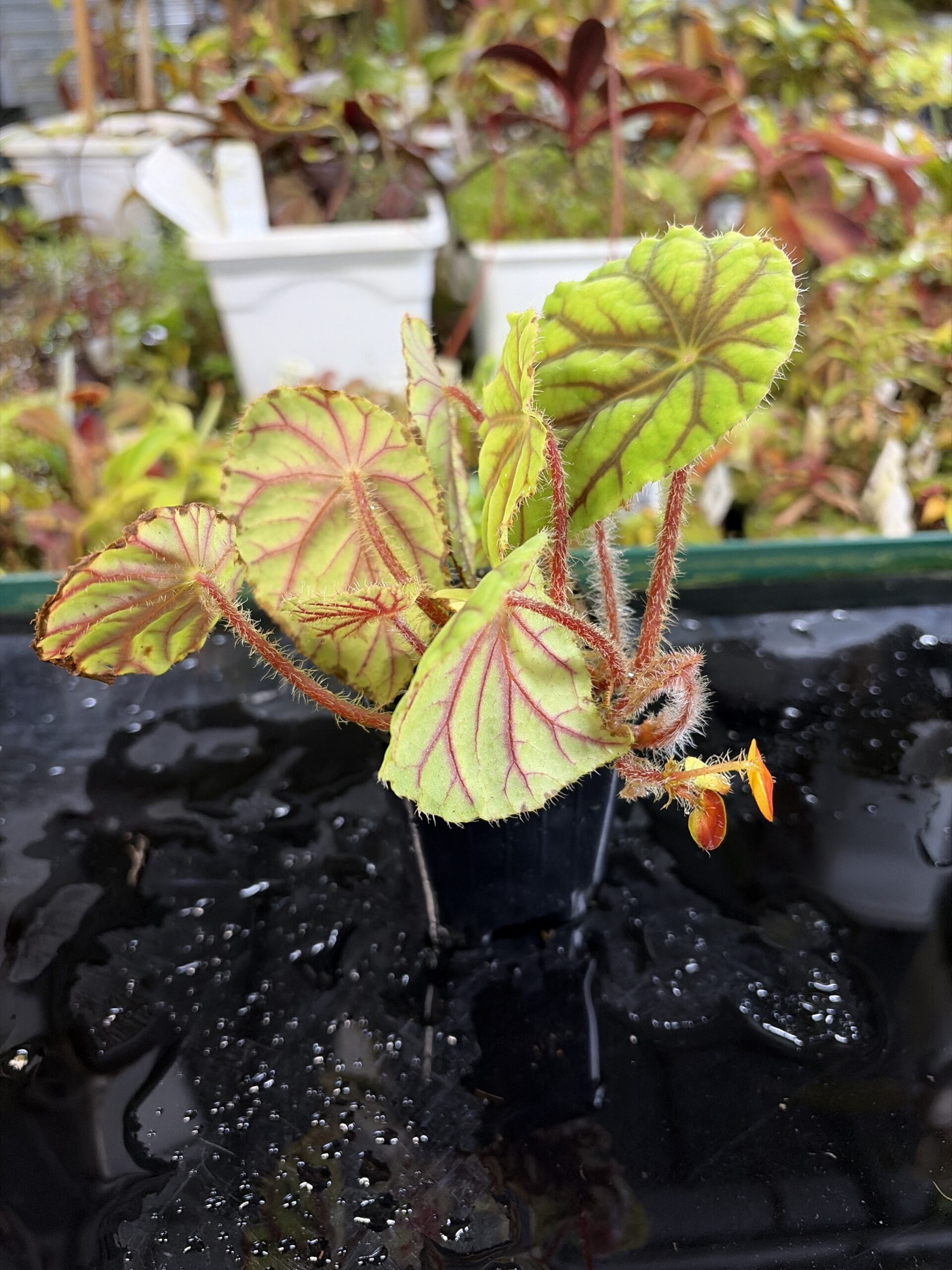
Its leaves are ovate and lime green, sometimes with thick red veins, and its flowers are yellow to orange-yellow. The genus is one of the largest in flowering plants, with more than 2,000 species, and was named by Charles Plumier for Michel Bégon, a governor of the French colony of Saint-Domingue. Ours came to us labelled from Africa, and we do not know its exact origin.

Care

Growing Begonia

Warm, humid and shaded: a foliage Begonia for a terrarium or a humid corner.

Our Begonia are grown for their foliage and prefer the warm, humid shade of a forest floor. We grow them intermediate: days in the 70s F (21 to 26 C), mild nights, high humidity and bright, indirect light without direct sun.

Use a light, airy mix that holds some moisture, and keep it evenly moist but never soggy. A terrarium or other enclosed, humid space suits them well, with a little airflow to keep the leaves from staying wet.