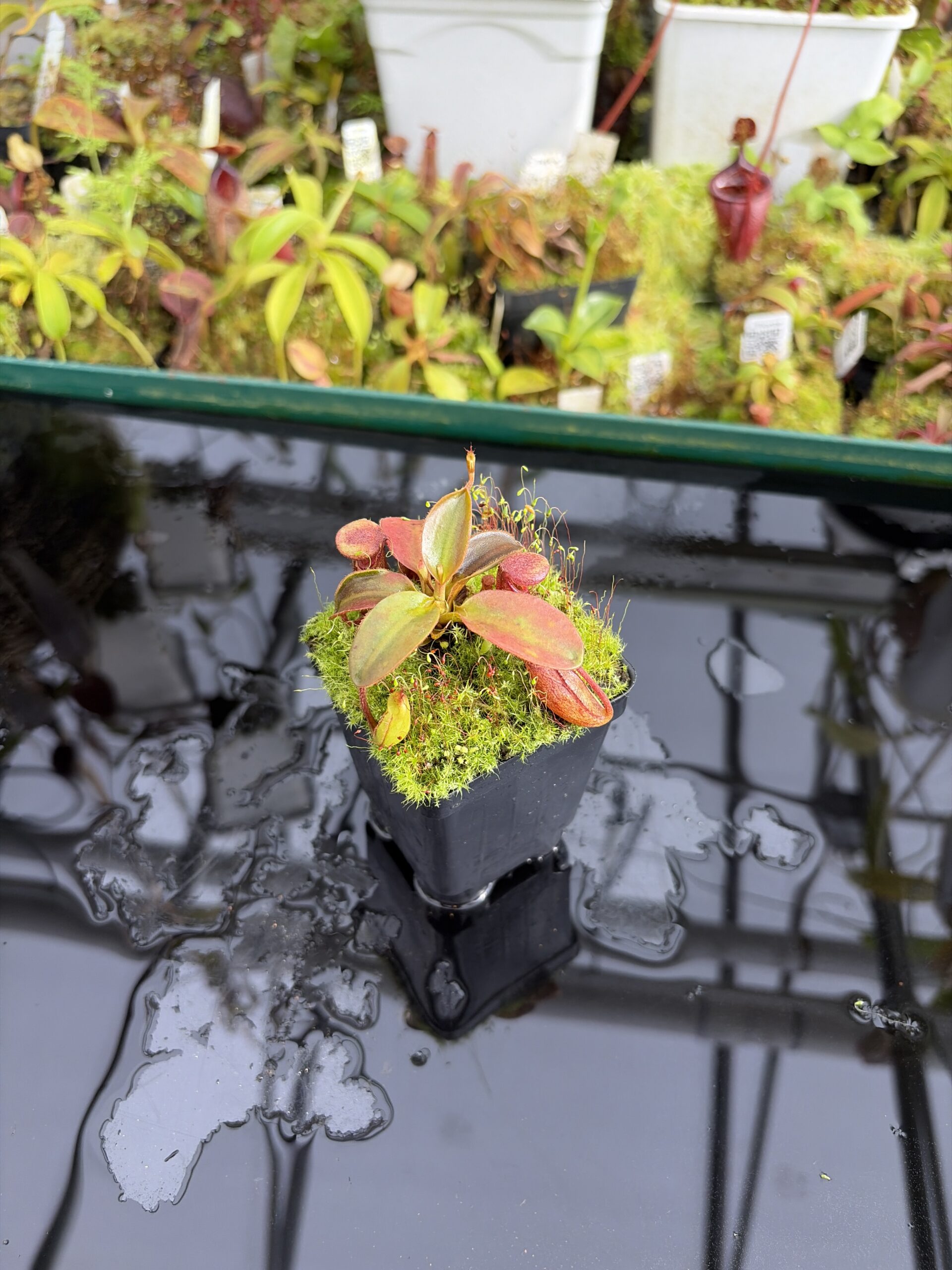
Nepenthes rajah | Borneo Exotics | BE-3152 | H28066

Current bid: $ 41.00

Item condition: New

Time left:

Auction ends: November 29, 2026 6:30 pm
Timezone: America/New_York

Propagation Method Tissue Culture
Size Small
Specimen Number H28066
SKU: NEP-0018 Categories: , Tag:

Plant Type

Growth Condtions

Description

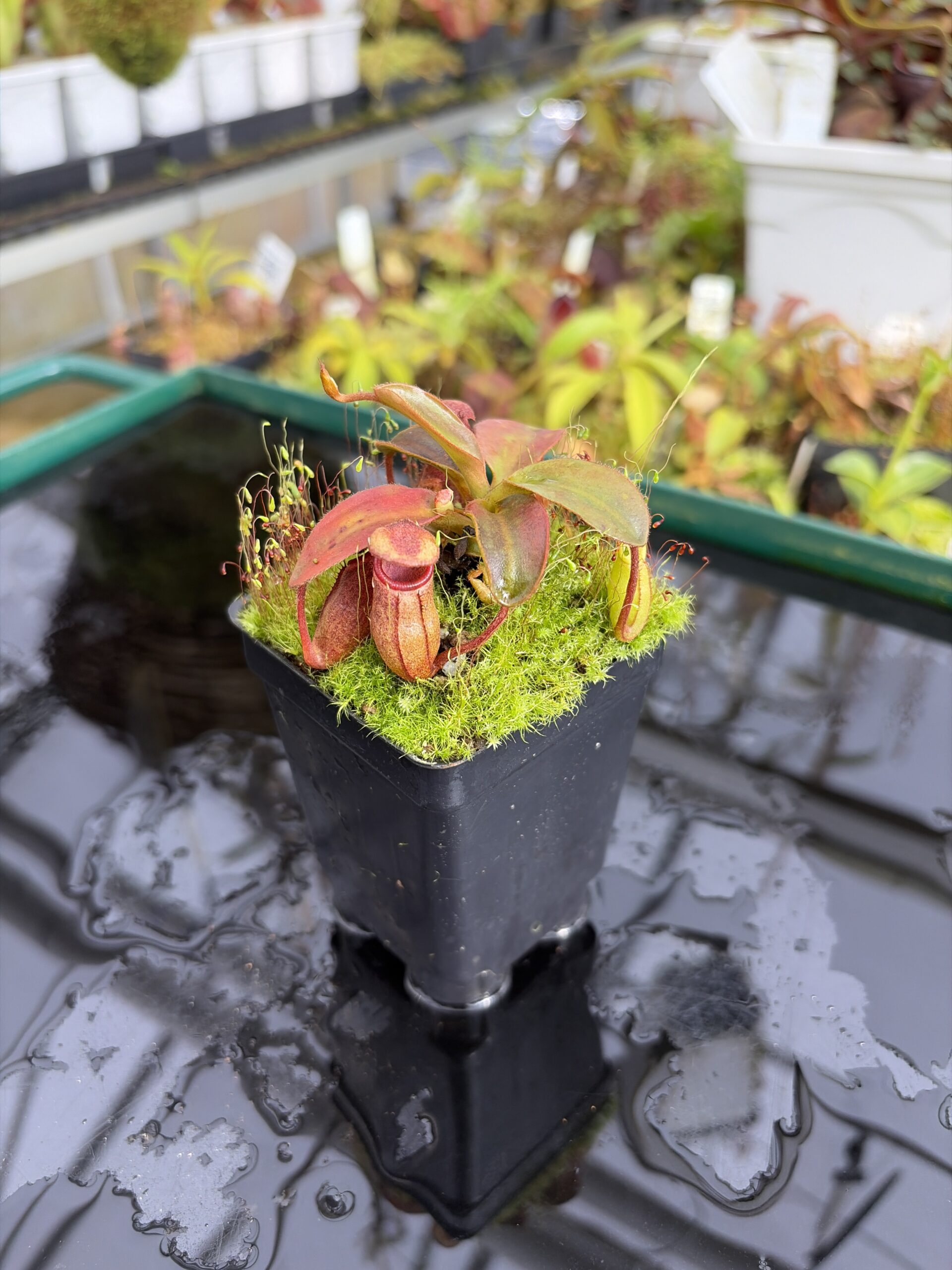
The plant in the photo is the exact plant you will receive. Our auction guidelines can be found here.

We offer a Live Plant Guarantee and ship all of our plants potted.

Purchasing this plant supports the planet! 1% of all revenue is donated to environmental conservation in partnership with 1% for the Planet.

See also:

Auction History

Date Bid User Auto
November 23, 2026 9:01 pm$ 41.00w*********9 Auto
November 23, 2026 9:01 pm$ 40.00e*******9
November 23, 2026 12:41 pm$ 26.00w*********9
November 23, 2026 12:41 pm$ 25.00e*******9 Auto
November 23, 2026 11:59 am$ 1.00e*******9
November 23, 2026 8:00 amAuction started

Learn more about this plant

Nepenthes rajah

The king of Nepenthes: endemic to Kinabalu and Tambuyukon on ultramafic soils, with the largest pitchers in the genus and a broad, toothed red peristome.

N. rajah is endemic to Mount Kinabalu and neighboring Mount Tambuyukon in Sabah, at 1,500 to 2,650 m, both within Kinabalu Park. It grows only on ultramafic soils rich in nickel and chromium, often in loose, permanently moist ground where groundwater seeps. Hugh Low collected it on Kinabalu in 1858 and Joseph Hooker described it in 1859, naming it after James Brooke, the first White Rajah of Sarawak. It is listed as Endangered and sits on CITES Appendix I, which bars commercial trade in wild-collected plants.

N. rajah is known for the largest pitchers in the genus. Exceptional lower pitchers reach about 41 cm tall and 20 cm wide and can hold 3.5 litres of water. They are usually red to purple outside, with a greatly expanded red peristome, scalloped and lined with sharp teeth along its inner edge, under a big, vaulted lid. The lid secretes nectar, and mountain tree shrews that visit to feed leave their droppings in the pitcher, which supplies much of the plant's nitrogen; the summit rat does the same.

Breeders

Borneo Exotics

The Nepenthes nursery in Sri Lanka that Rob Cantley founded in 1997.

Borneo Exotics is a Nepenthes nursery in the central highlands of Sri Lanka. Rob Cantley founded it in 1997, and he runs it with his wife and business partner, Diana. It built its own tissue culture laboratory because cuttings proved inconsistent and prone to disease, and it now offers micropropagation services to breeders and nurseries around the world.

Its plants are sold under BE numbers, and other sellers keep those numbers on their listings. Cantley also found a new species in January 1997, on a trip to Mindanao to look for N. truncata seed. It was described in 2011 as N. robcantleyi in his honor, and nearly all plants in cultivation descend from a small batch of seedlings from that one trip.

Care

Growing highland Nepenthes

Cool nights, mild days, high humidity and steady airflow, the mountain cloud forest that most of our Nepenthes come from.

Highland Nepenthes grow in montane forest where nights cool down sharply after mild days. Aim for nights about 50 to 55 F (10 to 13 C), days 70 to 78 F (21 to 26 C), humidity above 70 to 80 percent, bright filtered light and constant airflow. The night drop is what highland plants need most; a warm room at night slows them down.

Grow them in an open, airy mix that drains fast, such as long-fiber sphagnum with perlite or bark, and keep it evenly moist with pure water (rain, distilled or reverse osmosis). Never let the pot sit in water for long.

New plants settle in over a few weeks; keep conditions steady while they do. The pitchers catch their own food, so fertilizer, if any, should be light and occasional.