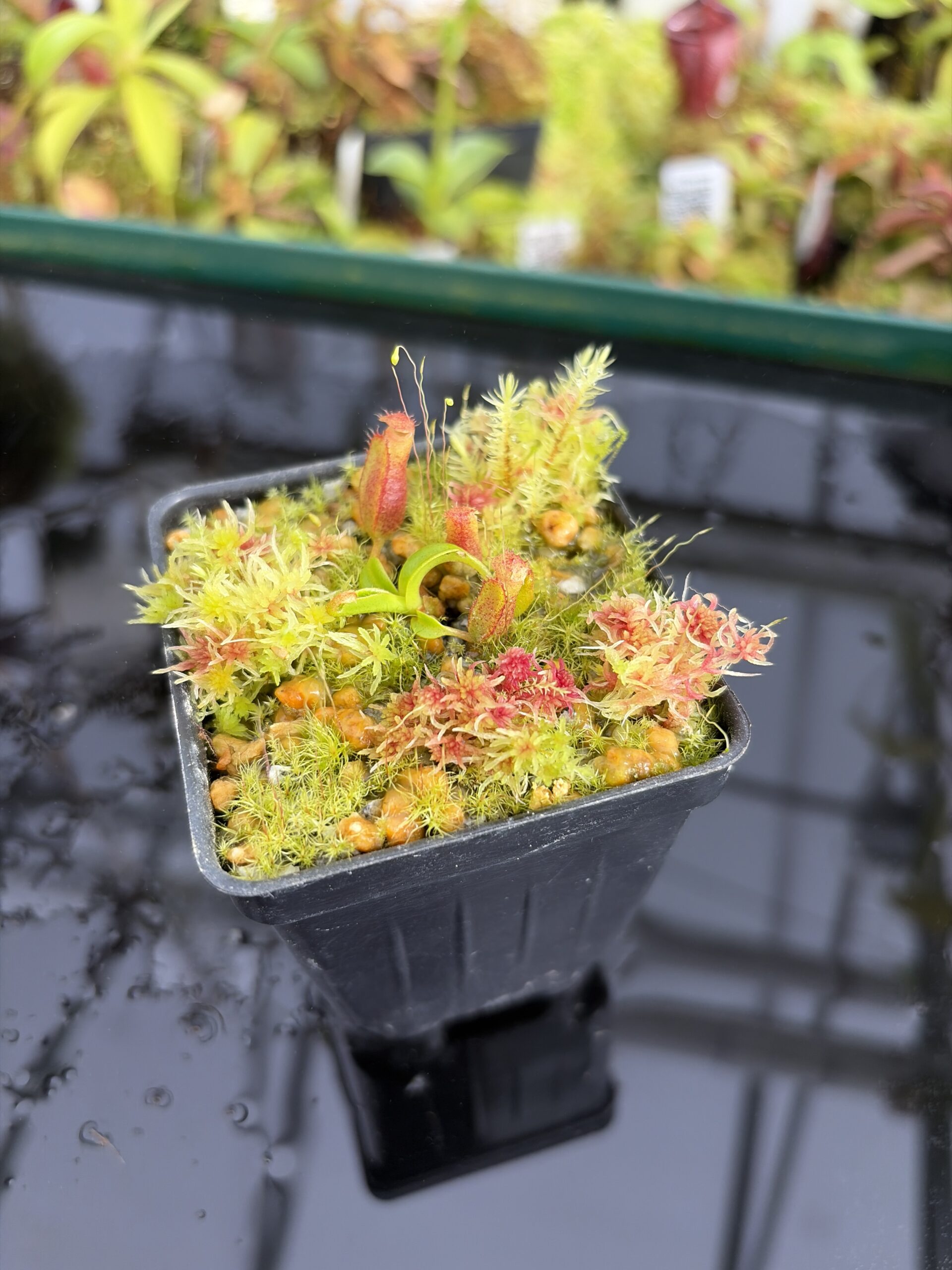
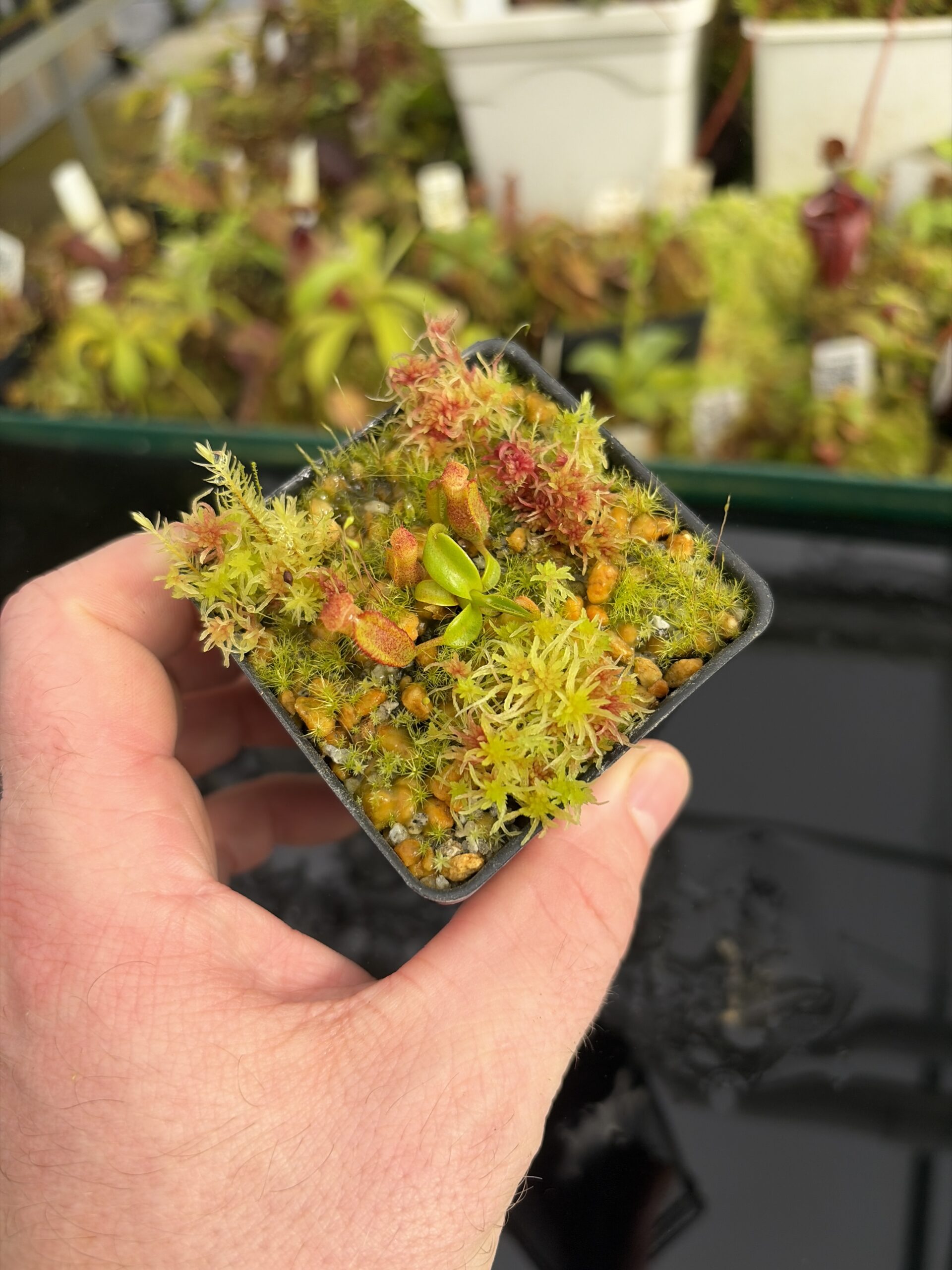
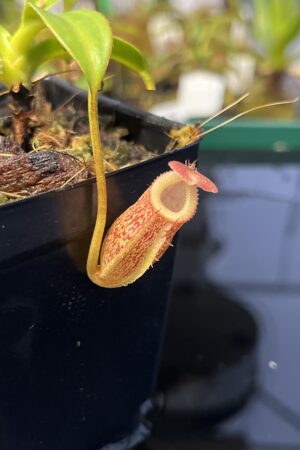
Nepenthes villosa x edwardsiana | Clone 03 | Jeremiah Harris | JH-322.03 | H28070

Starting bid: $ 1.00

Item condition: New

Time left:

Auction ends: November 29, 2026 6:30 pm
Timezone: America/New_York

Propagation Method Tissue Culture
Size Extra Small
Specimen Number H28070
SKU: NEP-1428 Categories: , Tag:

Plant Type

Growth Condtions

Description

The plant in the photo is the exact plant you will receive. Our auction guidelines can be found here.

We offer a Live Plant Guarantee and ship all of our plants potted.

Purchasing this plant supports the planet! 1% of all revenue is donated to environmental conservation in partnership with 1% for the Planet.

See also:

Auction History

November 23, 2026 8:00 amAuction started

Learn more about this plant

Nepenthes villosa × edwardsiana

Two Kinabalu icons in one plant: ultrahighland N. villosa's squat, hairy, deeply ribbed pitchers with the taller, finely ribbed pitchers of N. edwardsiana.

Both parents come from the same two mountains in Sabah but occupy different zones. Nepenthes villosa grows higher than any other Bornean Nepenthes, generally 2,300 to 3,240 m on Mount Kinabalu and Mount Tambuyukon, as a terrestrial shrub among boulders and stunted scrub on ultramafic soils. Nepenthes edwardsiana grows lower, at 1,500 to 2,700 m, mostly as an epiphyte in mossy forest. The two are closely related and hybridize where their ranges meet; the natural hybrid is known as N. ×harryana.

N. villosa is defined by its intricate, deeply ribbed peristome and squat, hairy pitchers. N. edwardsiana contributes a taller pitcher and its own finely ribbed peristome. A cross of the two sets up a pitcher with height, presence, and an exceptional peristome from both sides.

Breeders

Jeremiah Harris

Colorado Springs grower and hybridizer, founder of the Colorado Carnivorous Plant Society, and breeder of 'Leviathan'.

Jeremiah Harris grows and breeds Nepenthes in Colorado Springs, and he founded the Colorado Carnivorous Plant Society in 2003. Among his crosses is 'Leviathan', a cross of N. rajah and N. peltata that he first made in 2008. According to Guinness World Records, the name refers both to the biblical sea monster and to his brother Levi, and a male 'Leviathan' plant sold to an anonymous buyer for $4,500 in July 2019. Other growers have since used 'Leviathan' in crosses of their own.

Parents

Nepenthes villosa

The highest-growing Nepenthes in Borneo, generally found at 2,300 to 3,240 m on Kinabalu and Tambuyukon, with squat, densely hairy pitchers and a wide, ribbed, toothed peristome.

Nepenthes edwardsiana

A Kinabalu Park highland species with tall pitchers and one of the most refined, closely ribbed peristomes in the genus.

Care

Growing highland Nepenthes

Cool nights, mild days, high humidity and steady airflow, the mountain cloud forest that most of our Nepenthes come from.

Highland Nepenthes grow in montane forest where nights cool down sharply after mild days. Aim for nights about 50 to 55 F (10 to 13 C), days 70 to 78 F (21 to 26 C), humidity above 70 to 80 percent, bright filtered light and constant airflow. The night drop is what highland plants need most; a warm room at night slows them down.

Grow them in an open, airy mix that drains fast, such as long-fiber sphagnum with perlite or bark, and keep it evenly moist with pure water (rain, distilled or reverse osmosis). Never let the pot sit in water for long.

New plants settle in over a few weeks; keep conditions steady while they do. The pitchers catch their own food, so fertilizer, if any, should be light and occasional.