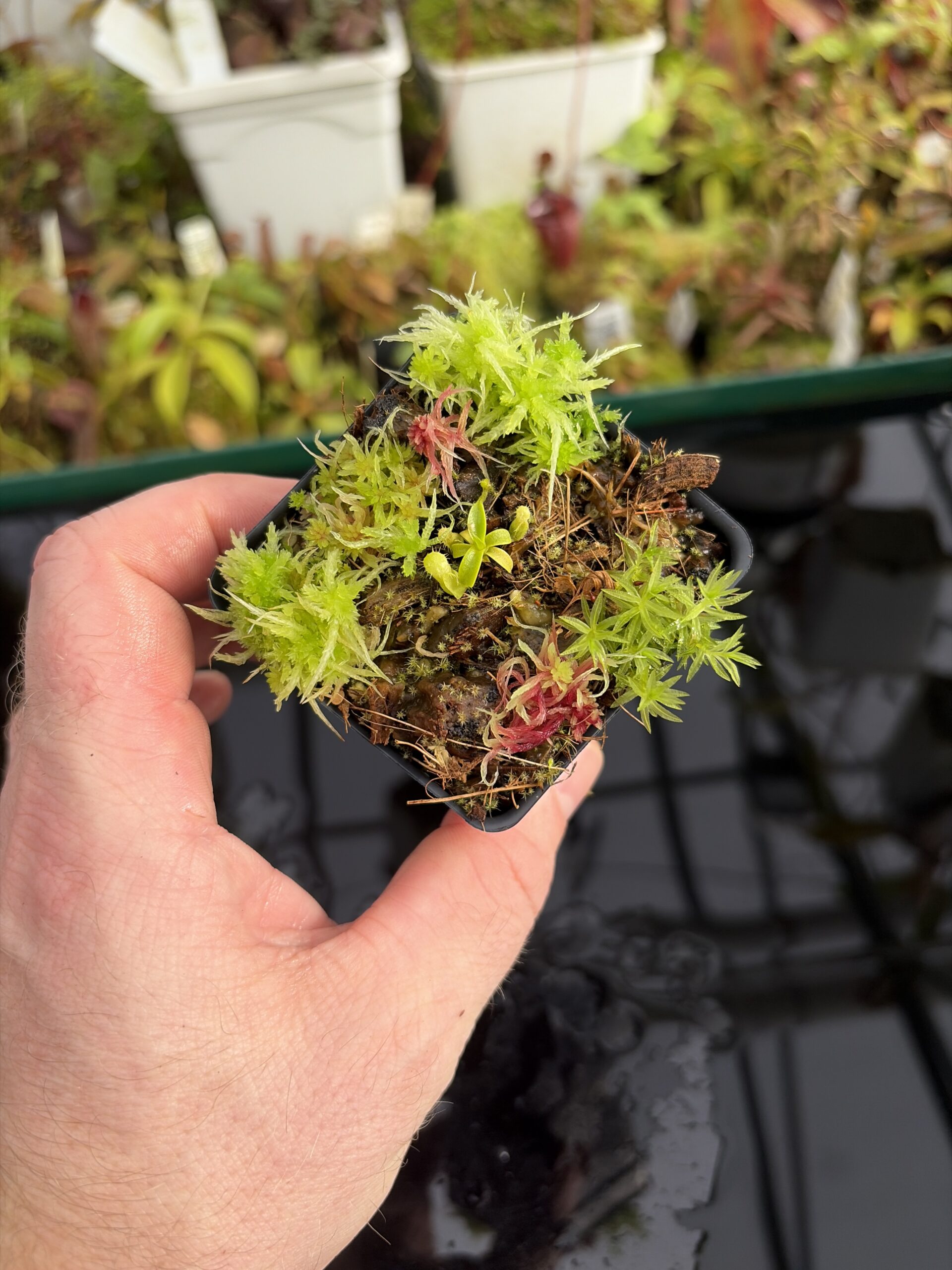
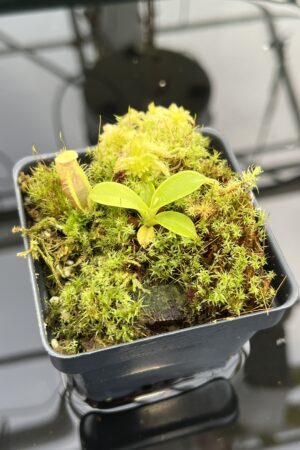
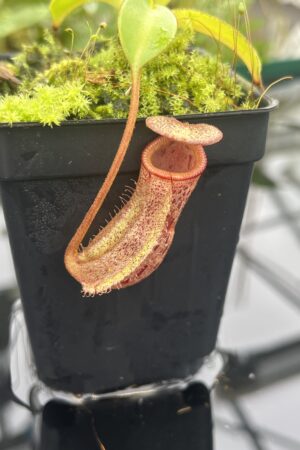
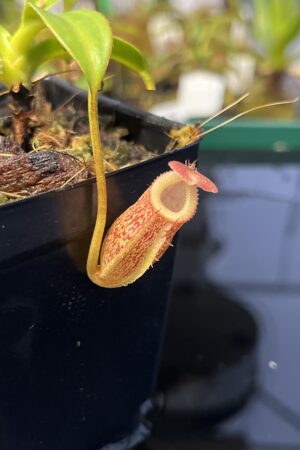
Nepenthes (diabolica x hamata) x (diabolica x hamata) pod #1 | Michael Kevin Smith | MKS-430.01 | H28072

Starting bid: $ 1.00

Item condition: New

Time left:

Auction ends: November 29, 2026 6:30 pm
Timezone: America/New_York

Propagation Method Tissue Culture
Size Extra Small
Specimen Number H28072
SKU: NEP-1759 Categories: , Tag:

Plant Type

Growth Condtions

Description

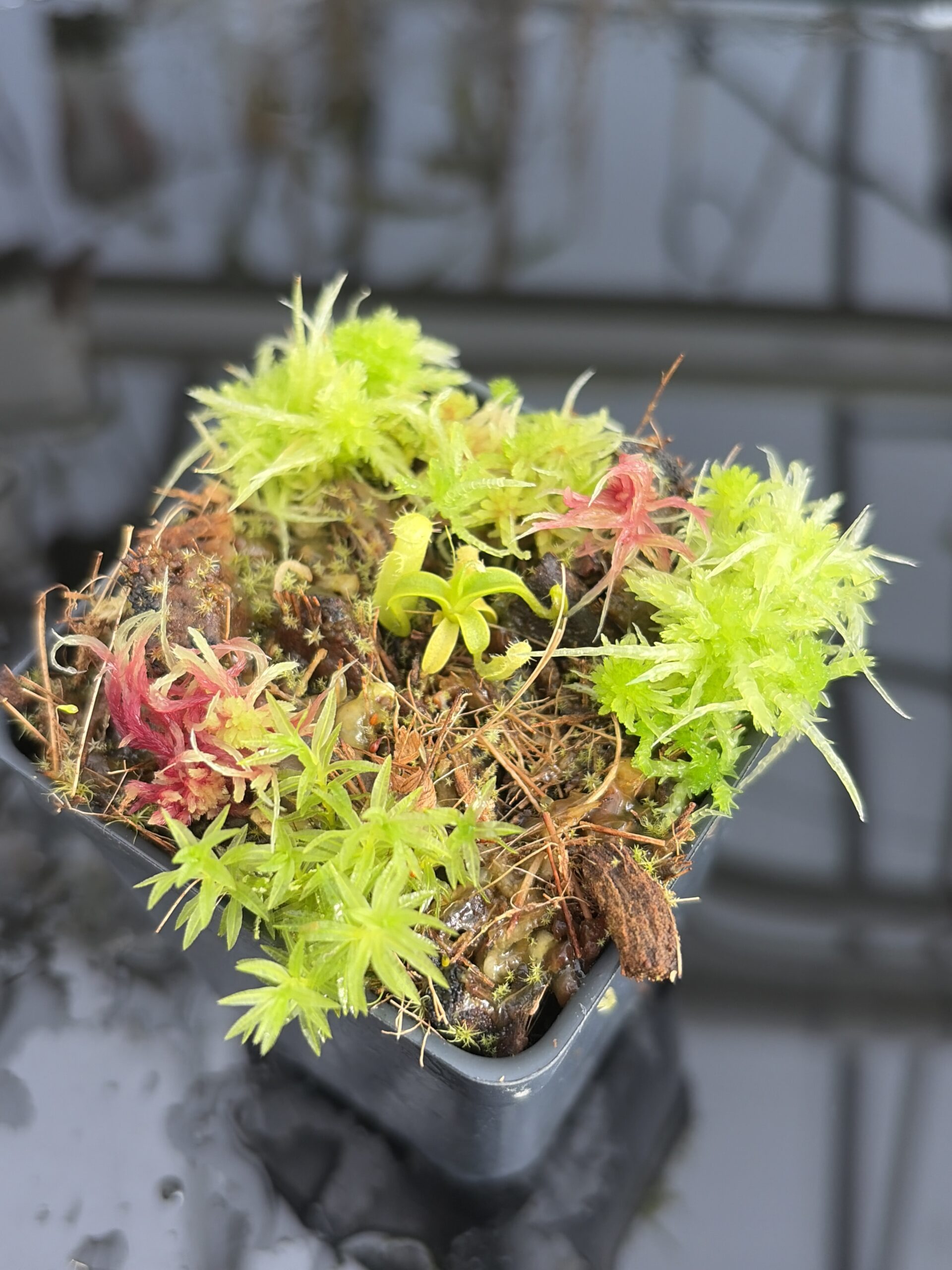
The plant in the photo is the exact plant you will receive. Our auction guidelines can be found here.

We offer a Live Plant Guarantee and ship all of our plants potted.

Purchasing this plant supports the planet! 1% of all revenue is donated to environmental conservation in partnership with 1% for the Planet.

See also:

Auction History

November 23, 2026 8:00 amAuction started

Learn more about this plant

Nepenthes (diabolica × hamata) × (diabolica × hamata)

An F2 of N. 'Smilodon' (diabolica × hamata): two heavily armed Central Sulawesi highland species, with siblings that vary widely.

Both parents are endemic to the mountains of Central Sulawesi. Nepenthes hamata grows in mossy forest and scrub on ridges and summits at 1,400 to 2,500 m. Nepenthes diabolica, formally described in 2020, is known from a single mountain at about 2,200 to 2,300 m. The first-generation cross of the two is known as N. 'Smilodon'.

This plant is an F2, a cross of two N. 'Smilodon' plants. In a first-generation hybrid, the seedlings tend to look fairly uniform. In the second generation, the parent genes recombine, so siblings can vary widely, and that is where standout individuals appear. Some lean toward the dense, rufous indumentum of N. diabolica, others toward the long hooked teeth of N. hamata. Both species carry an elaborate, strongly toothed peristome, so expect that structure throughout.

Care

Growing highland Nepenthes

Cool nights, mild days, high humidity and steady airflow, the mountain cloud forest that most of our Nepenthes come from.

Highland Nepenthes grow in montane forest where nights cool down sharply after mild days. Aim for nights about 50 to 55 F (10 to 13 C), days 70 to 78 F (21 to 26 C), humidity above 70 to 80 percent, bright filtered light and constant airflow. The night drop is what highland plants need most; a warm room at night slows them down.

Grow them in an open, airy mix that drains fast, such as long-fiber sphagnum with perlite or bark, and keep it evenly moist with pure water (rain, distilled or reverse osmosis). Never let the pot sit in water for long.

New plants settle in over a few weeks; keep conditions steady while they do. The pitchers catch their own food, so fertilizer, if any, should be light and occasional.