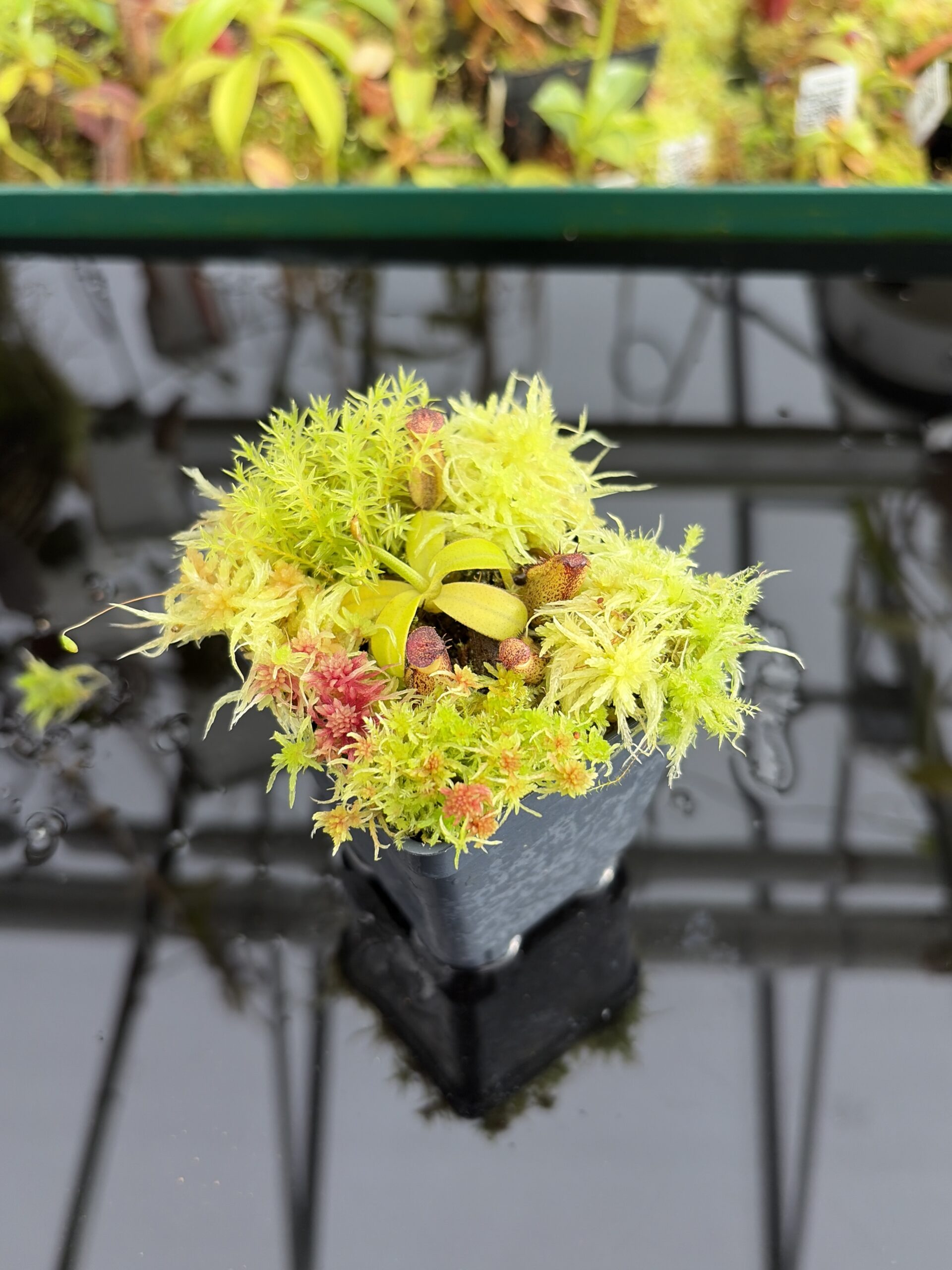
Nepenthes rigidifolia (Sumatra) | Random Selection of Clones | Andreas Wistuba | AW-RSC | H28061

Current bid: $ 76.00

Item condition: New

Time left:

Auction ends: November 29, 2026 6:30 pm
Timezone: America/New_York

Propagation Method Tissue Culture
Size Small
Specimen Number H28061
Locality

North Sumatra

SKU: NEP-2283 Categories: , Tag:

Plant Type

Growth Condtions

Description

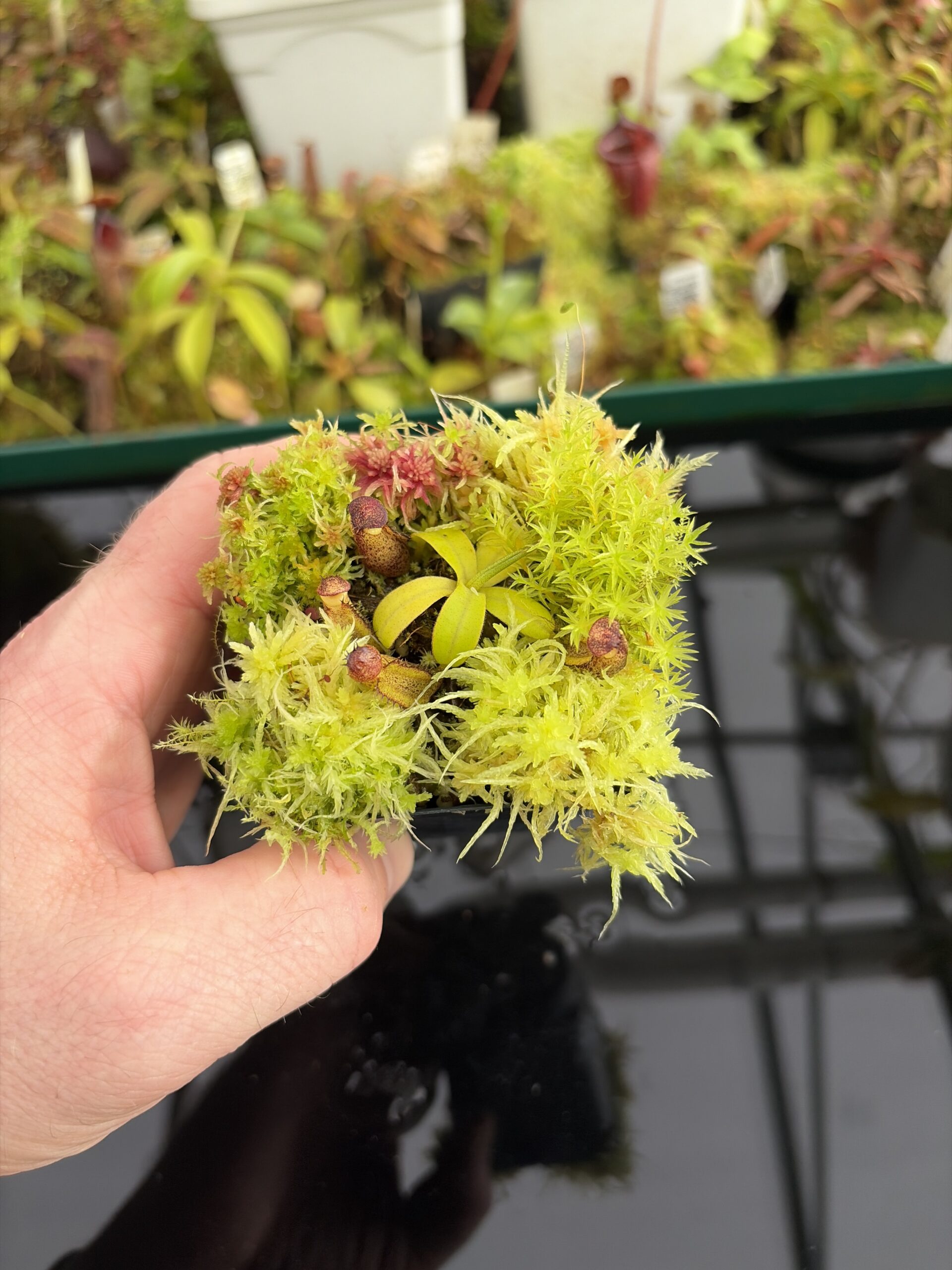
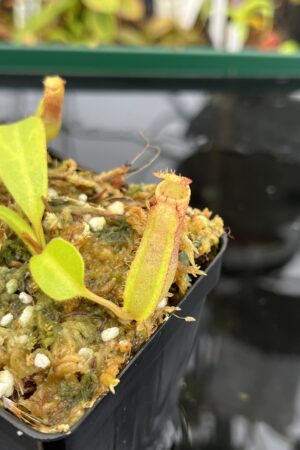
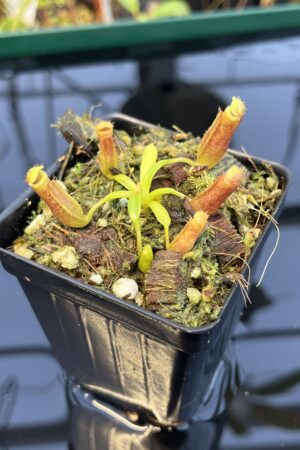
The plant in the photo is the exact plant you will receive. Our auction guidelines can be found here.

We offer a Live Plant Guarantee and ship all of our plants potted.

Purchasing this plant supports the planet! 1% of all revenue is donated to environmental conservation in partnership with 1% for the Planet.

See also:

Auction History

Date Bid User Auto
November 23, 2026 10:24 pm$ 76.00j*********a
November 23, 2026 10:24 pm$ 75.00b*******4 Auto
November 23, 2026 10:24 pm$ 67.66b*******4 Auto
November 23, 2026 10:24 pm$ 66.66j*********a
November 23, 2026 10:24 pm$ 51.00b*******4 Auto
November 23, 2026 10:24 pm$ 50.00j*********a
November 23, 2026 10:24 pm$ 26.00b*******4 Auto
November 23, 2026 10:24 pm$ 25.00j*********a
November 23, 2026 2:19 pm$ 11.00b*******4
November 23, 2026 2:19 pm$ 10.00j*********a Auto
November 23, 2026 12:08 pm$ 3.00j*********a Auto
November 23, 2026 12:08 pm$ 2.00j***************s
November 23, 2026 10:00 am$ 1.00j*********a
November 23, 2026 8:00 amAuction started

Learn more about this plant

Nepenthes rigidifolia

A critically endangered North Sumatran highland species, described in 2004, with stiff leathery leaves and a finely toothed peristome running from dark brown to orange-red.

Nepenthes rigidifolia is endemic to North Sumatra, known from a single small area near Sidikalang, where it grows terrestrially in lower montane forest and scrub at roughly 1,000 to 1,600 m. Young plants have also been seen growing on rock. It shares its habitat with N. spectabilis, and a natural hybrid between the two has been recorded. It was described in 2004 by Akhriadi, Hernawati and Tamin, and is listed as critically endangered. The describing authors counted only a couple of dozen mature plants, and the species is under real pressure from land clearing, road works, fire and collection. It has been claimed by some growers that a population survives inside a protected forest, though published accounts place the species outside any protected area.

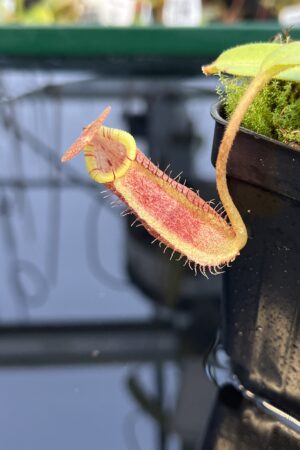
The epithet refers to the stiff, coriaceous leaves, which are among the most distinctive things about the plant in person. Rosette pitchers usually carry a dark brown peristome, and upper pitchers are often orange to dark red, under a lid that runs from dark red to brown or black. The peristome is cylindrical and expanded outward, lined on its inner margin with very small but distinct teeth. Upper pitchers reach about 21 cm.

Breeders

Andreas Wistuba

German botanist and nurseryman who has described more than half of all known Heliamphora and many Nepenthes.

Andreas Wistuba is a German botanist from Maselheim who specializes in carnivorous plants. He is credited with describing more than half of all known Heliamphora species, among them H. hispida, H. folliculata and H. chimantensis, and in 2024 he co-described H. electrum. With Joachim Nerz and others he co-described Nepenthes including N. talangensis, N. flava and N. undulatifolia.

His nursery says that it has been in business for more than 25 years. It runs its own propagation laboratory and keeps a gene bank of rare species and forms.

Care

Growing highland Nepenthes

Cool nights, mild days, high humidity and steady airflow, the mountain cloud forest that most of our Nepenthes come from.

Highland Nepenthes grow in montane forest where nights cool down sharply after mild days. Aim for nights about 50 to 55 F (10 to 13 C), days 70 to 78 F (21 to 26 C), humidity above 70 to 80 percent, bright filtered light and constant airflow. The night drop is what highland plants need most; a warm room at night slows them down.

Grow them in an open, airy mix that drains fast, such as long-fiber sphagnum with perlite or bark, and keep it evenly moist with pure water (rain, distilled or reverse osmosis). Never let the pot sit in water for long.

New plants settle in over a few weeks; keep conditions steady while they do. The pitchers catch their own food, so fertilizer, if any, should be light and occasional.