
Nepenthes burbidgeae
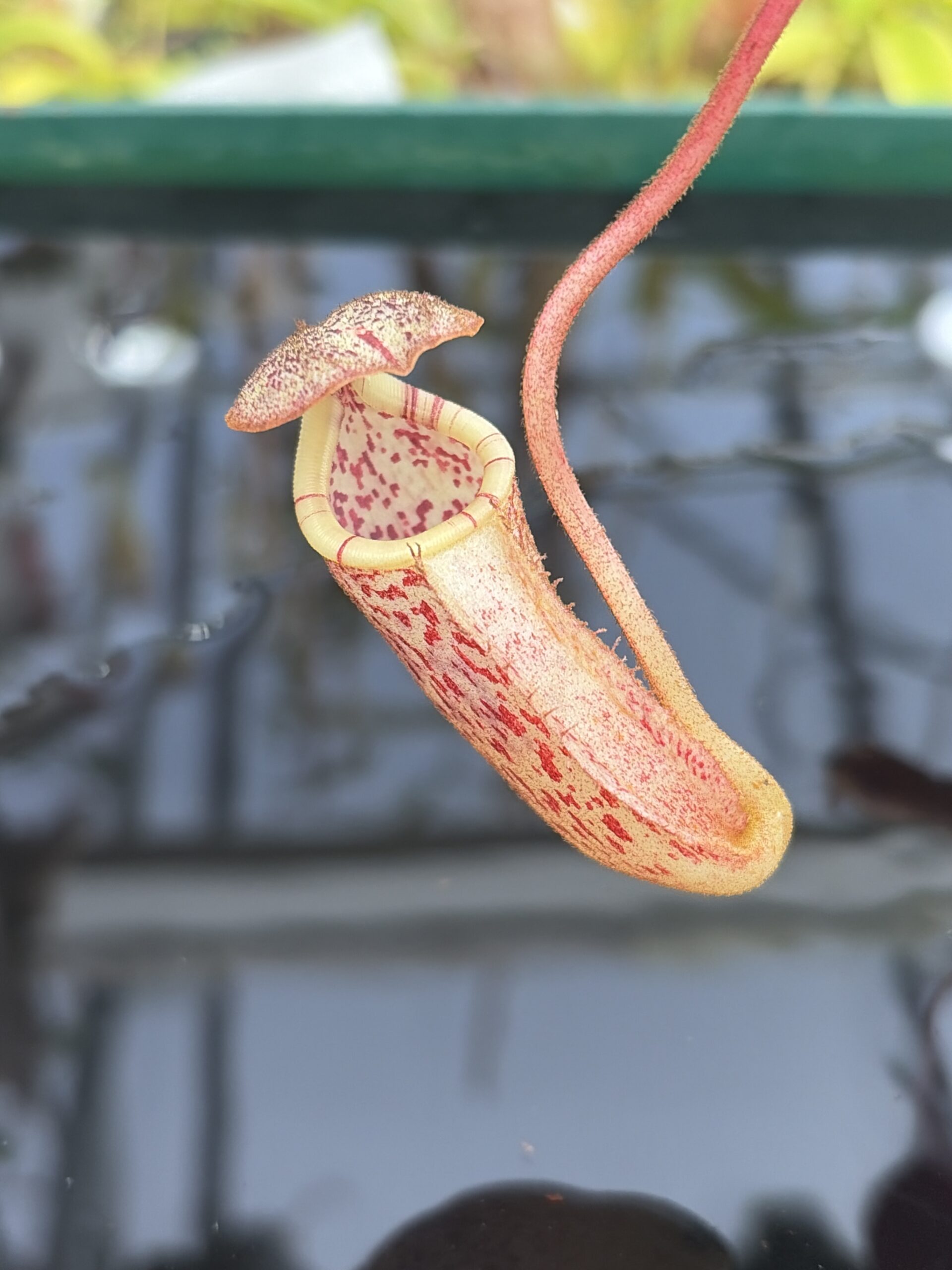
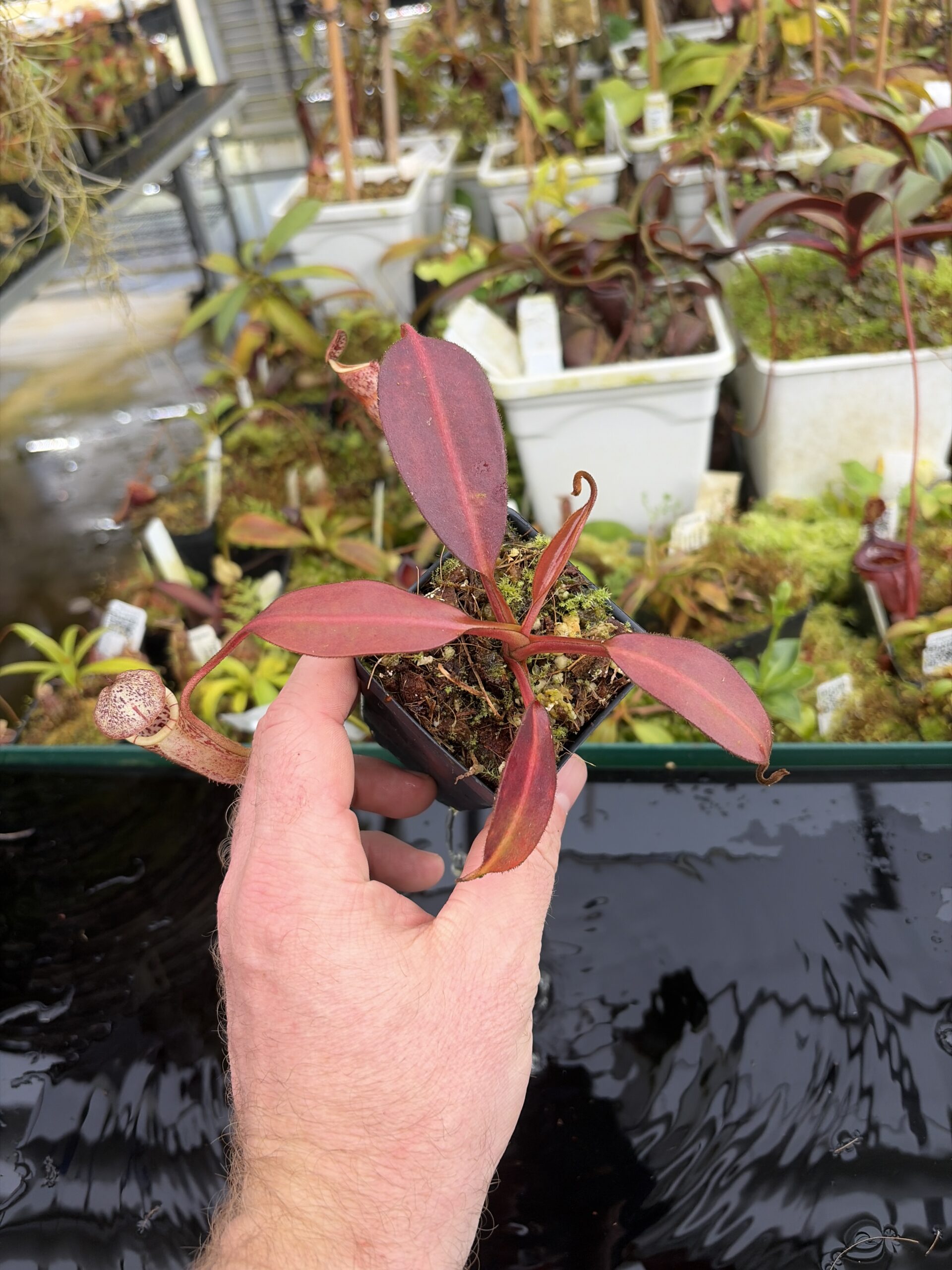
The painted pitcher plant of Kinabalu Park: white pitchers splashed with crimson, a wide flat peristome, and a strict preference for ultramafic soils.
Nepenthes burbidgeae is endemic to Kinabalu Park in Sabah, Borneo, with a patchy range around Mount Kinabalu and neighboring Mount Tambuyukon, including Marai Parai, the Mamut copper mine and Pig Hill. It is usually quoted at 1,200 to 1,800 m, with records from about 1,100 m up to around 2,250 m. It grows in mossy forest, low scrub and on exposed ridge tops, always on ultramafic soils. Hugh Low and Spenser St. John found it on Kinabalu in 1858, Frederick Burbidge collected it in 1878, and it was published in 1882. Hooker named it for Burbidge's wife. It is listed as Endangered, and the 1997 to 1998 El Niño drought and fires hit some populations hard.
Burbidge described the pitchers as white with crimson or blood-tinted blotches, and the upper pitchers keep the same coloring. Lower pitchers reach about 25 cm, rounded-funnel to conical, with fringed wings and a flattened peristome up to 30 mm wide, finely toothed on its inner edge. The ovate lid has a keel and a hooked appendage underneath. Upper pitchers are smaller, funnel-shaped at the base and rounded above.