
Nepenthes diabolica

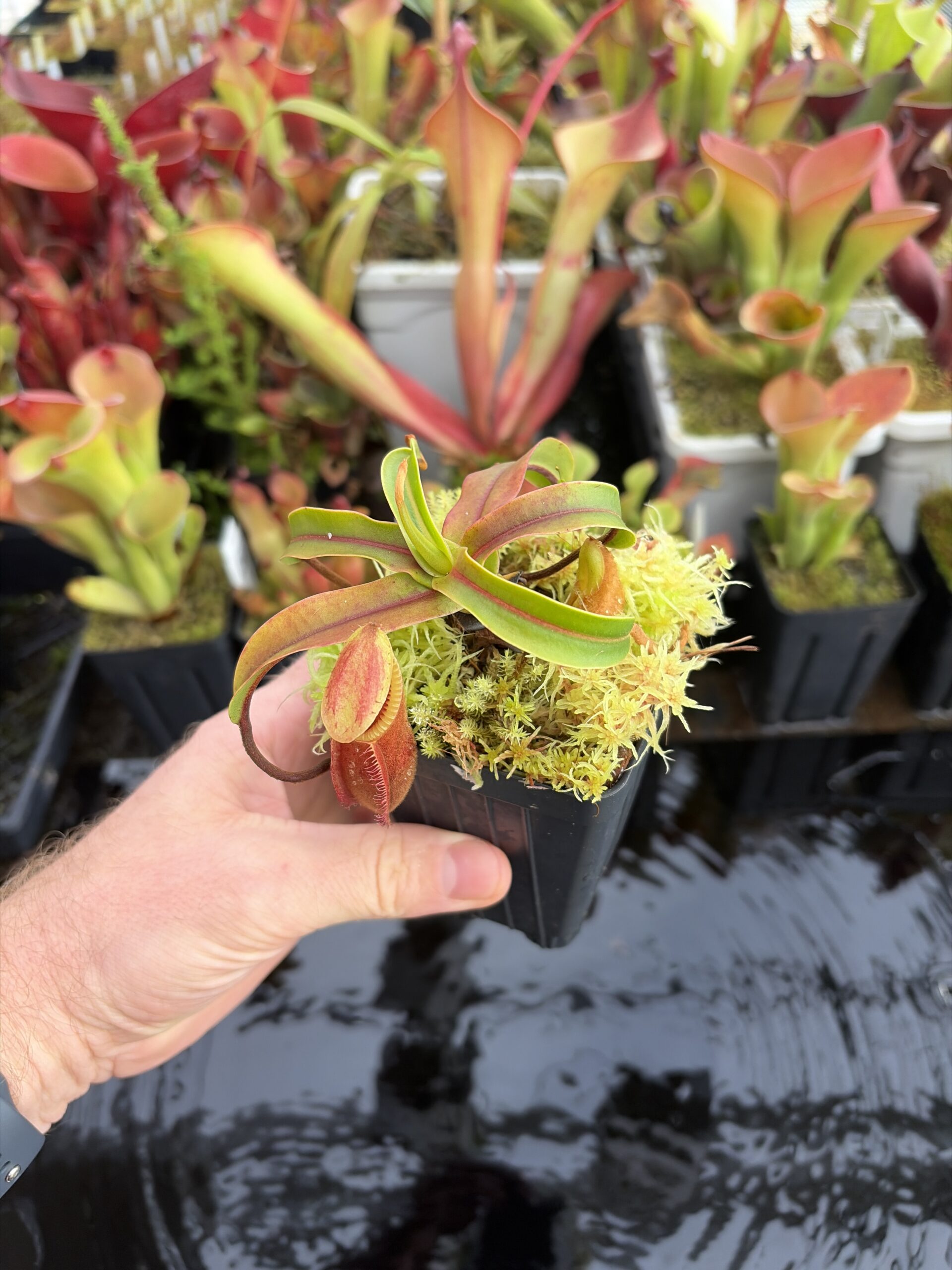
1 specimen in stock, $499.99. Each photo shows the exact plant you receive.

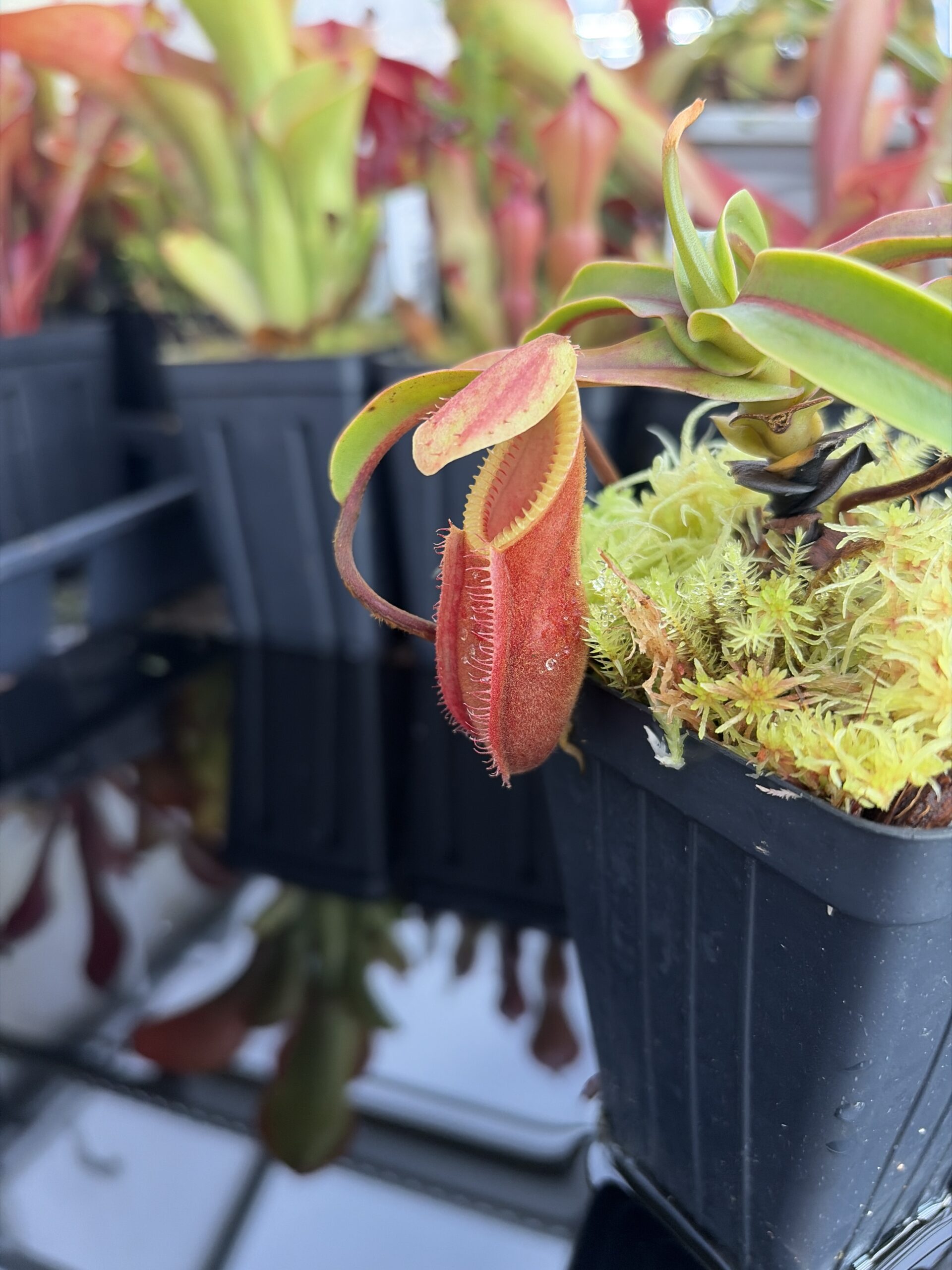
Nepenthes diabolica, Clone 14, specimen H28112
Medium · Clone 14 · Andreas Wistuba
Choose a specimen

$499.99

Size
Medium
Clone
Clone 14
Locality
N/A
Breeder
Andreas Wistuba
Producer code
AW-14
Conditions
Highland
Propagation
Tissue Culture
Specimen
H28112

Nepenthes diabolica

A high-montane Central Sulawesi species from a single mountain at 2,200 to 2,300 m, set apart from N. hamata by a flanged peristome and rufous, woolly pitchers.

Nepenthes diabolica is known from a single mountain in Central Sulawesi, growing terrestrially and epiphytically at roughly 2,200 to 2,300 m. Ch'ien Lee flagged it in 2005 as a N. hamata form with an unusually dense coat of hairs. It circulated in cultivation for fifteen years under informal names, including 'red hairy', before Bianchi, Lee and colleagues formally described it in 2020. The describers assessed it as Critically Endangered because of its tiny range, the few plants recorded and its appeal to collectors.

The formal description sets it apart from N. hamata, its closest relative and the only other Sulawesi species with a comparably elaborate peristome, on two characters: an elaborately flanged peristome and a rufous, woolly indumentum across the pitchers. The epithet means devilish, and refers both to the red of the lower pitchers and to those enlarged, hooked peristome teeth.

Specimens available now

Learn more about this plant

Breeders

Andreas Wistuba

German botanist and nurseryman who has described more than half of all known Heliamphora and many Nepenthes.

Andreas Wistuba is a German botanist from Maselheim who specializes in carnivorous plants. He is credited with describing more than half of all known Heliamphora species, among them H. hispida, H. folliculata and H. chimantensis, and in 2024 he co-described H. electrum. With Joachim Nerz and others he co-described Nepenthes including N. talangensis, N. flava and N. undulatifolia.

His nursery says that it has been in business for more than 25 years. It runs its own propagation laboratory and keeps a gene bank of rare species and forms.

Care

Growing highland Nepenthes

Cool nights, mild days, high humidity and steady airflow, the mountain cloud forest that most of our Nepenthes come from.

Highland Nepenthes grow in montane forest where nights cool down sharply after mild days. Aim for nights about 50 to 55 F (10 to 13 C), days 70 to 78 F (21 to 26 C), humidity above 70 to 80 percent, bright filtered light and constant airflow. The night drop is what highland plants need most; a warm room at night slows them down.

Grow them in an open, airy mix that drains fast, such as long-fiber sphagnum with perlite or bark, and keep it evenly moist with pure water (rain, distilled or reverse osmosis). Never let the pot sit in water for long.

New plants settle in over a few weeks; keep conditions steady while they do. The pitchers catch their own food, so fertilizer, if any, should be light and occasional.