
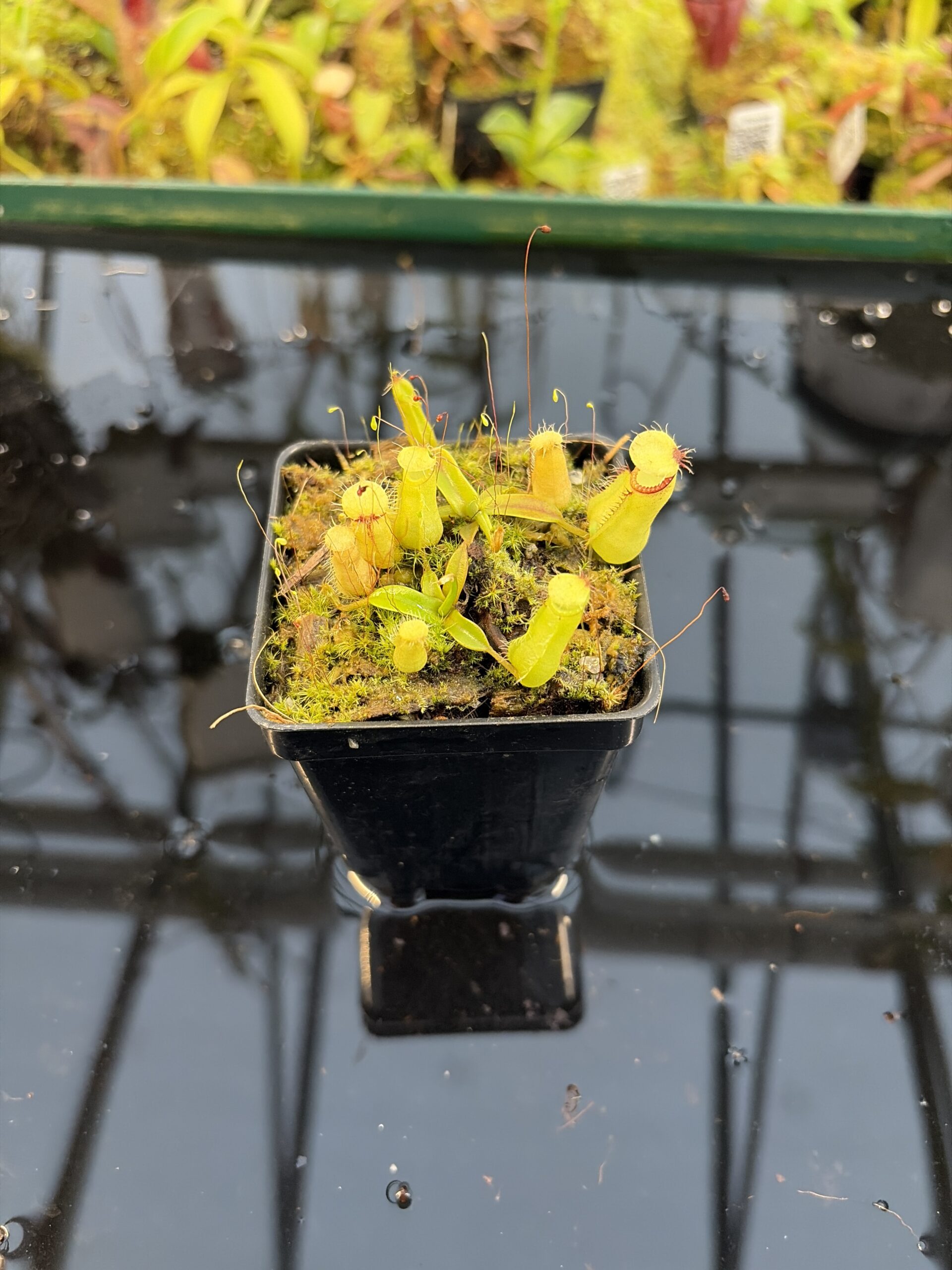
Nepenthes hamata (katopasa × a.w. #1 lumut)

None in stock right now.

Nepenthes hamata (katopasa × a.w. #1 lumut), a past plant
A past plant, shown as an example. It has sold.

We don't have Nepenthes hamata (katopasa × a.w. #1 lumut) in stock right now. Subscribe below to hear about new plants.

Learn more about this plant

Breeders

Jeremiah Harris

Colorado Springs grower and hybridizer, founder of the Colorado Carnivorous Plant Society, and breeder of 'Leviathan'.

Jeremiah Harris grows and breeds Nepenthes in Colorado Springs, and he founded the Colorado Carnivorous Plant Society in 2003. Among his crosses is 'Leviathan', a cross of N. rajah and N. peltata that he first made in 2008. According to Guinness World Records, the name refers both to the biblical sea monster and to his brother Levi, and a male 'Leviathan' plant sold to an anonymous buyer for $4,500 in July 2019. Other growers have since used 'Leviathan' in crosses of their own.

Care

Growing highland Nepenthes

Cool nights, mild days, high humidity and steady airflow, the mountain cloud forest that most of our Nepenthes come from.

Highland Nepenthes grow in montane forest where nights cool down sharply after mild days. Aim for nights about 50 to 55 F (10 to 13 C), days 70 to 78 F (21 to 26 C), humidity above 70 to 80 percent, bright filtered light and constant airflow. The night drop is what highland plants need most; a warm room at night slows them down.

Grow them in an open, airy mix that drains fast, such as long-fiber sphagnum with perlite or bark, and keep it evenly moist with pure water (rain, distilled or reverse osmosis). Never let the pot sit in water for long.

New plants settle in over a few weeks; keep conditions steady while they do. The pitchers catch their own food, so fertilizer, if any, should be light and occasional.