
Nepenthes hirsuta

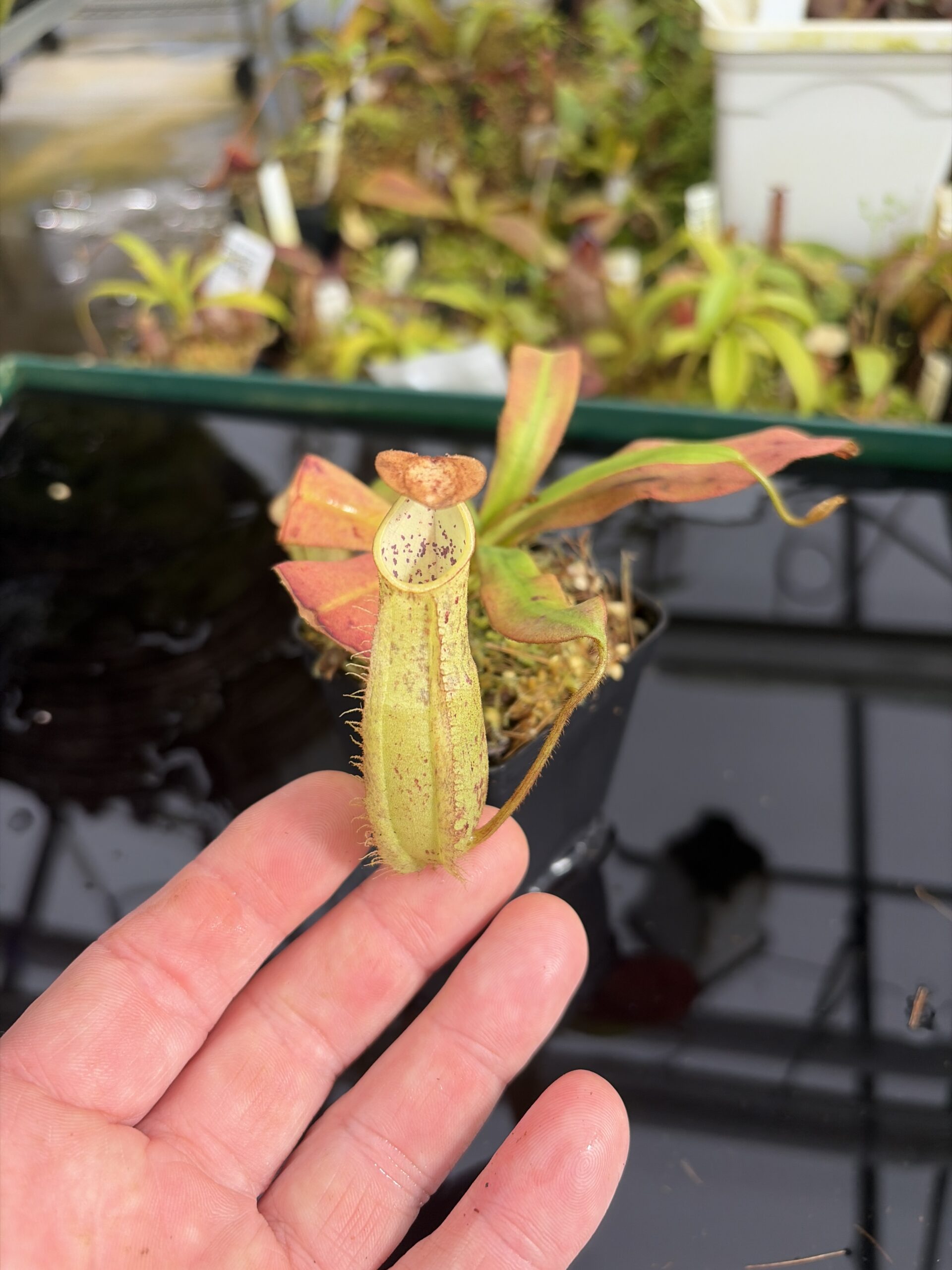
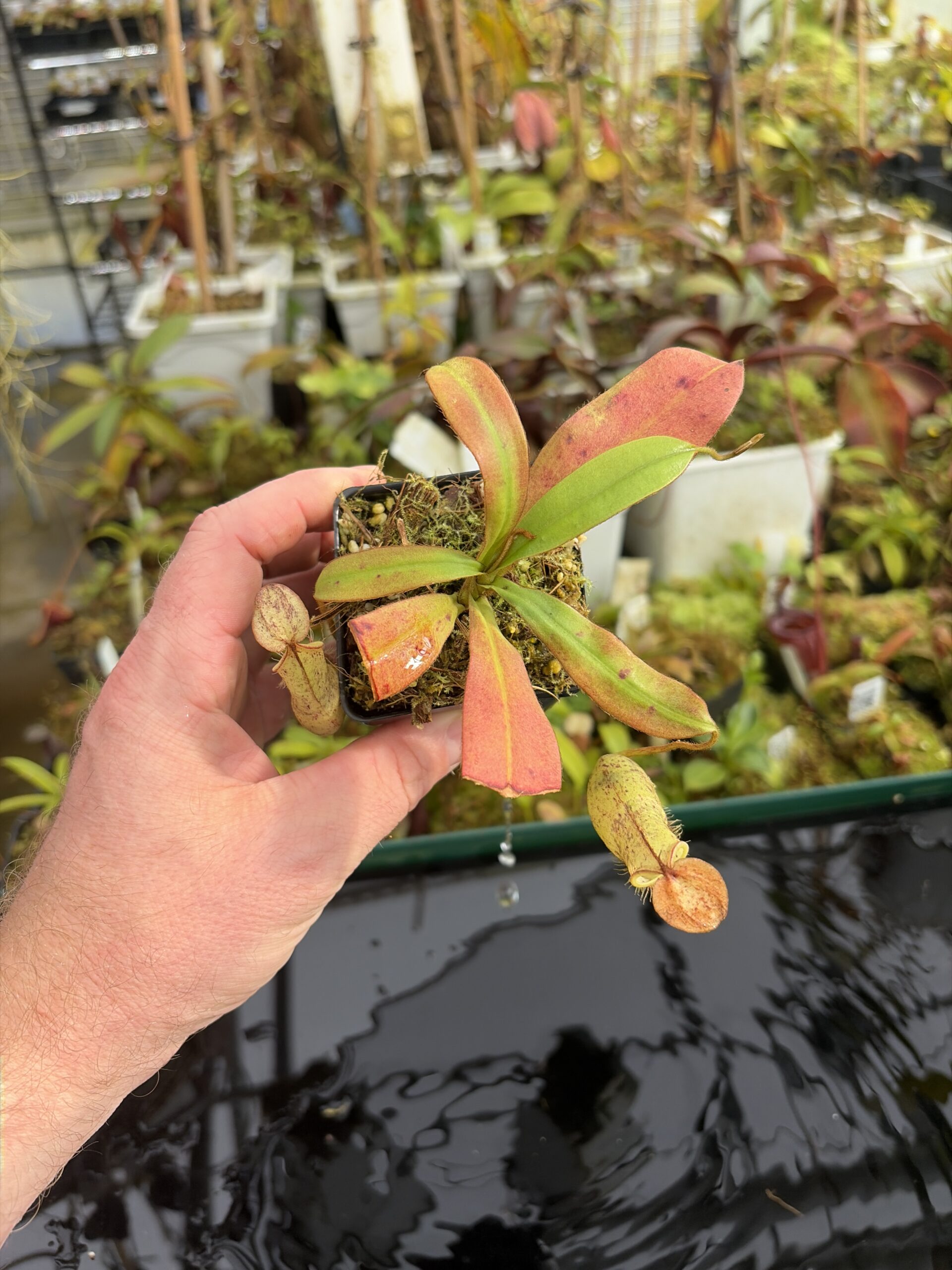
1 specimen in stock, $21.99. Each photo shows the exact plant you receive.

Nepenthes hirsuta, specimen IN27361
Medium · Borneo Exotics
Choose a specimen

$21.99

Size
Medium
Locality
N/A
Breeder
Borneo Exotics
Producer code
BE-3083
Conditions
Intermediate
Propagation
Tissue Culture
Specimen
IN27361

Nepenthes hirsuta

The hairy pitcher plant of Borneo: a low-growing species of kerangas and lower montane banks, coated in thick brown hairs, at about 200 to 1,100 m.

Nepenthes hirsuta is endemic to Borneo, where it grows at about 200 to 1,100 m in kerangas heath forest, on mossy banks in lower montane forest, in open areas and along disturbed lower ridges, mostly on sandstone. Joseph Hooker described it in 1873, and Danser's N. leptochila of 1928 is now treated as the same species. Its closest relatives are N. hispida, which Jan Schlauer treats as a synonym, and N. macrovulgaris. It is assessed as Least Concern.

The epithet is Latin for hairy or bristly, and the common name is the hairy pitcher plant. Thick brown hairs cover the stem, the leaves and even the flower spike. The pitchers are mostly green, some with red blotches on the inner surface. The leaves are leathery, up to about 20 cm, broadest toward the tip and narrowing to a flattened sheath at the base. Natural hybrids are recorded with N. albomarginata and N. ampullaria.

Specimens available now

Learn more about this plant

Breeders

Borneo Exotics

The Nepenthes nursery in Sri Lanka that Rob Cantley founded in 1997.

Borneo Exotics is a Nepenthes nursery in the central highlands of Sri Lanka. Rob Cantley founded it in 1997, and he runs it with his wife and business partner, Diana. It built its own tissue culture laboratory because cuttings proved inconsistent and prone to disease, and it now offers micropropagation services to breeders and nurseries around the world.

Its plants are sold under BE numbers, and other sellers keep those numbers on their listings. Cantley also found a new species in January 1997, on a trip to Mindanao to look for N. truncata seed. It was described in 2011 as N. robcantleyi in his honor, and nearly all plants in cultivation descend from a small batch of seedlings from that one trip.

Care

Growing intermediate Nepenthes

Warm days, mild nights and high humidity: forgiving conditions that suit hybrids with both highland and lowland parents.

Intermediate Nepenthes sit between the cool highland and the warm lowland plants, and many hybrids with parents from both are happiest here. Aim for days about 70 to 80 F (21 to 27 C) and nights about 55 to 65 F (13 to 18 C), with humidity above 70 percent, bright filtered light and good airflow. A modest drop at night helps, but these plants tolerate more warmth than strict highlanders.

Use an open mix that drains fast, such as long-fiber sphagnum with perlite or bark, and keep it evenly moist with pure water (rain, distilled or reverse osmosis).

Give larger plants room to climb or trail as they mature. The pitchers feed the plant; fertilizer, if any, should be light and occasional.

Growing lowland Nepenthes

Warm days and warm nights with high humidity, the tropical lowland forest these plants come from.

Lowland Nepenthes come from hot, humid forest near sea level, and they want warmth around the clock. Aim for days in the 80s F (27 to 32 C) and nights that stay in the 70s F (21 to 26 C), with humidity above 70 percent and bright, indirect light. Cold nights are what hold lowland plants back.

Grow them in an open, airy mix that drains fast and keep it evenly moist with pure water (rain, distilled or reverse osmosis). Good airflow keeps the warm, humid air from going stale.

Lowland plants are often vigorous once settled. The pitchers feed the plant; fertilizer, if any, should be light and occasional.