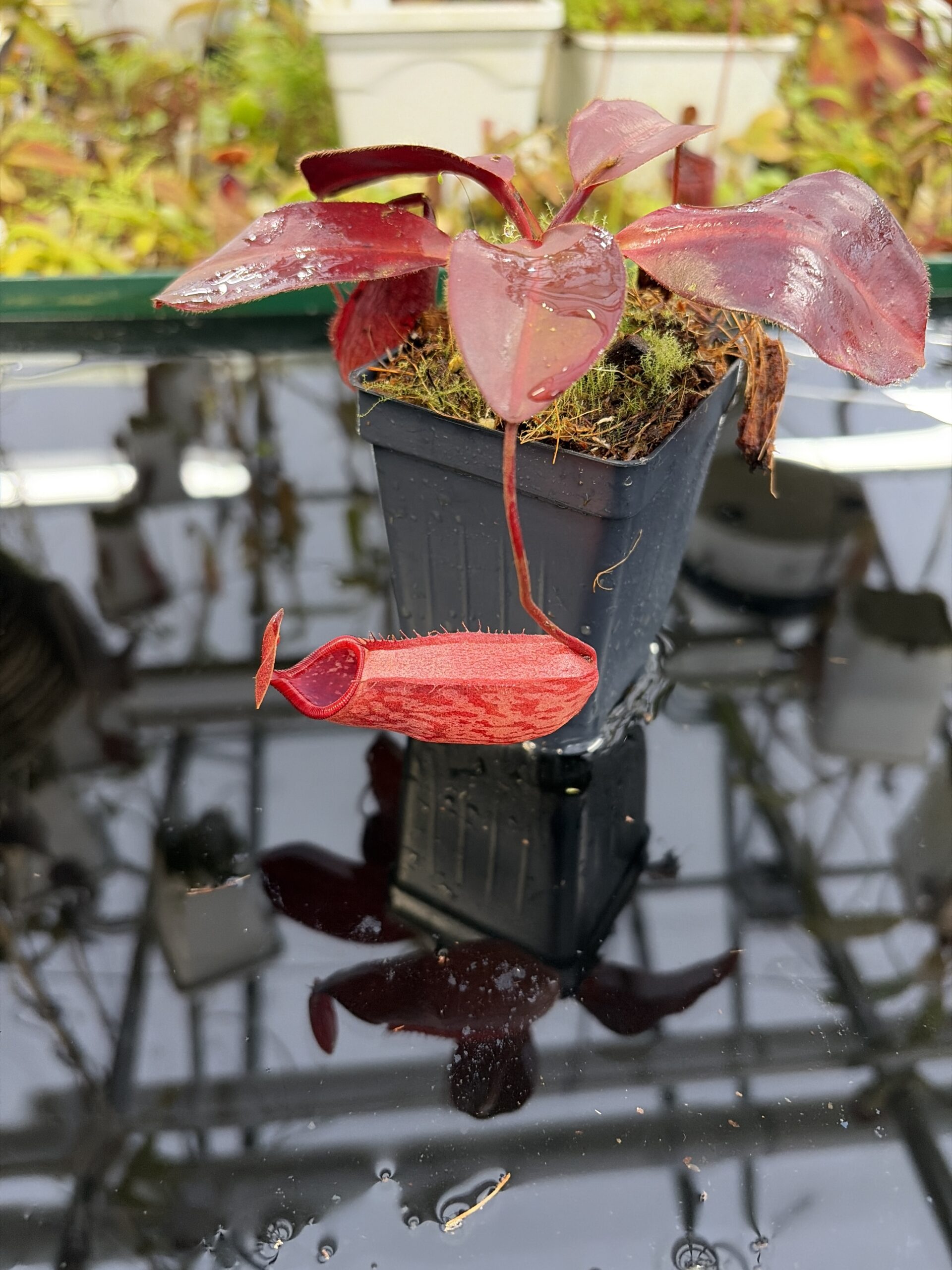
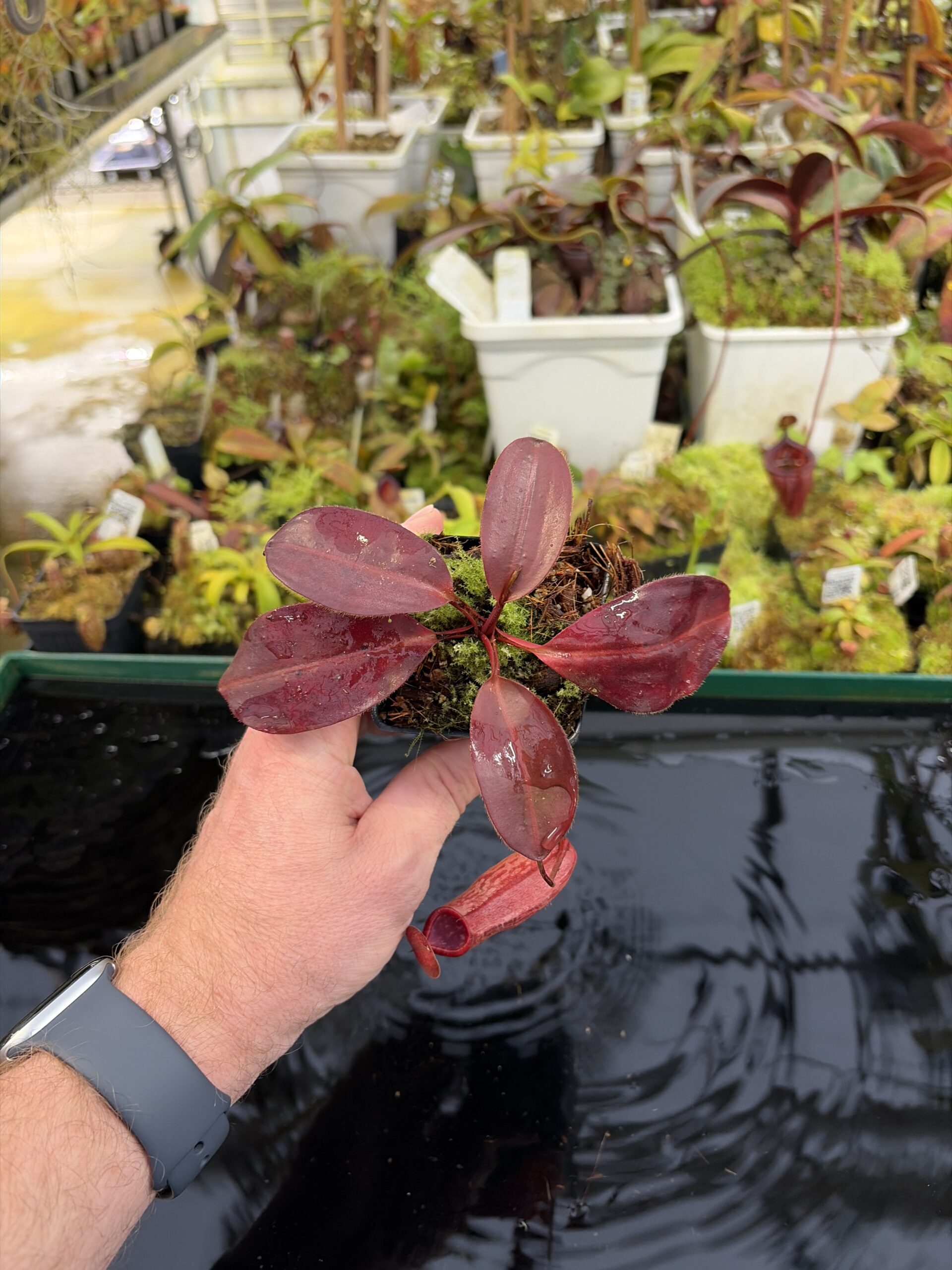
Nepenthes rajah × peltata

1 specimen in stock, $34.99. Each photo shows the exact plant you receive.

Nepenthes rajah × peltata, specimen H27728
Large · Borneo Exotics
Choose a specimen

$34.99

Size
Large
Locality
N/A
Breeder
Borneo Exotics
Conditions
Highland
Propagation
Tissue Culture
Specimen
H27728

Nepenthes rajah × peltata

Two ultramafic specialists: N. rajah from Mount Kinabalu and N. peltata from Mount Hamiguitan on Mindanao, named for its shield-like tendril attachment.

Both parents grow only on ultramafic soils, on mountains in two countries. N. rajah is endemic to Mount Kinabalu and Mount Tambuyukon in Sabah, Borneo, at 1,500 to 2,650 m, where groundwater seeps. N. peltata is known only from the upper slopes of Mount Hamiguitan on Mindanao in the Philippines, from about 865 m to the summit at 1,635 m.

N. rajah is known for the largest pitchers in the genus, with a broad, scalloped red peristome and a huge vaulted lid. N. peltata, described by Kurata in 2008, makes ovoid lower pitchers up to about 28 cm with a ribbed, cylindrical peristome and a large lid; its name refers to the shield-like attachment of the tendril to the leaf. Documentation on the cross itself is limited, so expect individual character.

Specimens available now

Learn more about this plant

Parents

Nepenthes rajah

The king of Nepenthes: endemic to Kinabalu and Tambuyukon on ultramafic soils, with the largest pitchers in the genus and a broad, toothed red peristome.

Nepenthes peltata

A Mount Hamiguitan endemic on ultramafic soils, with a shield-like tendril attachment shared with N. rajah and broad, ribbed lower pitchers.

Care

Growing highland Nepenthes

Cool nights, mild days, high humidity and steady airflow, the mountain cloud forest that most of our Nepenthes come from.

Highland Nepenthes grow in montane forest where nights cool down sharply after mild days. Aim for nights about 50 to 55 F (10 to 13 C), days 70 to 78 F (21 to 26 C), humidity above 70 to 80 percent, bright filtered light and constant airflow. The night drop is what highland plants need most; a warm room at night slows them down.

Grow them in an open, airy mix that drains fast, such as long-fiber sphagnum with perlite or bark, and keep it evenly moist with pure water (rain, distilled or reverse osmosis). Never let the pot sit in water for long.

New plants settle in over a few weeks; keep conditions steady while they do. The pitchers catch their own food, so fertilizer, if any, should be light and occasional.

Growing intermediate Nepenthes

Warm days, mild nights and high humidity: forgiving conditions that suit hybrids with both highland and lowland parents.

Intermediate Nepenthes sit between the cool highland and the warm lowland plants, and many hybrids with parents from both are happiest here. Aim for days about 70 to 80 F (21 to 27 C) and nights about 55 to 65 F (13 to 18 C), with humidity above 70 percent, bright filtered light and good airflow. A modest drop at night helps, but these plants tolerate more warmth than strict highlanders.

Use an open mix that drains fast, such as long-fiber sphagnum with perlite or bark, and keep it evenly moist with pure water (rain, distilled or reverse osmosis).

Give larger plants room to climb or trail as they mature. The pitchers feed the plant; fertilizer, if any, should be light and occasional.