
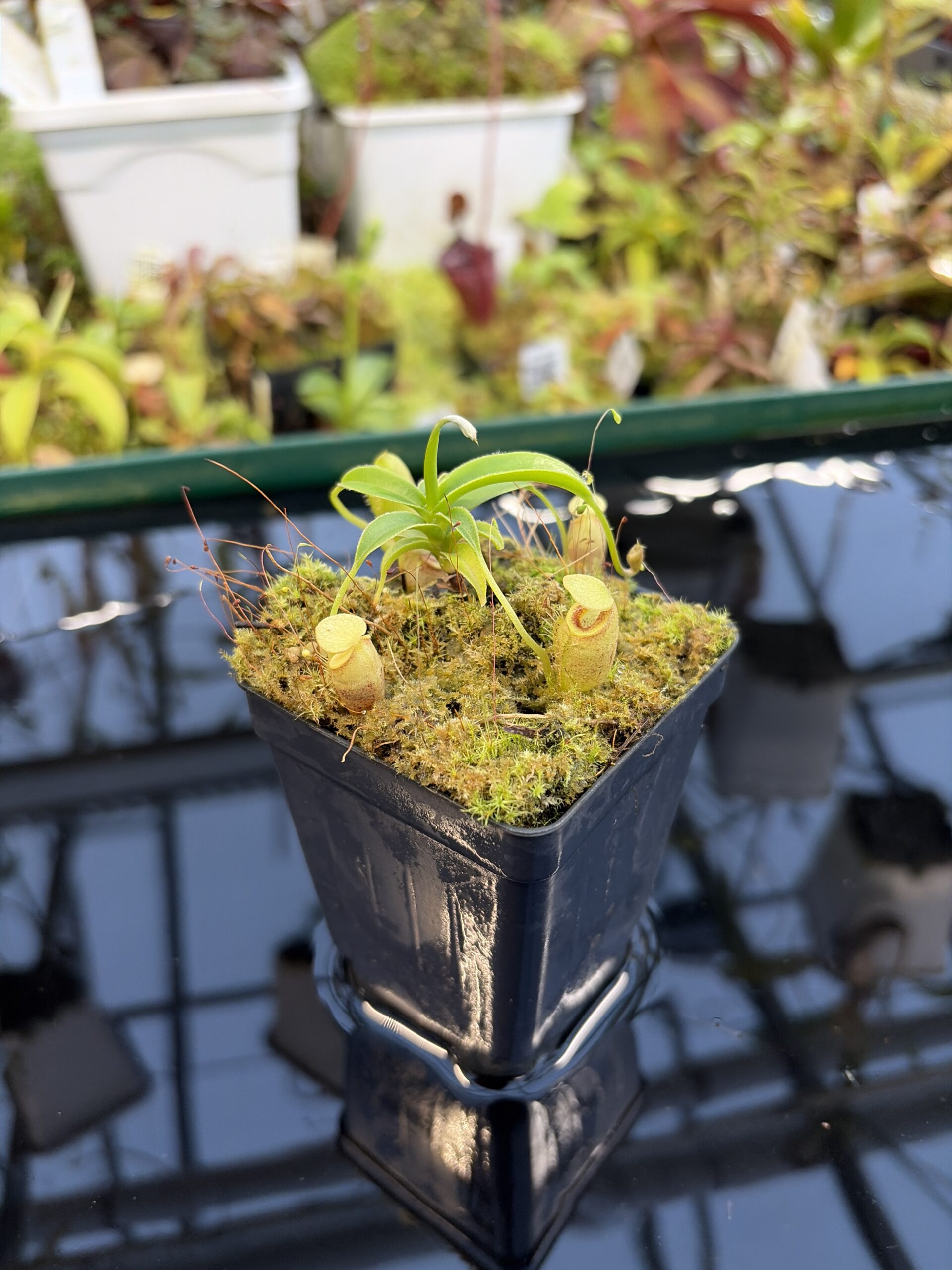
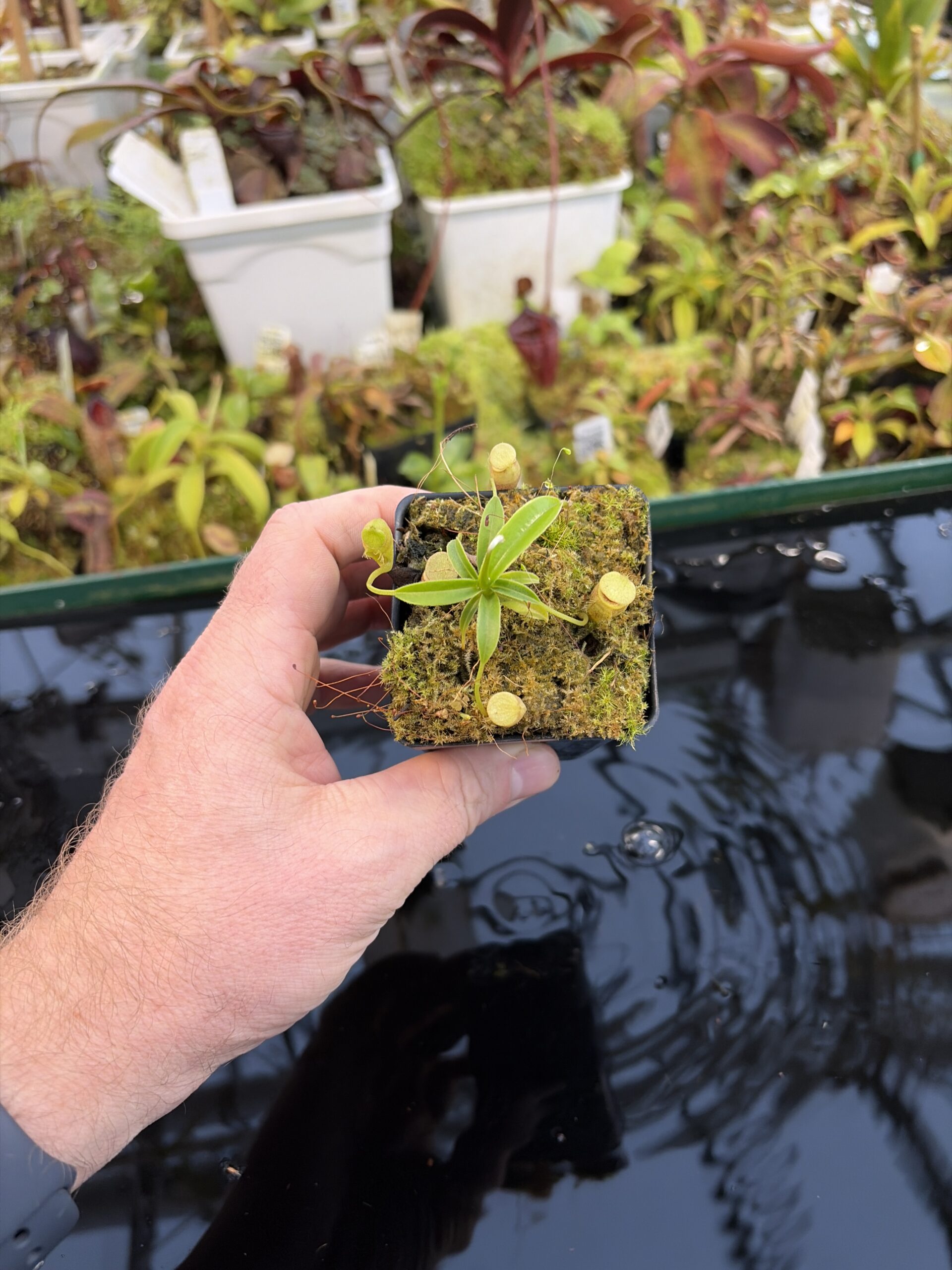
Nepenthes talangensis

1 specimen in stock, $28.99. Each photo shows the exact plant you receive.

Nepenthes talangensis, specimen H28000
Small · Borneo Exotics
Choose a specimen

$28.99

Size
Small
Locality
N/A
Breeder
Borneo Exotics
Producer code
BE-3835
Conditions
Highland
Propagation
Tissue Culture
Specimen
H28000

Nepenthes talangensis

A small-pitchered highland species from Gunung Talang in West Sumatra, with a strongly incurved, toothed peristome and very sticky pitcher fluid.

N. talangensis is endemic to West Sumatra, known from Gunung Talang and nearby Bukit Gombak at 1,800 to 2,500 m. It grows in mossy upper montane forest, almost always on the ground, either in shade or among open, stunted shrubs in strong sun. Bünnemeijer collected it as early as 1918, but it was long confused with N. bongso until Nerz and Wistuba described it in 1994. Jebb and Cheek later sank it into N. bongso, but Clarke and McPherson kept it separate. It is listed as Endangered.

The name means from Talang. It is a compact plant with small pitchers: lowers up to about 10 cm, ovate, yellowish to olive green speckled red or purple, sometimes with fringed wings, and uppers up to about 12 cm. The peristome is strongly incurved and toothed, yellow to orange when fresh and ageing to dark red or purple. The pitcher fluid is very viscous, and the traps are thought to work partly like flypaper. Its closest relative is N. aristolochioides, and a natural hybrid with N. inermis is named N. ×pyriformis.

Specimens available now

Learn more about this plant

Breeders

Borneo Exotics

The Nepenthes nursery in Sri Lanka that Rob Cantley founded in 1997.

Borneo Exotics is a Nepenthes nursery in the central highlands of Sri Lanka. Rob Cantley founded it in 1997, and he runs it with his wife and business partner, Diana. It built its own tissue culture laboratory because cuttings proved inconsistent and prone to disease, and it now offers micropropagation services to breeders and nurseries around the world.

Its plants are sold under BE numbers, and other sellers keep those numbers on their listings. Cantley also found a new species in January 1997, on a trip to Mindanao to look for N. truncata seed. It was described in 2011 as N. robcantleyi in his honor, and nearly all plants in cultivation descend from a small batch of seedlings from that one trip.

Care

Growing highland Nepenthes

Cool nights, mild days, high humidity and steady airflow, the mountain cloud forest that most of our Nepenthes come from.

Highland Nepenthes grow in montane forest where nights cool down sharply after mild days. Aim for nights about 50 to 55 F (10 to 13 C), days 70 to 78 F (21 to 26 C), humidity above 70 to 80 percent, bright filtered light and constant airflow. The night drop is what highland plants need most; a warm room at night slows them down.

Grow them in an open, airy mix that drains fast, such as long-fiber sphagnum with perlite or bark, and keep it evenly moist with pure water (rain, distilled or reverse osmosis). Never let the pot sit in water for long.

New plants settle in over a few weeks; keep conditions steady while they do. The pitchers catch their own food, so fertilizer, if any, should be light and occasional.