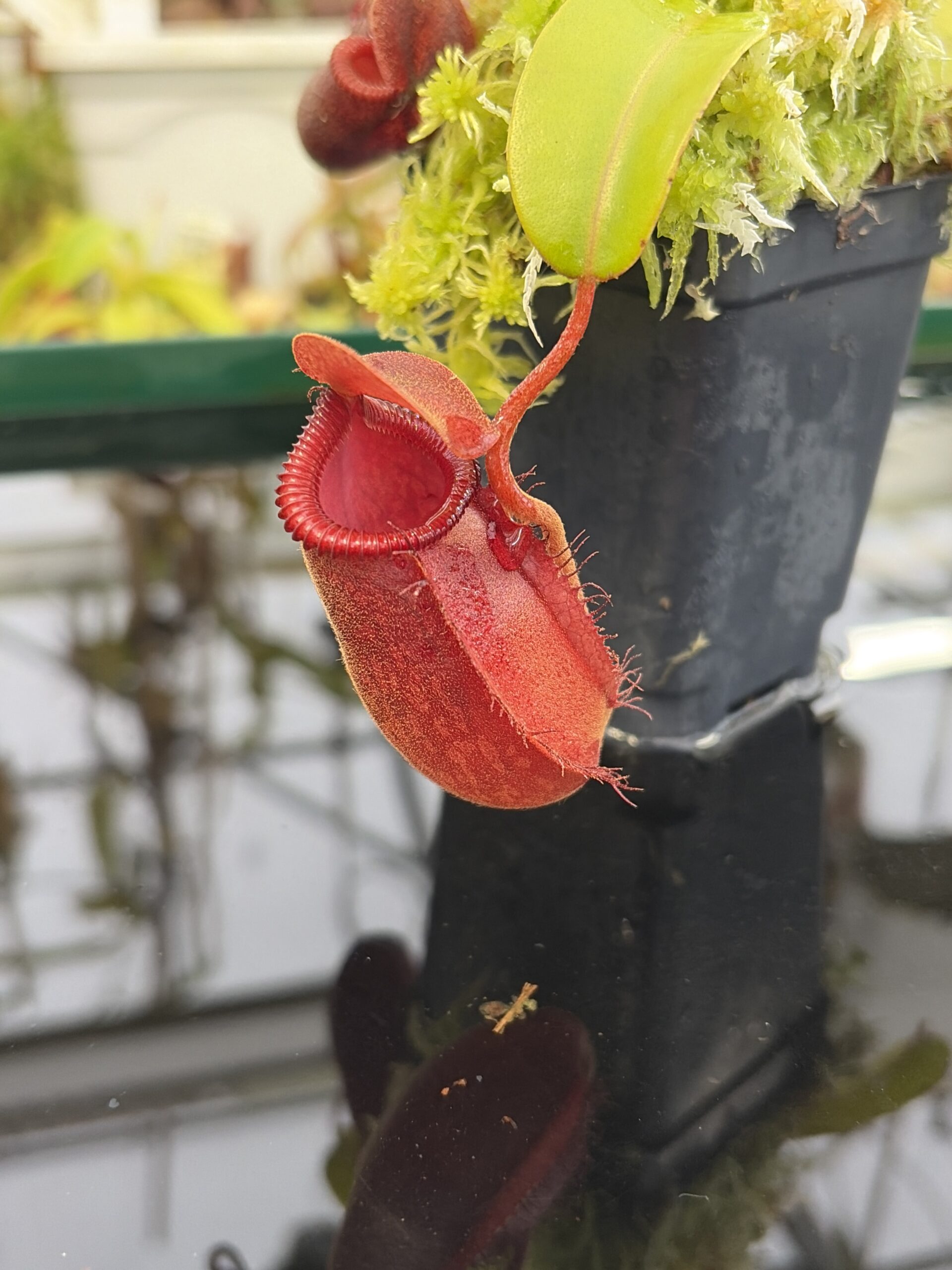
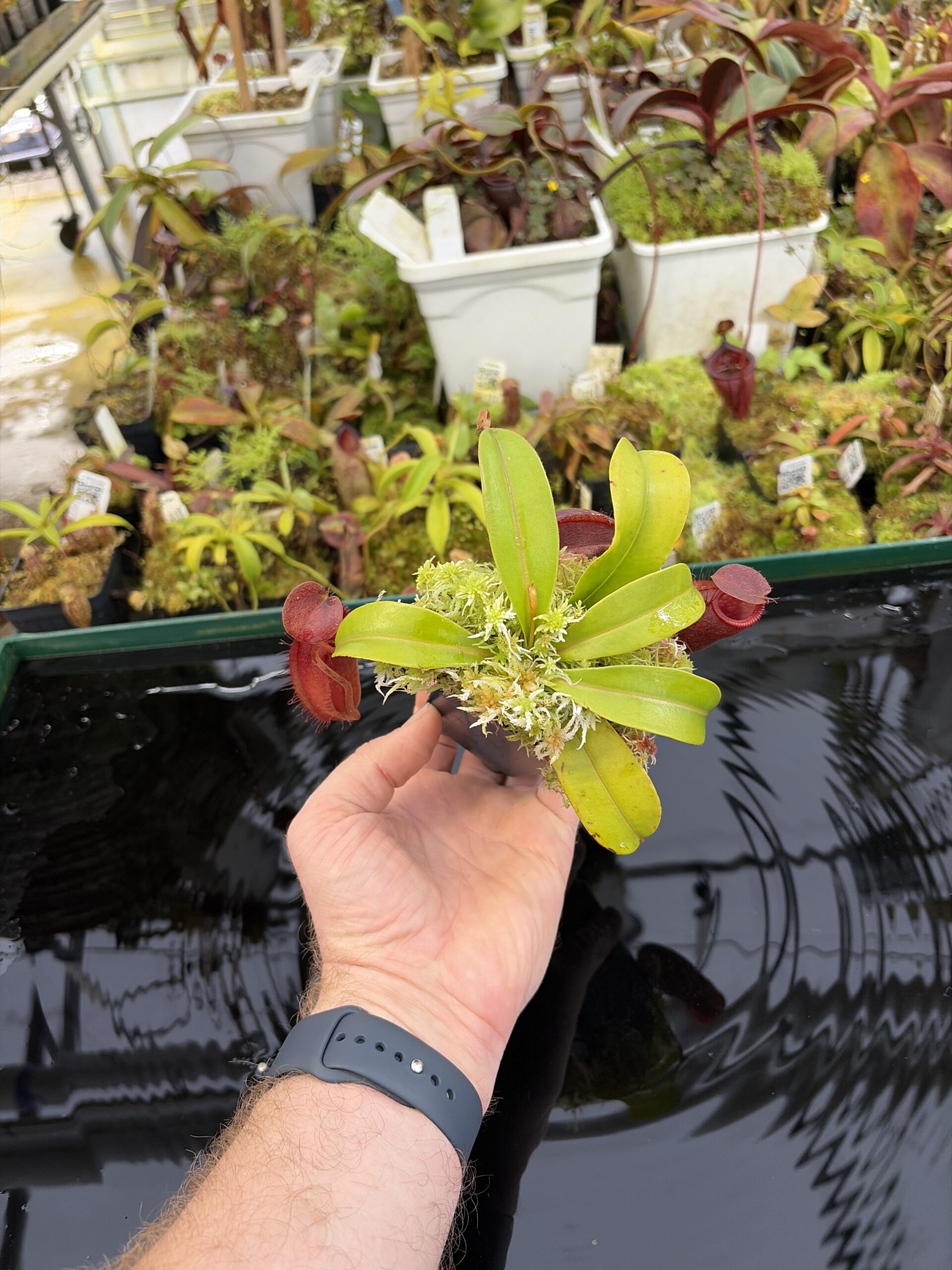
Nepenthes undulatifolia × diabolica

1 specimen in stock, $182.99. Each photo shows the exact plant you receive.

Nepenthes undulatifolia × diabolica, specimen H27716
Large · Andreas Wistuba
Choose a specimen

$182.99

Size
Large
Locality
N/A
Breeder
Andreas Wistuba
Conditions
Highland
Propagation
Seed Grown
Specimen
H27716

Nepenthes undulatifolia × diabolica

Two Sulawesi highland species in one plant: the wavy-leaved N. undulatifolia from the south east and the woolly, hook-toothed N. diabolica from the center.

Both parents are Sulawesi endemics, from different parts of the island. Nepenthes undulatifolia is known only from South East Sulawesi at around 1,800 m, and was described in 2011 by Nerz, Wistuba and colleagues. Nepenthes diabolica is known from a single mountain in Central Sulawesi, growing on the ground and as an epiphyte at roughly 2,200 to 2,300 m. It circulated in cultivation for years as a form of N. hamata before Bianchi and colleagues described it in 2020.

N. undulatifolia is named for its wavy leaf margins. Growers describe rounded, tubby pitchers in colors from lime green to deep red, and fine white hairs on the leaves and stem. N. diabolica brings an elaborately flanged peristome with enlarged, hooked teeth and a rufous, woolly indumentum across the pitchers; the epithet means devilish. Documentation on this cross is limited, so expect individual character.

Specimens available now

Learn more about this plant

Parents

Nepenthes undulatifolia

A highland species from South East Sulawesi described in 2011, named for its wavy leaf margins, with pitchers that growers say vary widely in color.

Nepenthes diabolica

A high-montane Central Sulawesi species from a single mountain at 2,200 to 2,300 m, set apart from N. hamata by a flanged peristome and rufous, woolly pitchers.

Care

Growing highland Nepenthes

Cool nights, mild days, high humidity and steady airflow, the mountain cloud forest that most of our Nepenthes come from.

Highland Nepenthes grow in montane forest where nights cool down sharply after mild days. Aim for nights about 50 to 55 F (10 to 13 C), days 70 to 78 F (21 to 26 C), humidity above 70 to 80 percent, bright filtered light and constant airflow. The night drop is what highland plants need most; a warm room at night slows them down.

Grow them in an open, airy mix that drains fast, such as long-fiber sphagnum with perlite or bark, and keep it evenly moist with pure water (rain, distilled or reverse osmosis). Never let the pot sit in water for long.

New plants settle in over a few weeks; keep conditions steady while they do. The pitchers catch their own food, so fertilizer, if any, should be light and occasional.