
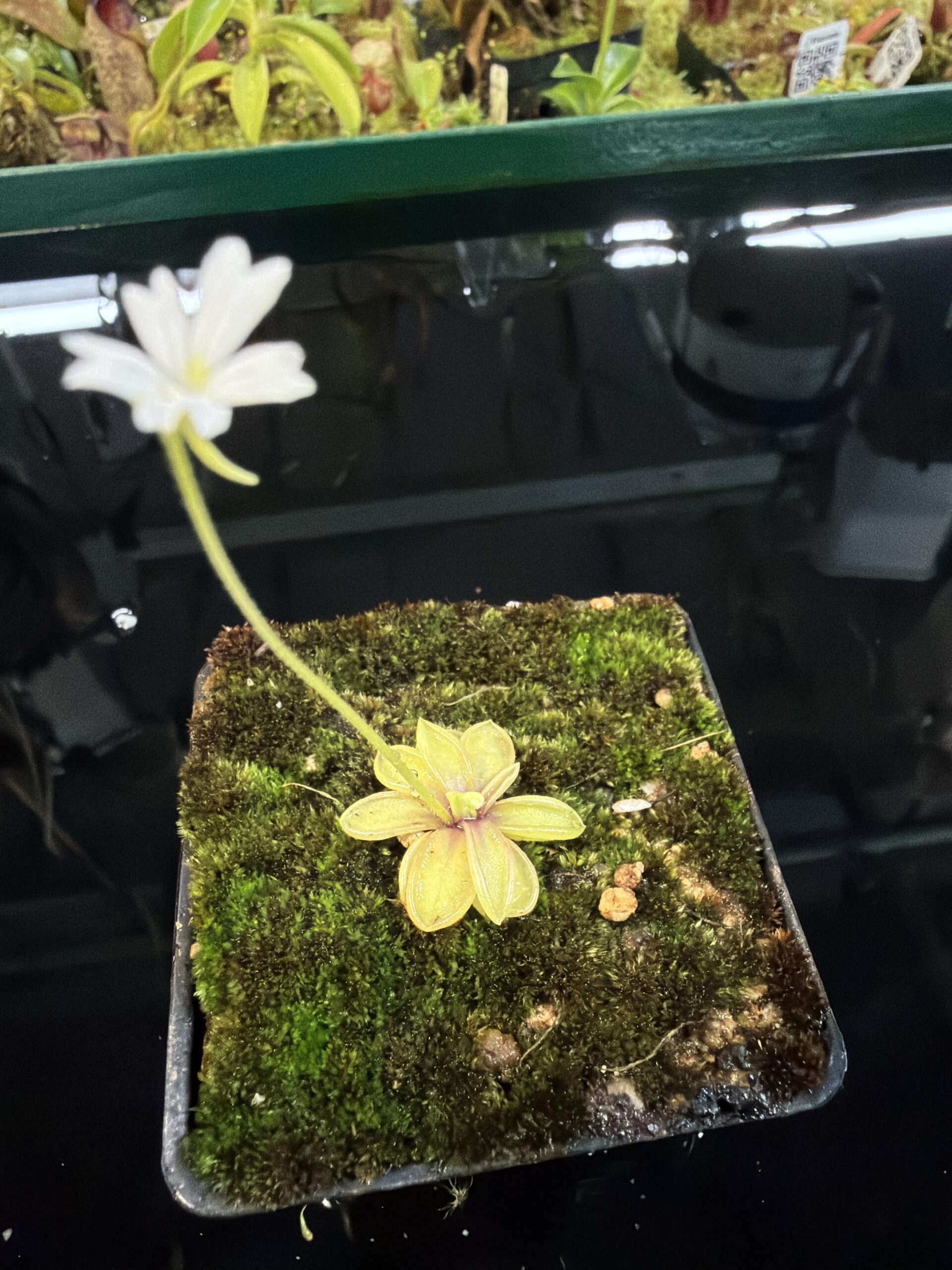
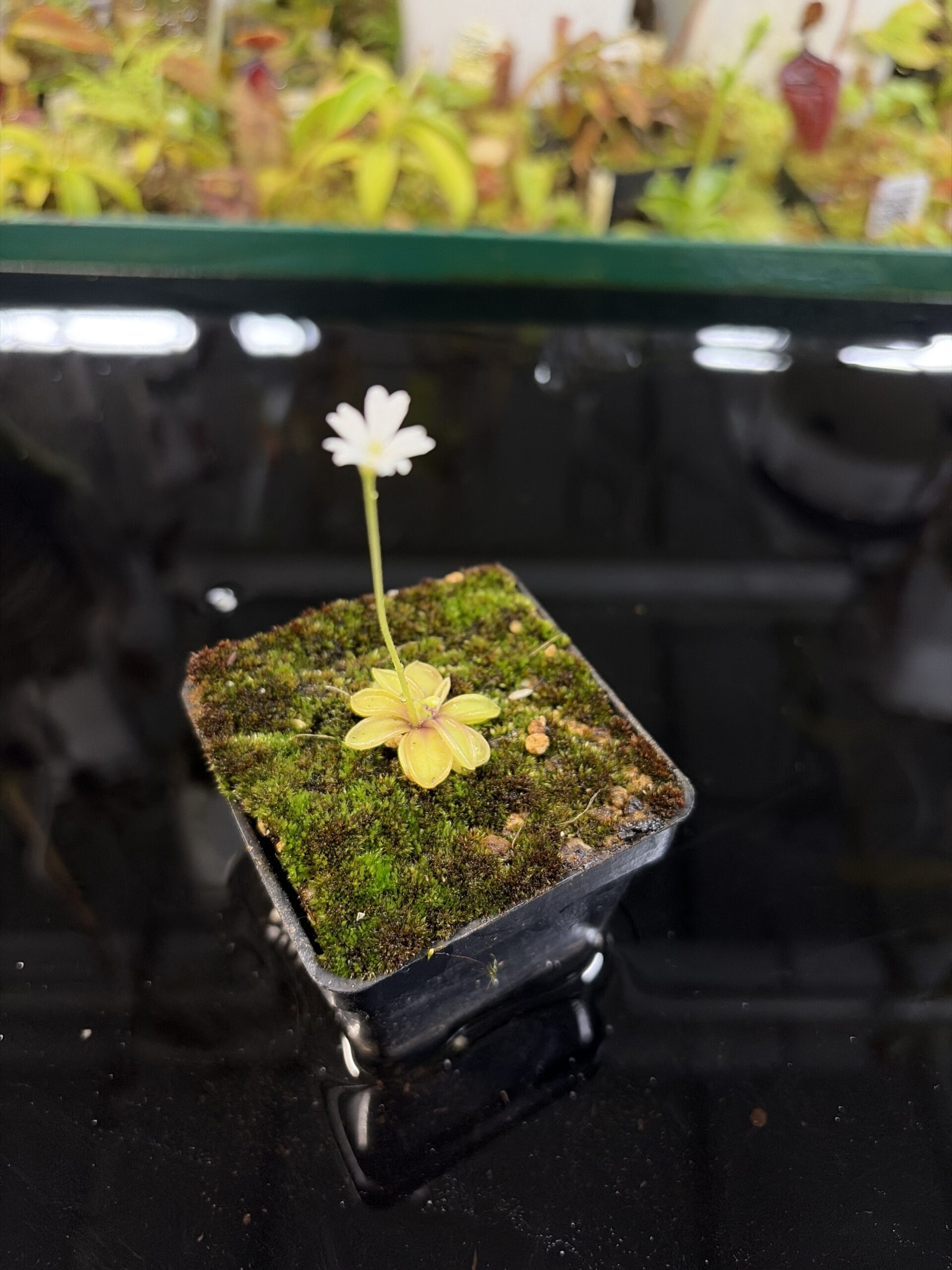
Pinguicula emarginata

1 specimen in stock, $23.99. Each photo shows the exact plant you receive.

Pinguicula emarginata, specimen IN27754
Extra Small · Best Carnivorous Plants
Choose a specimen

$23.99

Size
Extra Small
Locality
N/A
Breeder
Best Carnivorous Plants
Producer code
BCP-1284
Conditions
Intermediate
Propagation
Tissue Culture
Specimen
IN27754

Pinguicula emarginata

A Mexican cloud-forest butterwort from wet sandstone walls on the Veracruz-Puebla border, with white to violet flowers lined in darker veins.

Pinguicula emarginata is a butterwort from eastern Mexico, described in 1986 by Sergio Zamudio and Jerzy Rzedowski. The type came from Tatzayanala in Atzalan, Veracruz, on rocks along a river bank at about 1,400 m, and it also grows near the Puebla border on stream banks in cloud forest at about 1,500 m. There it covers vertical sandstone walls among mosses near waterfalls, rooted into a thin, permanently wet layer of humus and shaded from direct sun.

The rosettes hold 5 to 16 elliptic to obovate leaves, 1 to 5 cm long, usually plain green but sometimes maroon red. Flowers vary a great deal: from nearly white with faint veins to purple-pink with darker veins, with a yellow patch at the base of the lower lip that ranges from bright to barely visible. After pollination the flower stalks bend back against the rock, which keeps the seed on the mossy wall. The original description says it forms no winter rosette, though some plants in habitat have been seen making succulent winter leaves.

Specimens available now

Learn more about this plant

Care

Growing Mexican butterworts

Bright light and a lean, open mix; most rest drier in winter, while the year-round growers stay moist.

Most of our Pinguicula are Mexican butterworts. Many grow sticky, carnivorous leaves through the warm, wet season, then form a tight rosette of small, succulent leaves for a drier winter. Others, such as P. gigantea and P. emarginata, keep their carnivorous leaves all year. We grow them intermediate, in bright light with steady airflow.

Most do best in a lean, open mix that drains fast, such as perlite, pumice or gypsum sand with a little peat. Through the summer, water with pure water and keep the mix moist. When a plant forms its winter rosette, water much less, just enough to stop it shriveling; year-round growers stay evenly moist. Keep water off the leaves.

The leaves catch small insects such as fungus gnats on their own. No fertilizer is needed.