
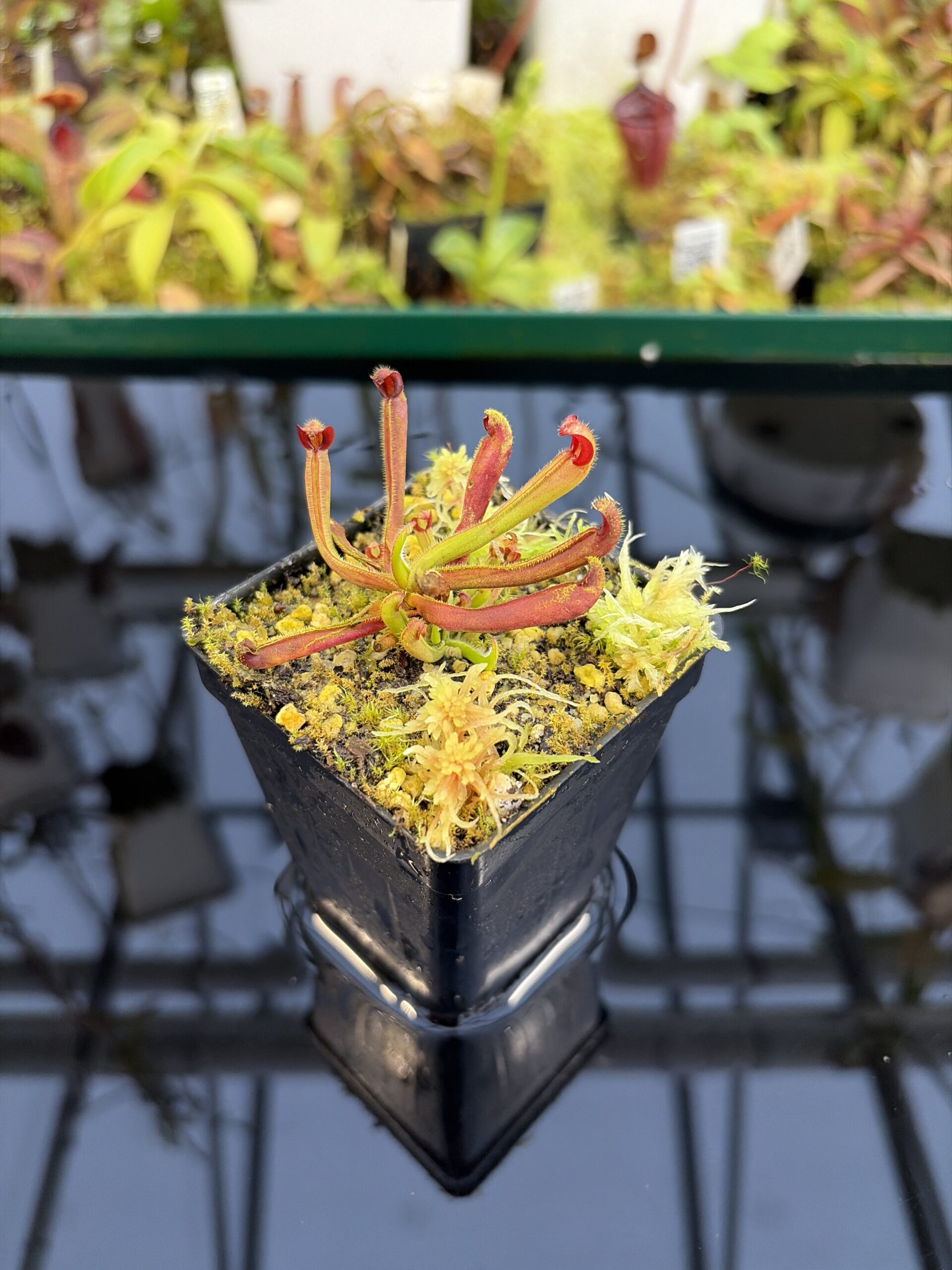
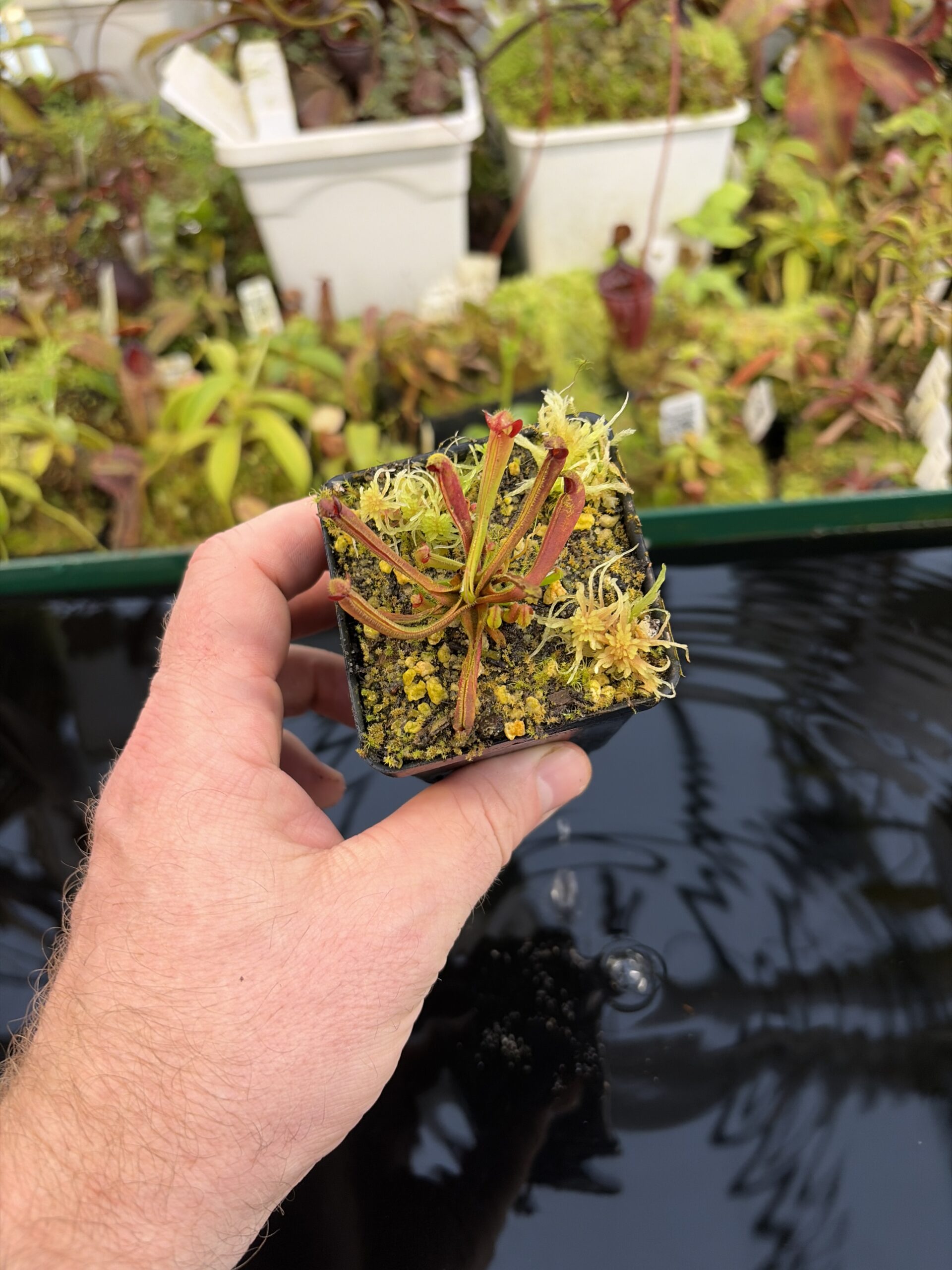
Heliamphora nutans

1 specimen in stock, $26.99. Each photo shows the exact plant you receive.

Heliamphora nutans, specimen H28082
Small · Borneo Exotics
Choose a specimen

$26.99

Size
Small
Locality
N/A
Breeder
Borneo Exotics
Producer code
BE-3251
Conditions
Highland
Propagation
Tissue Culture
Specimen
H28082

Specimens available now

Learn more about this plant

Breeders

Borneo Exotics

The Nepenthes nursery in Sri Lanka that Rob Cantley founded in 1997.

Borneo Exotics is a Nepenthes nursery in the central highlands of Sri Lanka. Rob Cantley founded it in 1997, and he runs it with his wife and business partner, Diana. It built its own tissue culture laboratory because cuttings proved inconsistent and prone to disease, and it now offers micropropagation services to breeders and nurseries around the world.

Its plants are sold under BE numbers, and other sellers keep those numbers on their listings. Cantley also found a new species in January 1997, on a trip to Mindanao to look for N. truncata seed. It was described in 2011 as N. robcantleyi in his honor, and nearly all plants in cultivation descend from a small batch of seedlings from that one trip.

Care

Growing highland Heliamphora

Very bright light, cool roots and high humidity: the sun pitchers of the South American tepui summits.

Heliamphora, the sun pitchers, come from the tepui summits of the Guiana Highlands in Venezuela, Guyana and Brazil, mostly at 4,000 to 9,200 ft (1,200 to 2,800 m). Grow them highland: nights about 50 to 55 F (10 to 13 C), days no warmer than about 79 F (26 C), humidity above 70 percent, gentle air movement and very bright light, from the sides as well as above.

Use an open mix such as long-fiber sphagnum with perlite and never let it dry out. Water at the soil, not over the plant, with pure water (distilled or reverse osmosis).

Heat is the main risk. Long warm spells can kill large plants, and cool roots matter more than a cool night. Heliamphora need feeding to grow well: feed adult pitchers about once a month with dilute orchid fertilizer, and keep it out of the soil, where too much is a quick way to lose a plant.