
Nepenthes ampullaria
A lowland Nepenthes of the Sunda region and New Guinea that carpets the forest floor with small, round, lidless-looking pitchers built to catch falling leaf litter.
Nepenthes ampullaria has one of the widest ranges in the genus: Borneo, Sumatra, Peninsular Malaysia, Singapore, southern Thailand, the Moluccas and New Guinea, plus many smaller islands. Most populations sit in the lowlands. On Borneo it grows mainly on flat ground below about 1,000 m, in kerangas, peat swamp and degraded swamp forest, always in damp, shady places. William Jack described it in 1835, and the name comes from the Latin ampulla, a flask.
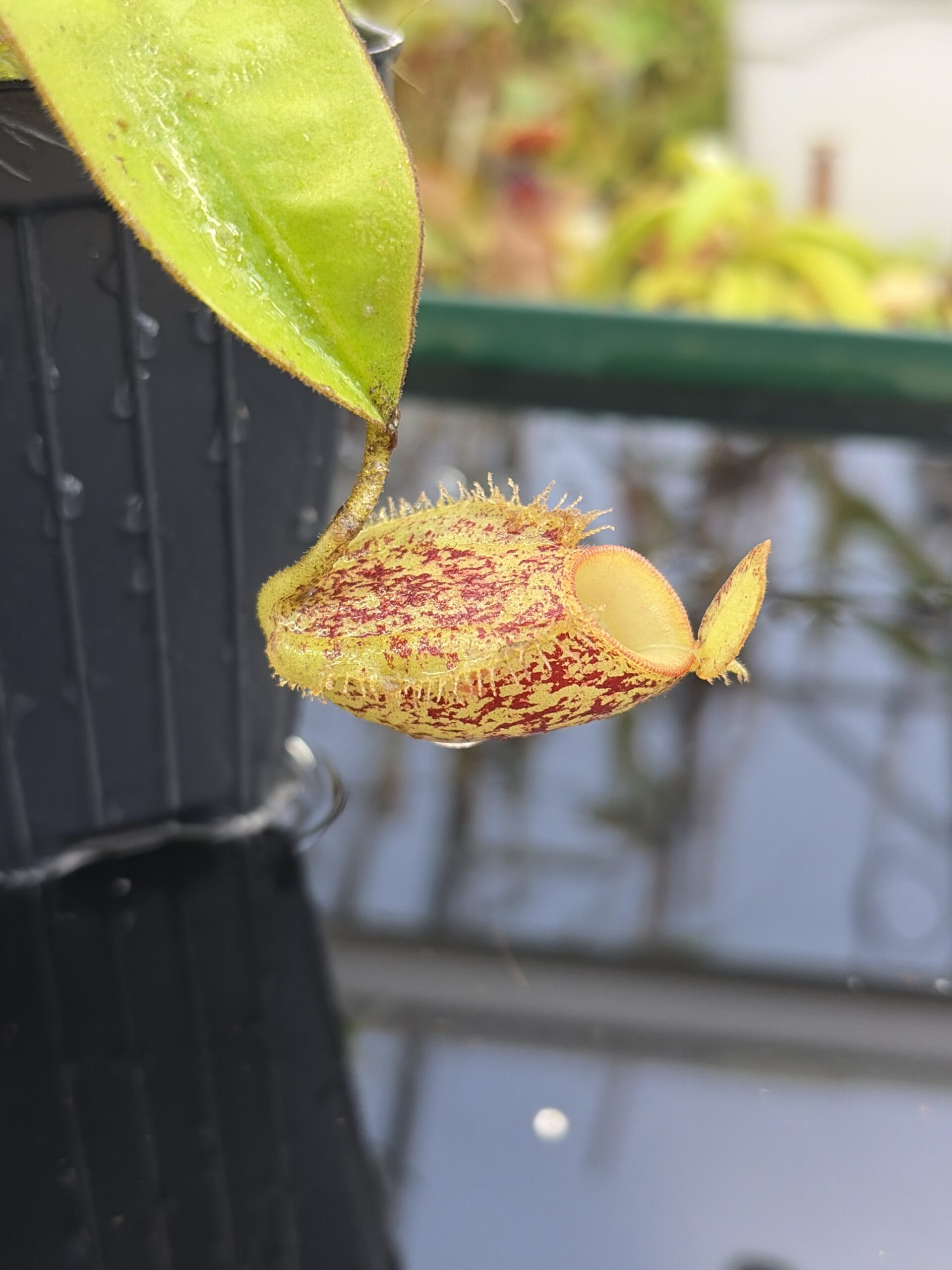
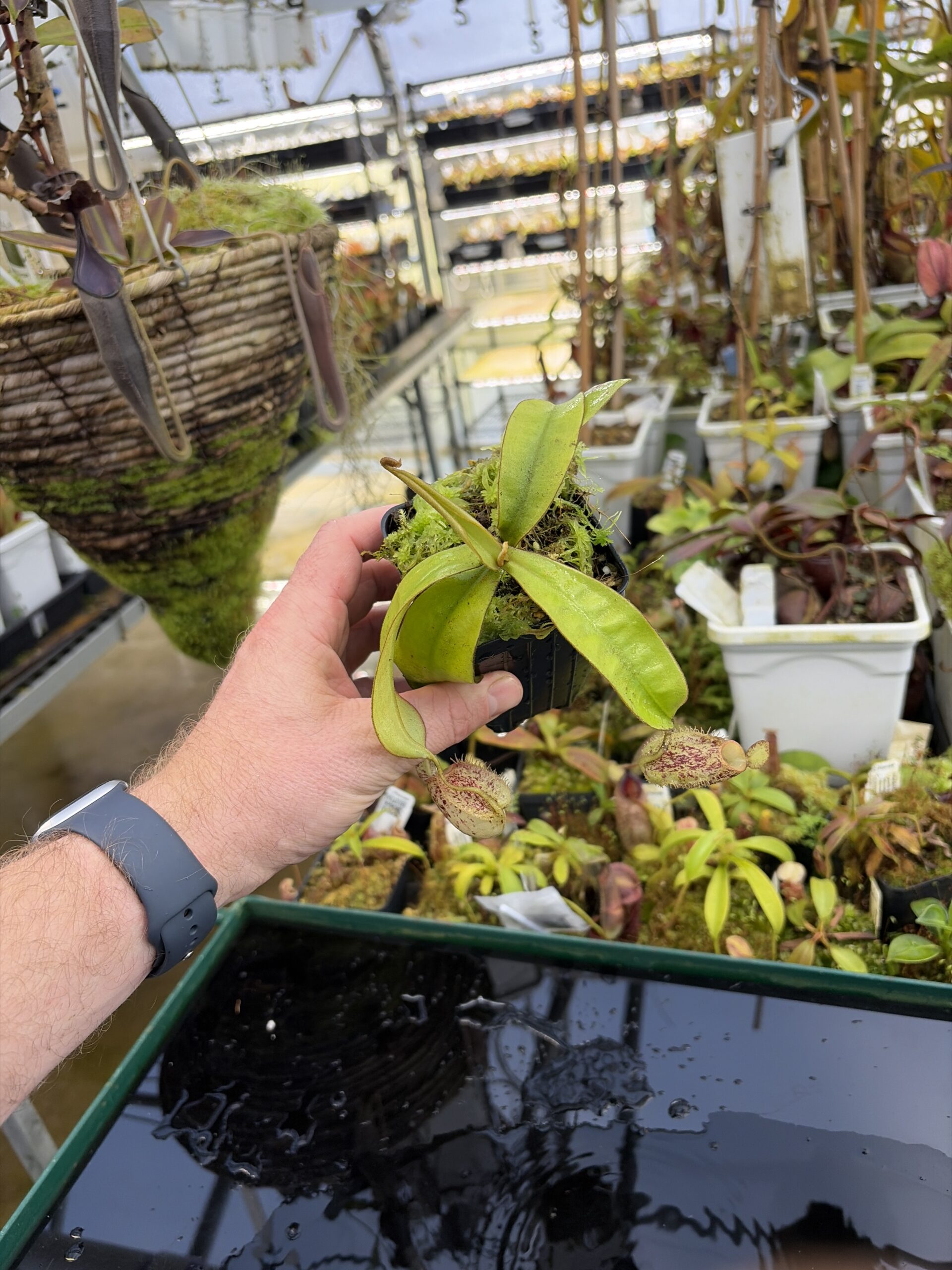
The pitchers are small, round urns, rarely more than 10 cm tall, with a strongly incurved peristome and a tiny lid bent back away from the mouth. Color runs from light green to solid dark red with every speckled form in between; the red forms are mostly Bornean. The plant spreads by underground runners into dense carpets of rosettes, and upper pitchers are rare. That open mouth has a purpose. N. ampullaria has moved partly away from catching insects and toward digesting leaf litter that falls into its traps. One study estimated that about 36% of the nitrogen in shaded plants came from litter.