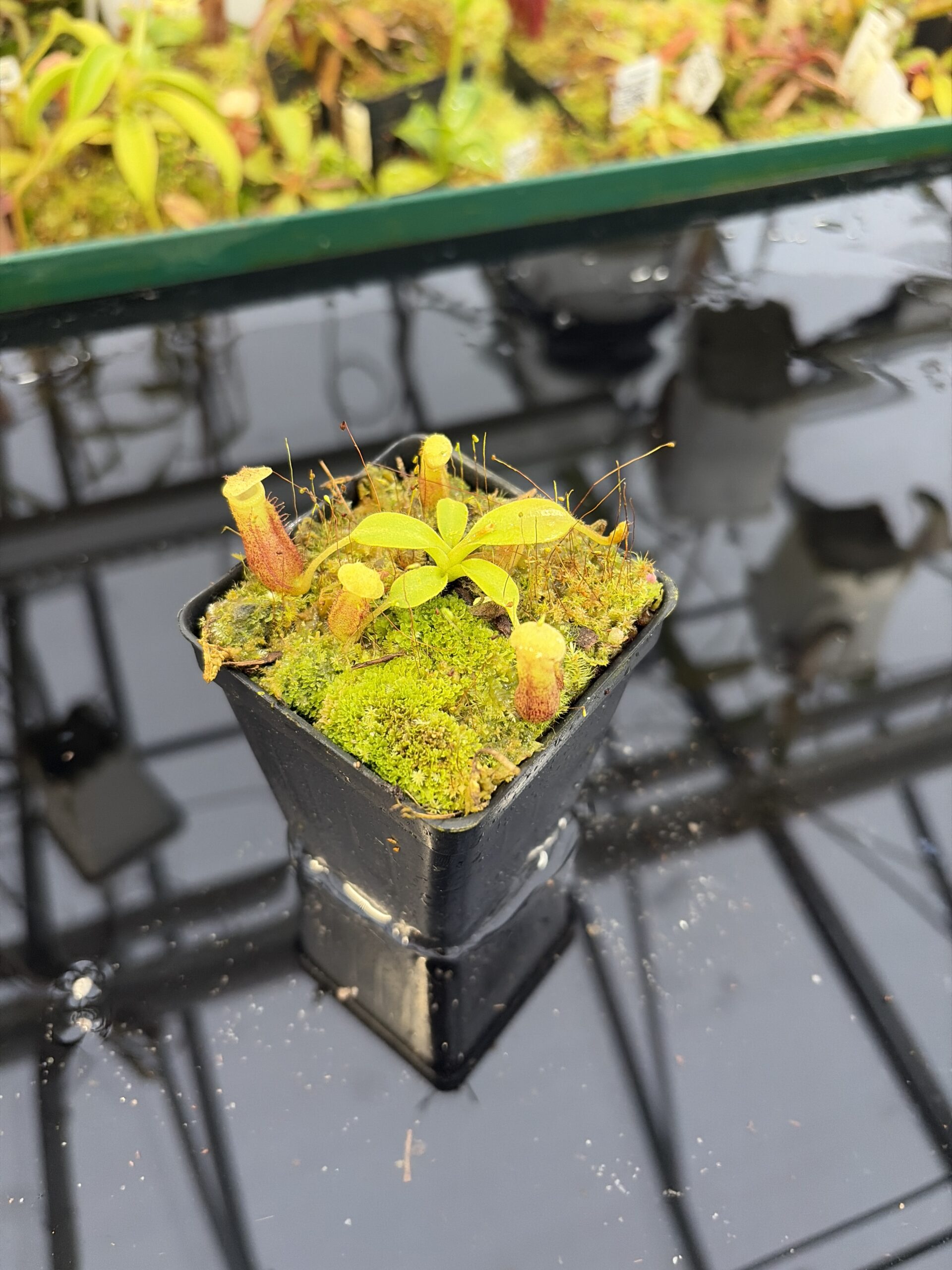
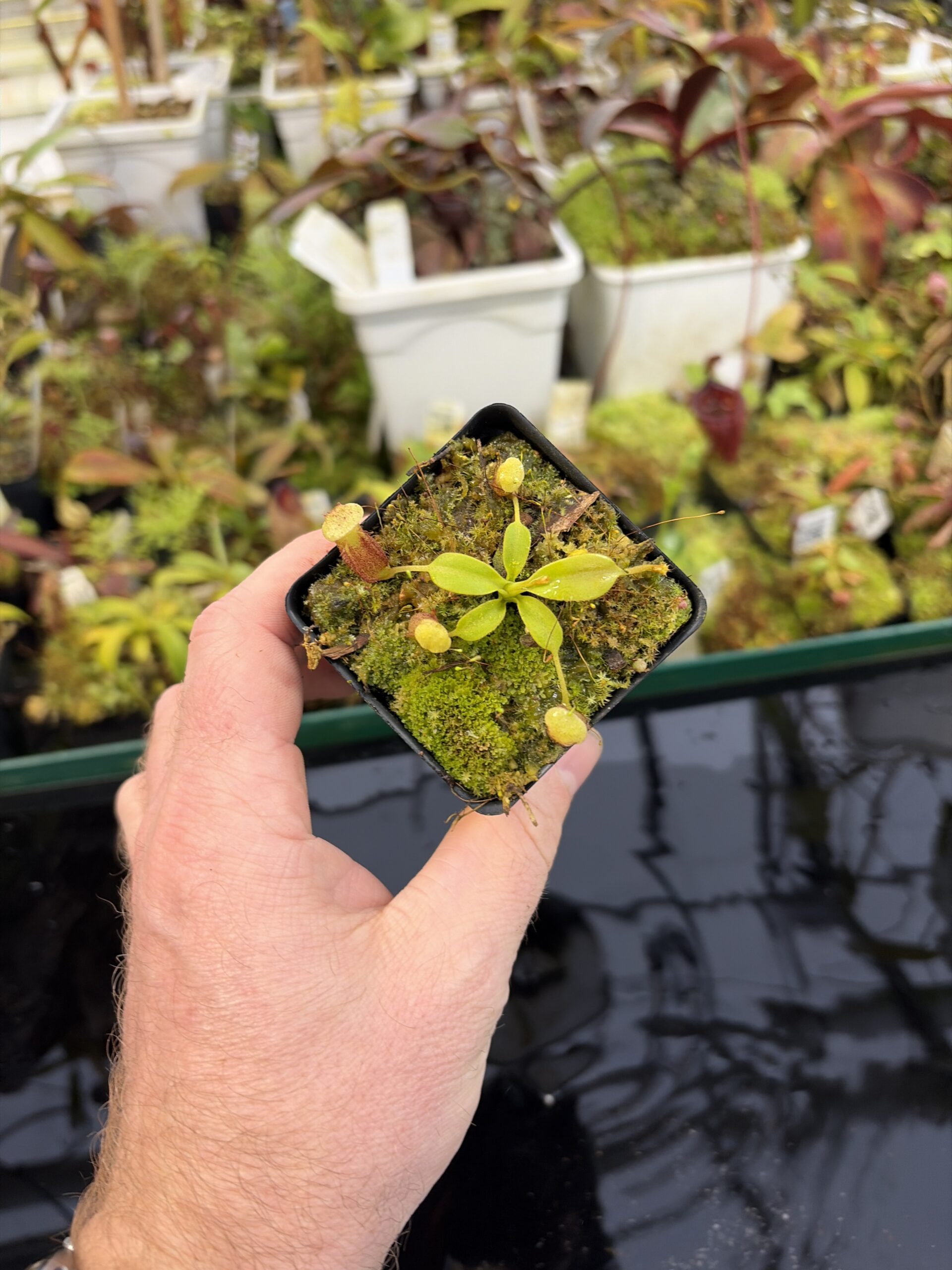
Nepenthes burbidgeae × villosa

1 specimen in stock, $59.99. Each photo shows the exact plant you receive.

Nepenthes burbidgeae × villosa, Clone 06, specimen H27725
Small · Clone 06 · Jeremiah Harris
Choose a specimen

$59.99

Size
Small
Clone
Clone 06
Locality
N/A
Breeder
Jeremiah Harris
Conditions
Highland
Propagation
Tissue Culture
Specimen
H27725

Nepenthes burbidgeae × villosa

Two species from the same Sabah mountains: the painted pitcher plant, N. burbidgeae, and the ultrahighland N. villosa.

Both parents come from Mount Kinabalu and Mount Tambuyukon in Sabah, Borneo, at different heights. Nepenthes burbidgeae grows at about 1,200 to 1,800 m, often climbing through low scrub on exposed ridges over ultramafic soils. Burbidge published the name in 1882. N. villosa grows higher than any other Bornean Nepenthes, generally 2,300 to 3,240 m, as a terrestrial shrub among boulders and stunted scrub.

N. burbidgeae, the painted pitcher plant, has white, semi-translucent pitchers blotched with crimson. N. villosa brings its intricate, deeply ribbed and toothed peristome on squat, hairy pitchers. Documentation on this cross is limited, so expect individual character.

Specimens available now

Learn more about this plant

Parents

Nepenthes burbidgeae

The painted pitcher plant of Kinabalu Park: white pitchers splashed with crimson, a wide flat peristome, and a strict preference for ultramafic soils.

Nepenthes villosa

The highest-growing Nepenthes in Borneo, generally found at 2,300 to 3,240 m on Kinabalu and Tambuyukon, with squat, densely hairy pitchers and a wide, ribbed, toothed peristome.

Care

Growing highland Nepenthes

Cool nights, mild days, high humidity and steady airflow, the mountain cloud forest that most of our Nepenthes come from.

Highland Nepenthes grow in montane forest where nights cool down sharply after mild days. Aim for nights about 50 to 55 F (10 to 13 C), days 70 to 78 F (21 to 26 C), humidity above 70 to 80 percent, bright filtered light and constant airflow. The night drop is what highland plants need most; a warm room at night slows them down.

Grow them in an open, airy mix that drains fast, such as long-fiber sphagnum with perlite or bark, and keep it evenly moist with pure water (rain, distilled or reverse osmosis). Never let the pot sit in water for long.

New plants settle in over a few weeks; keep conditions steady while they do. The pitchers catch their own food, so fertilizer, if any, should be light and occasional.