
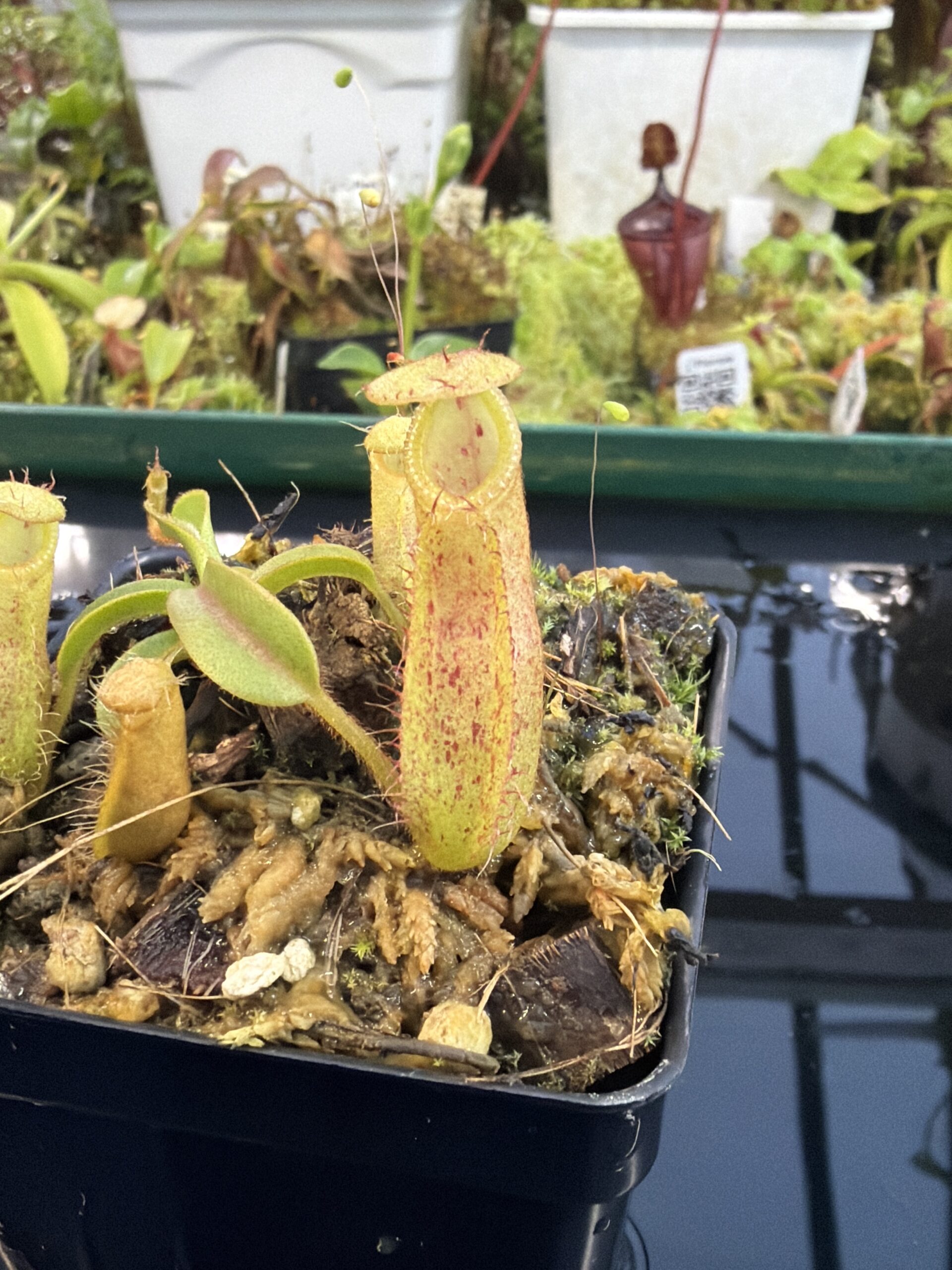
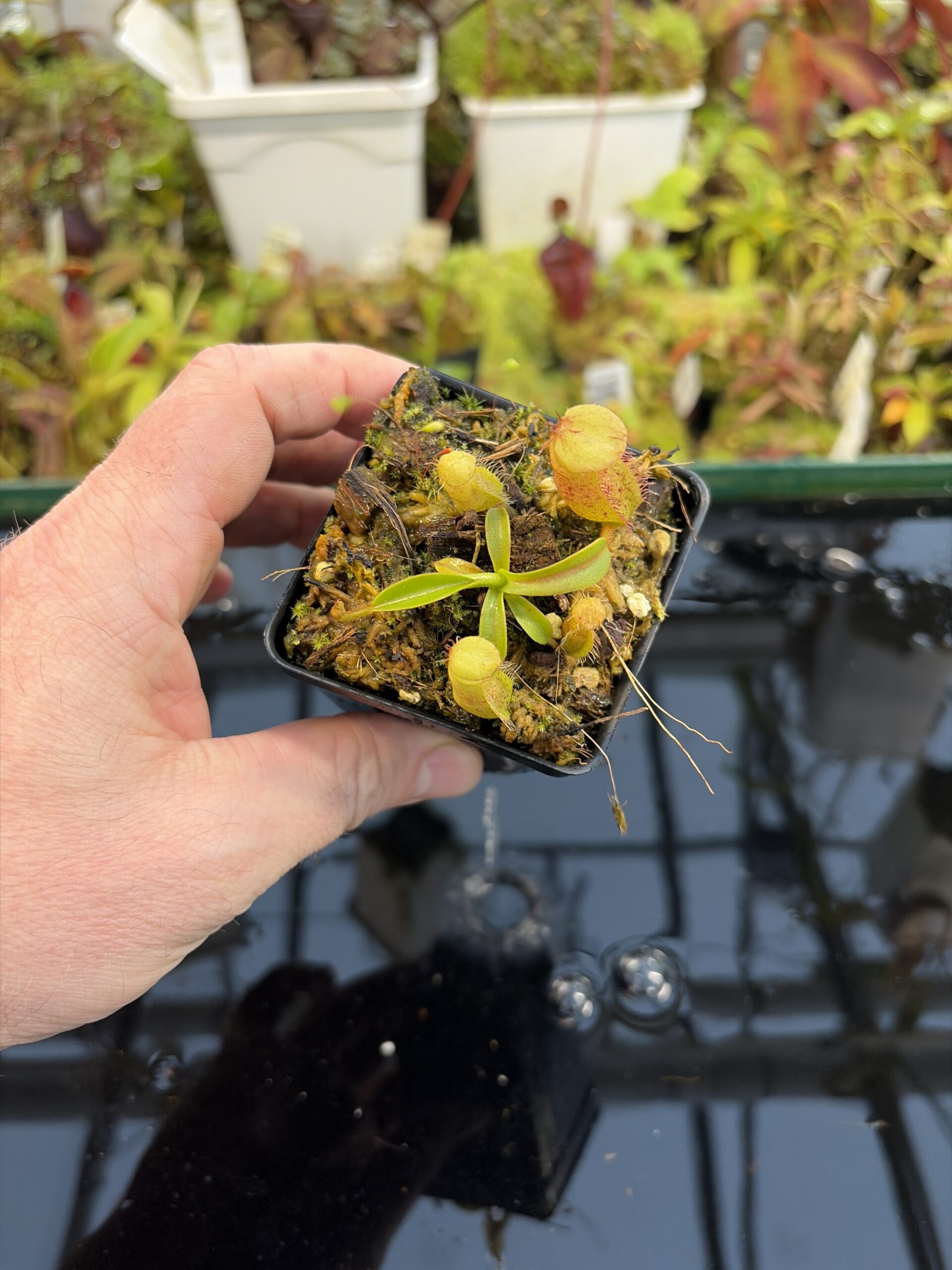
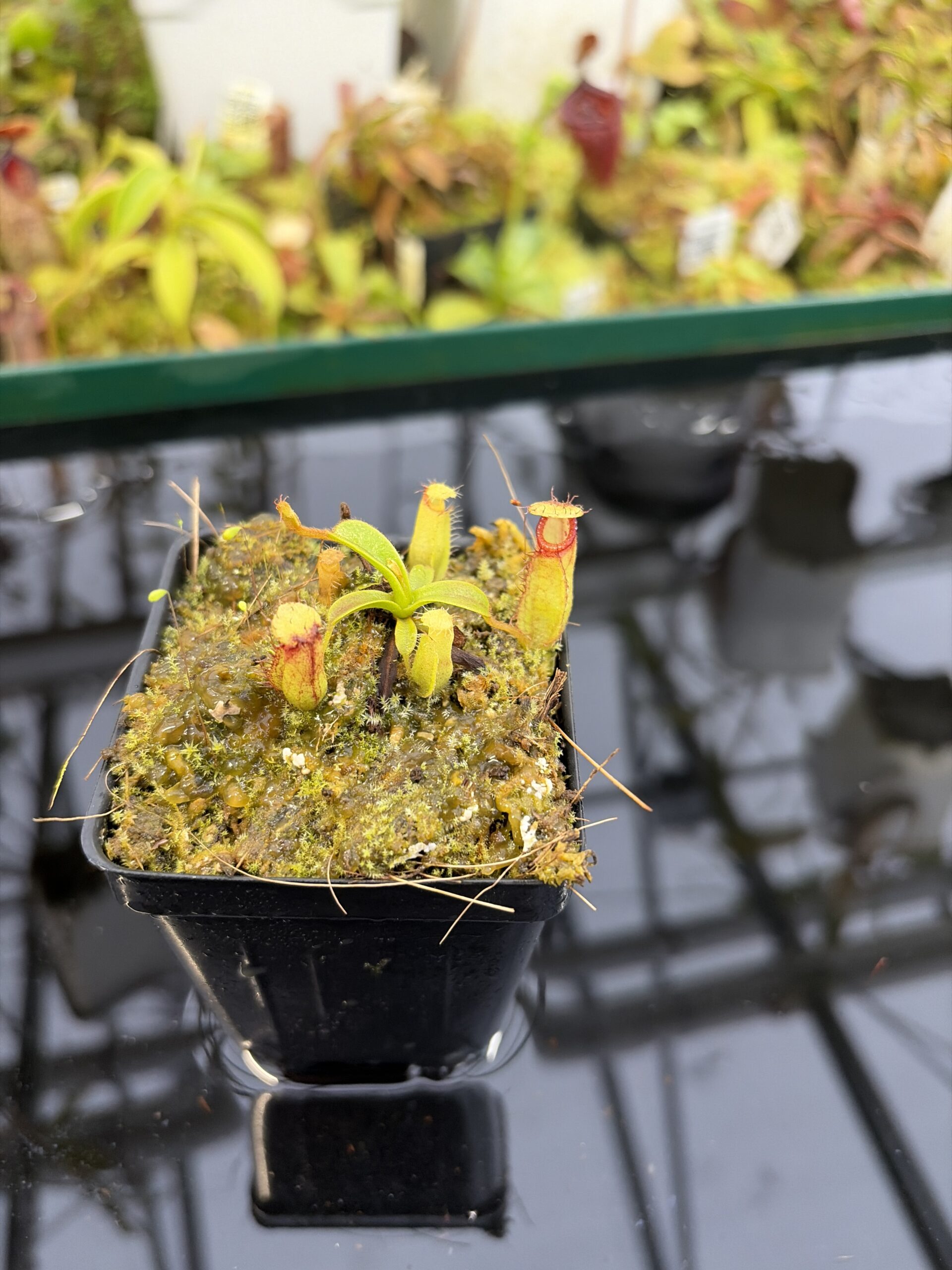
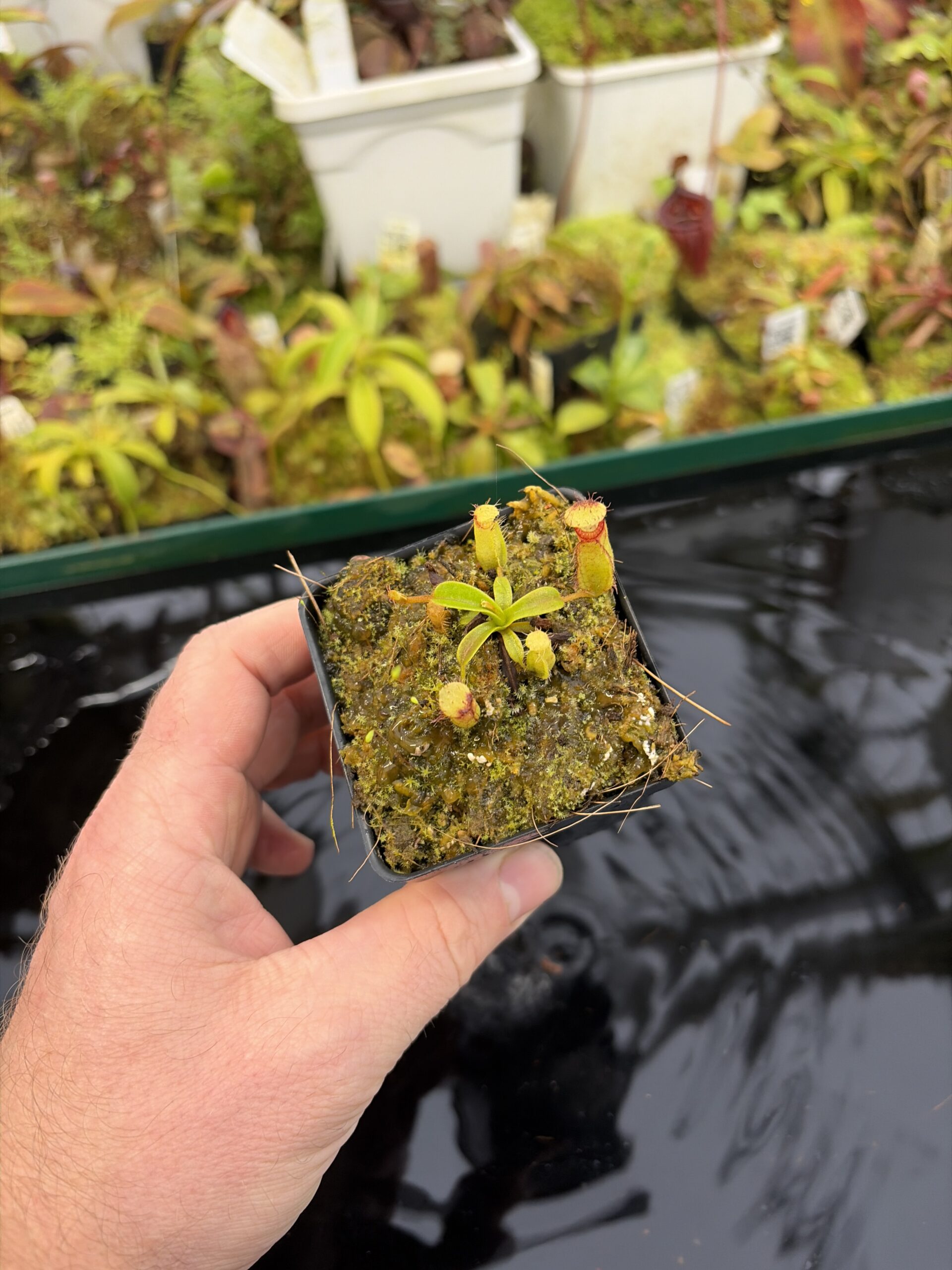
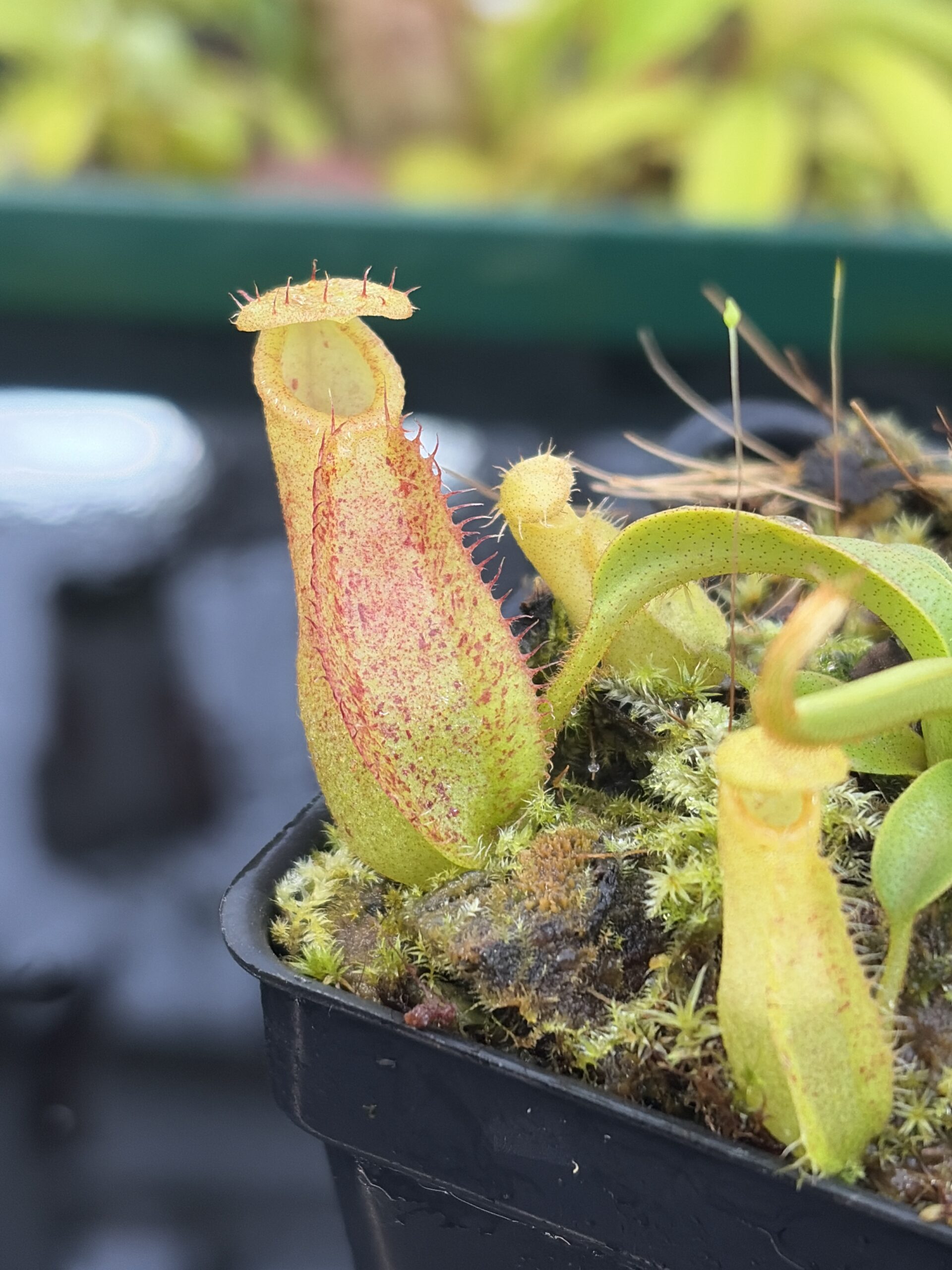
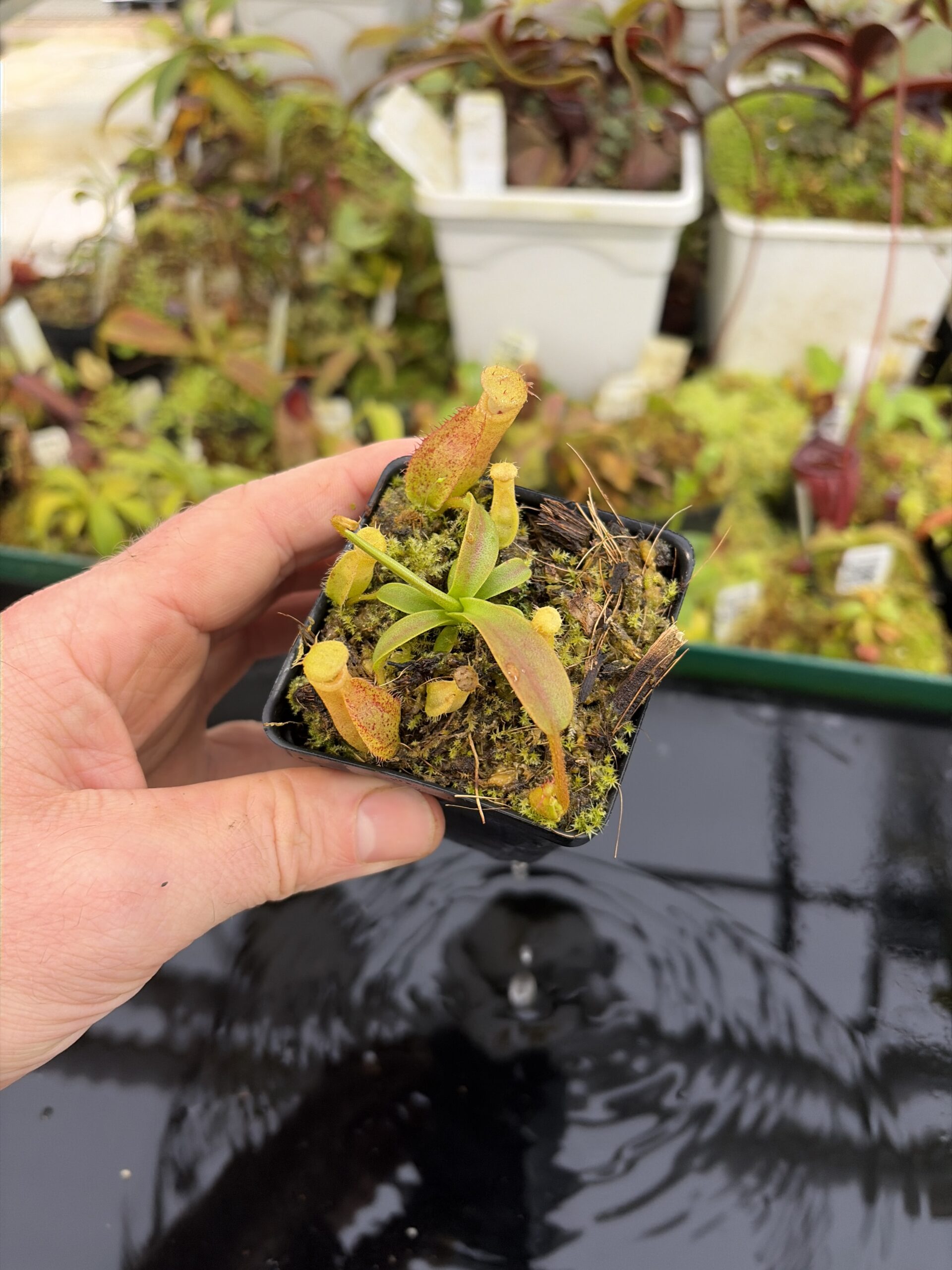
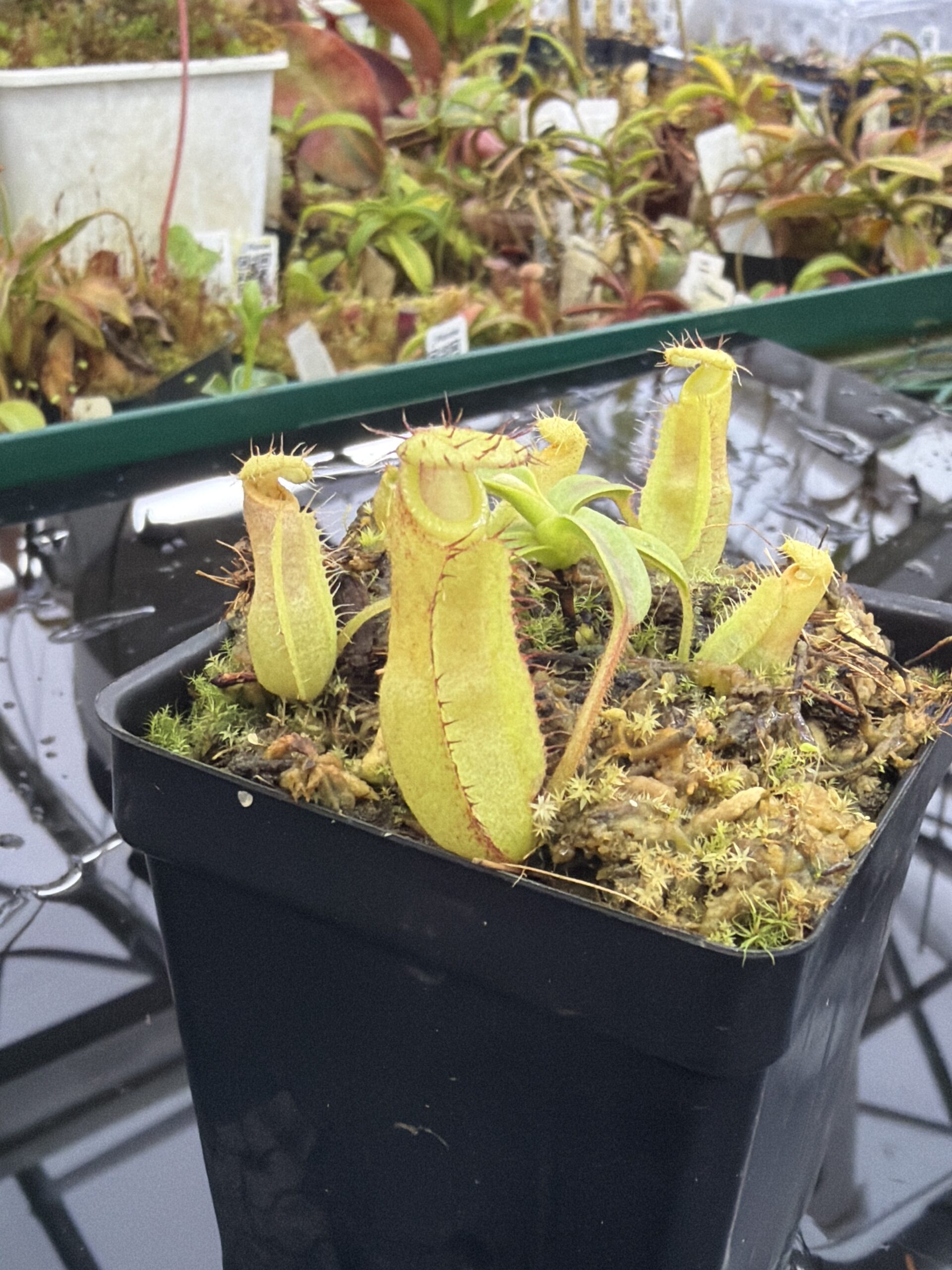
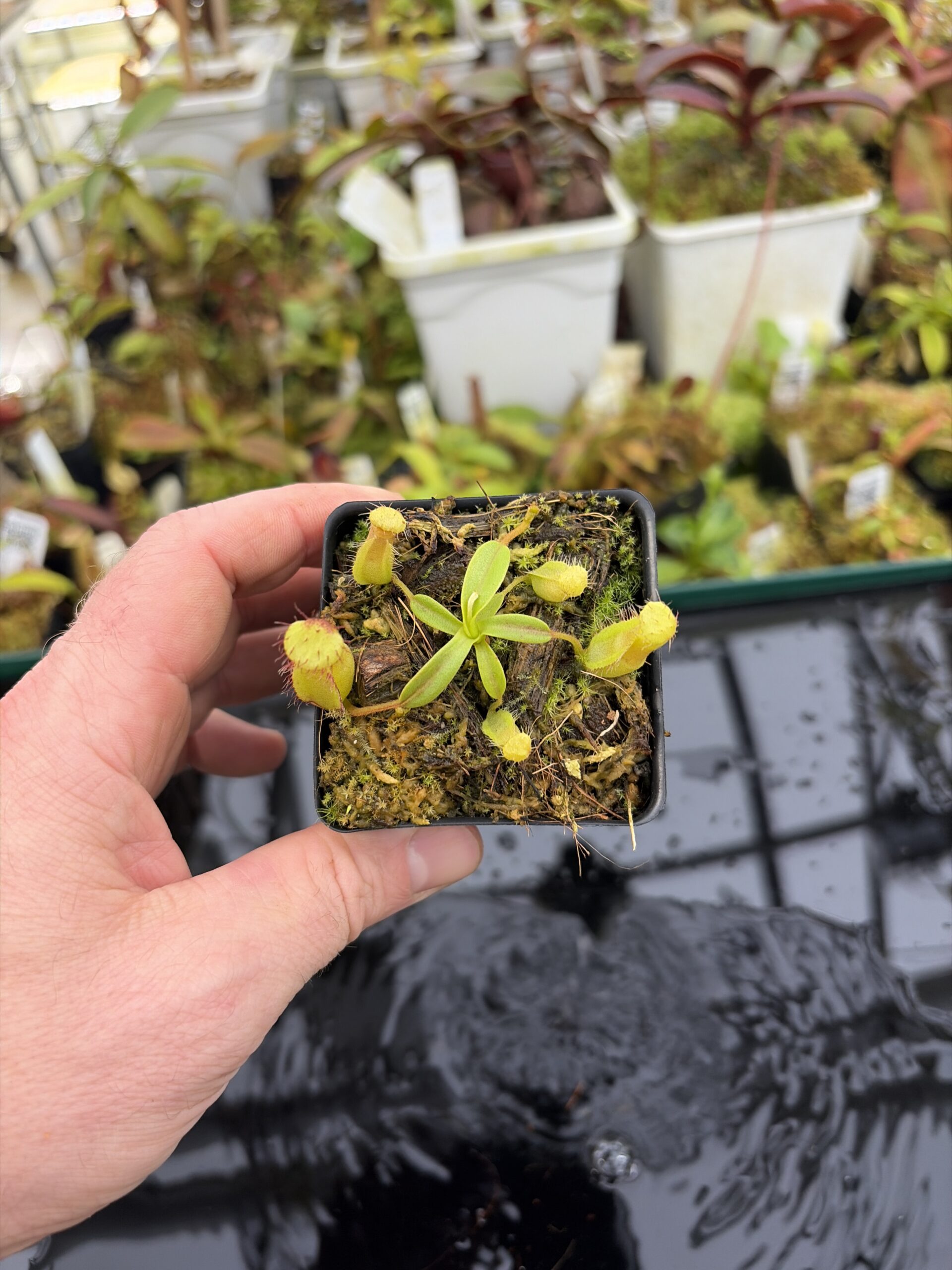
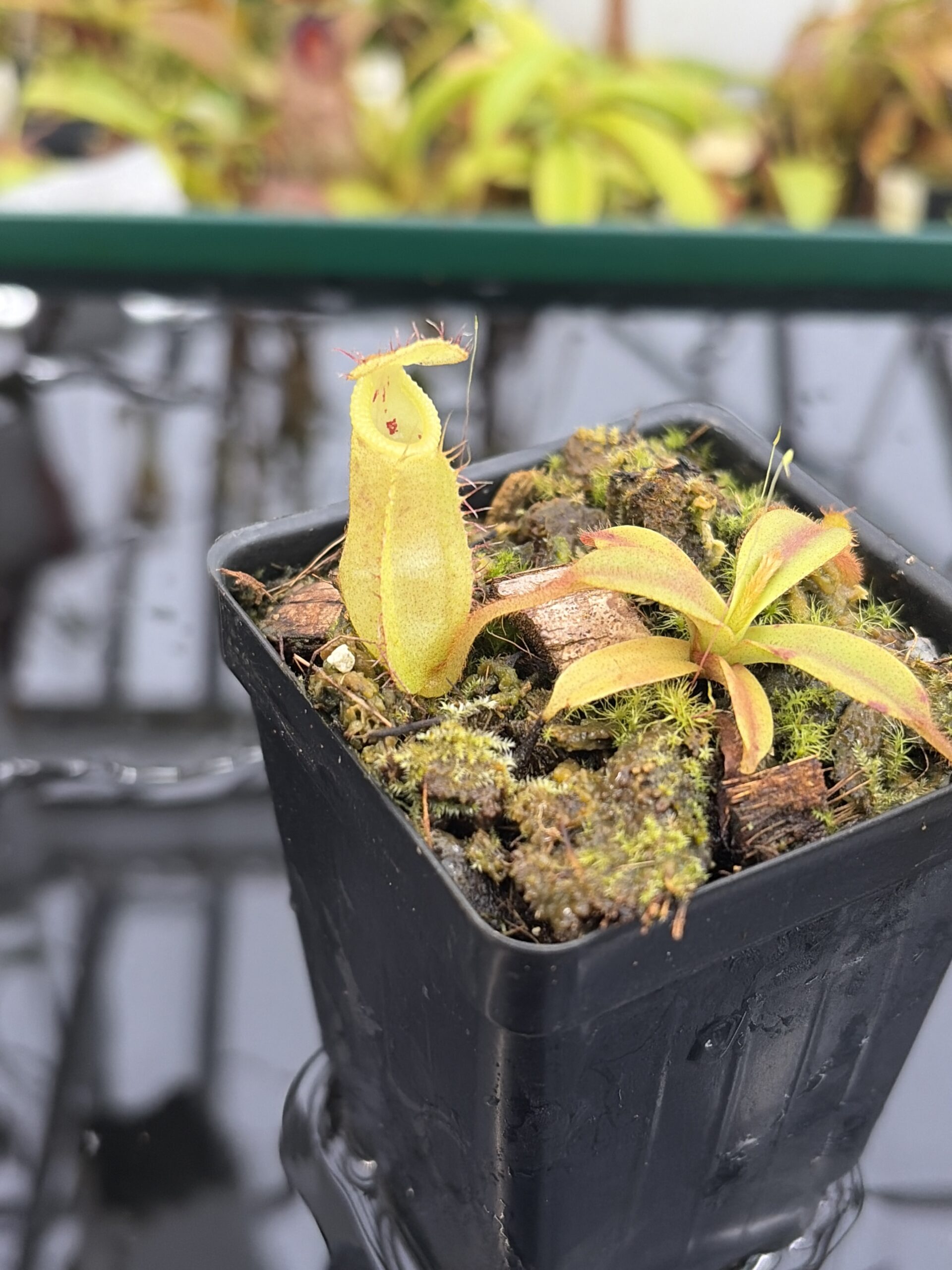
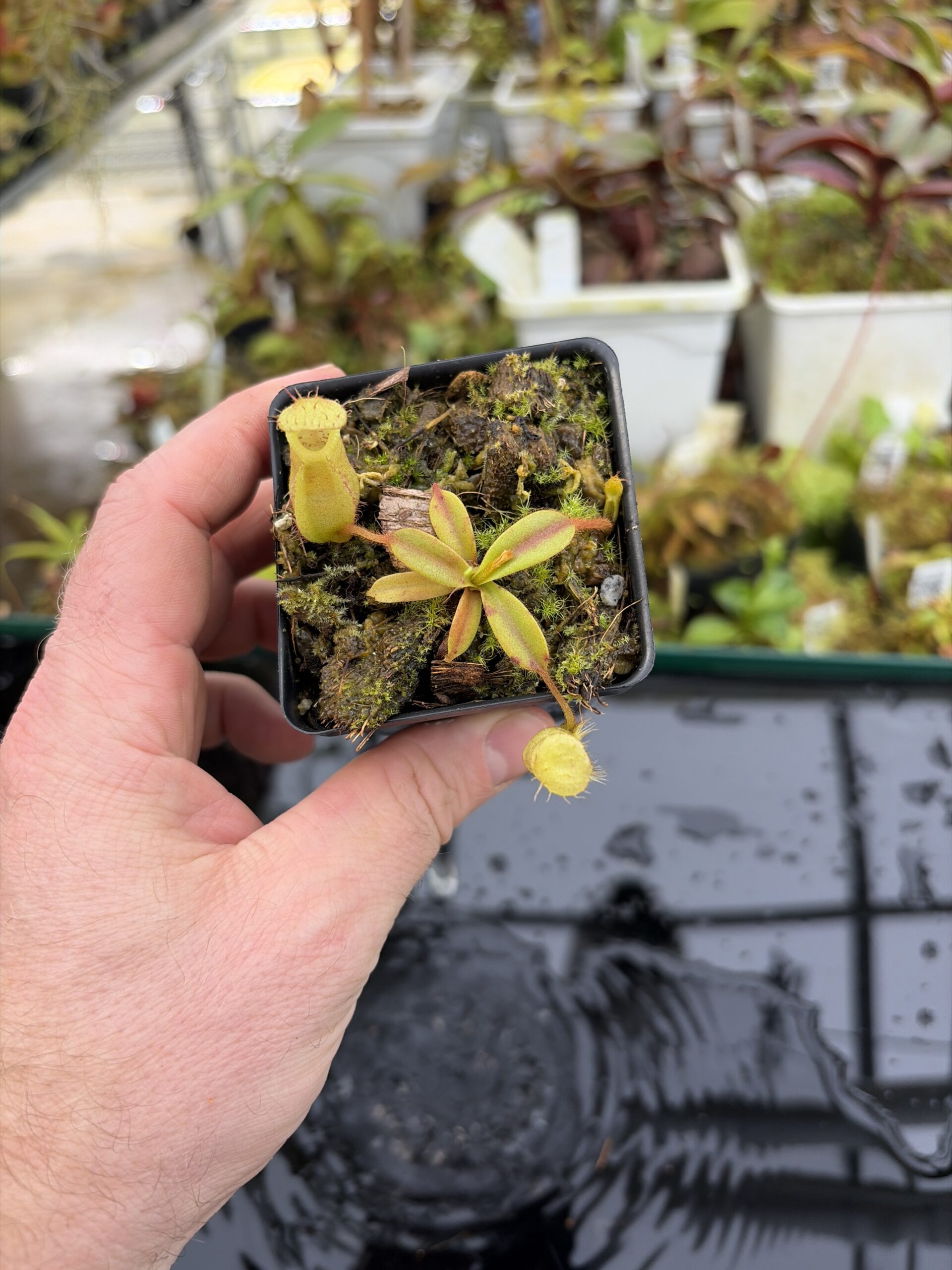
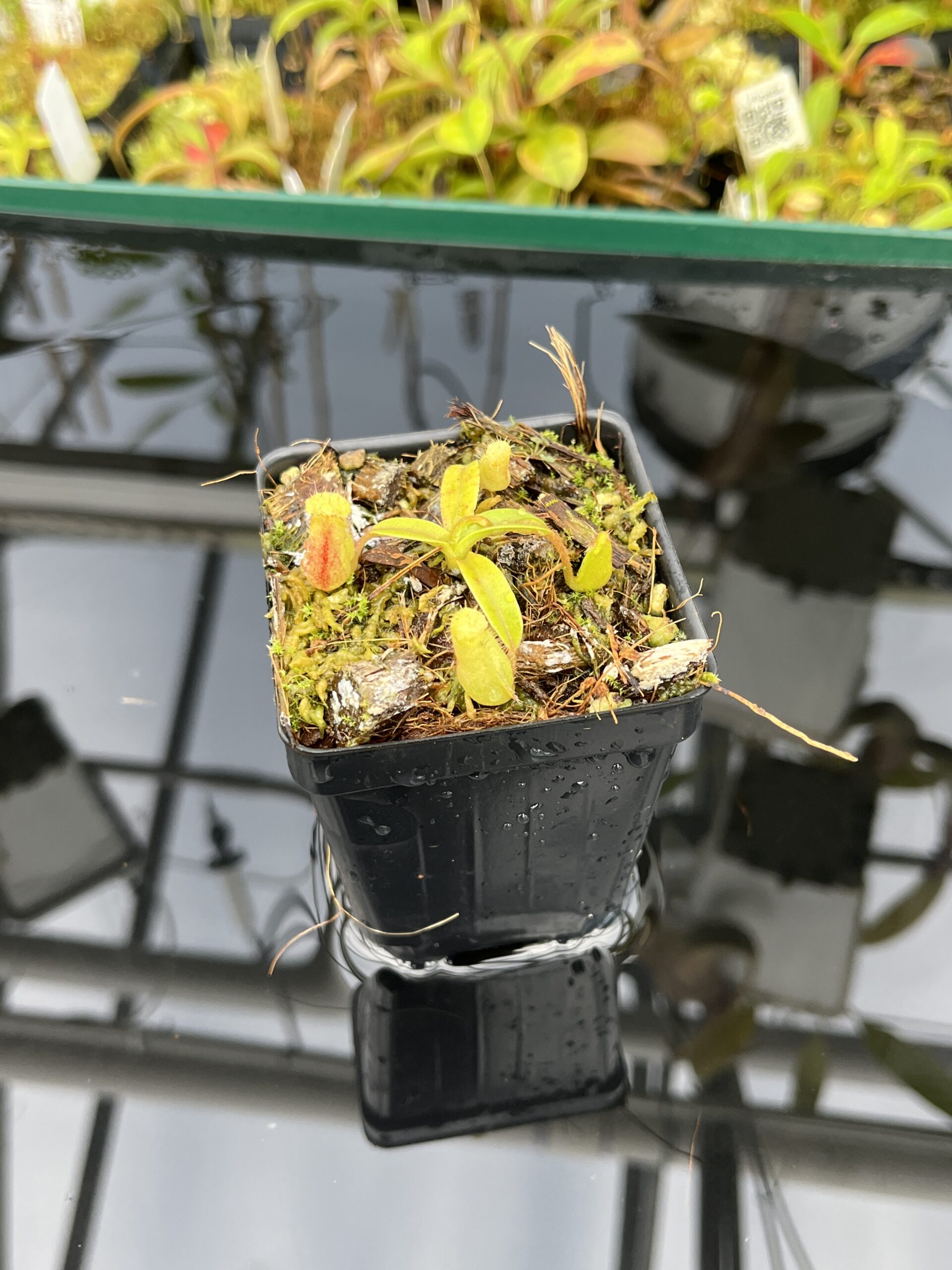
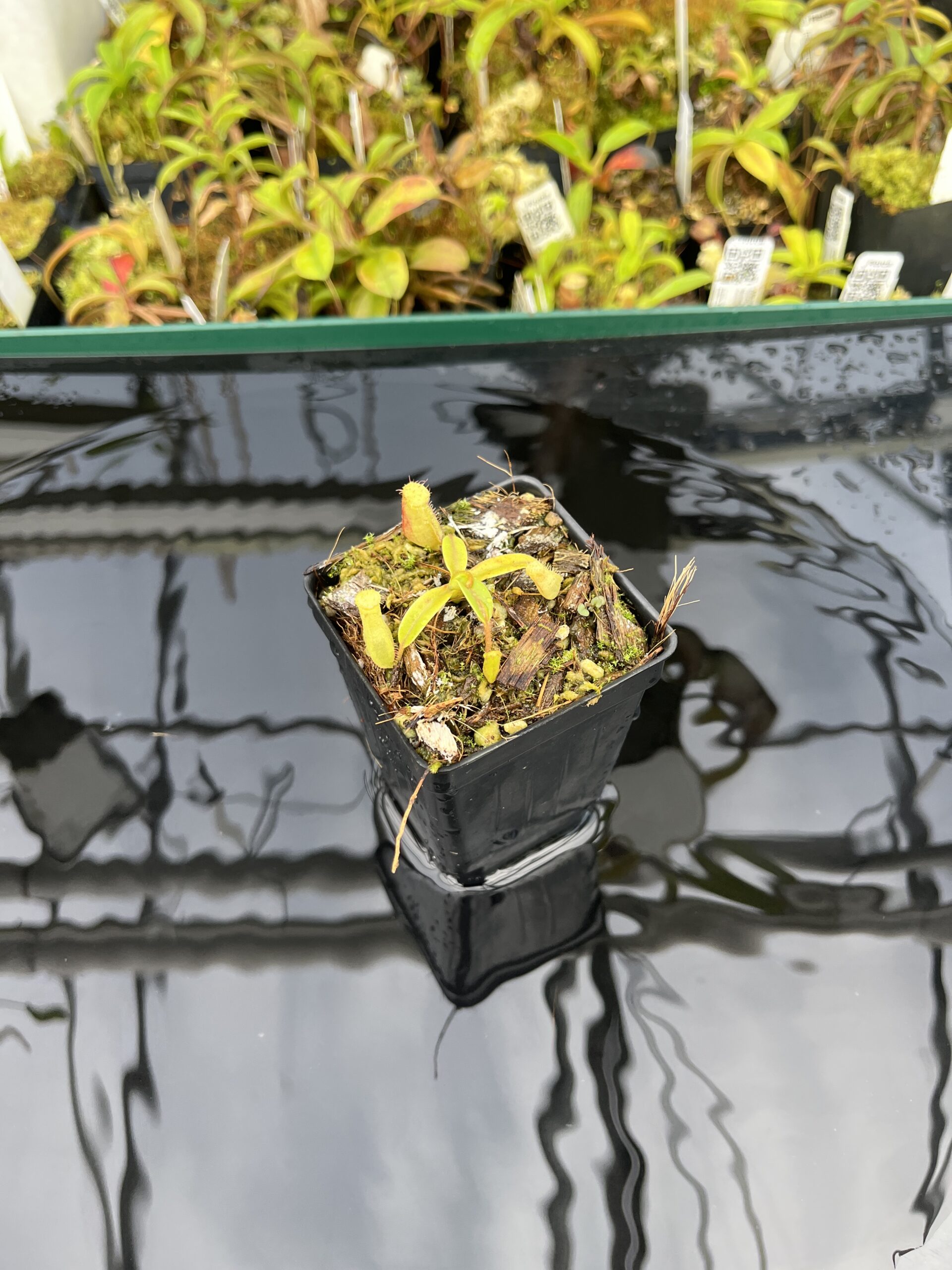
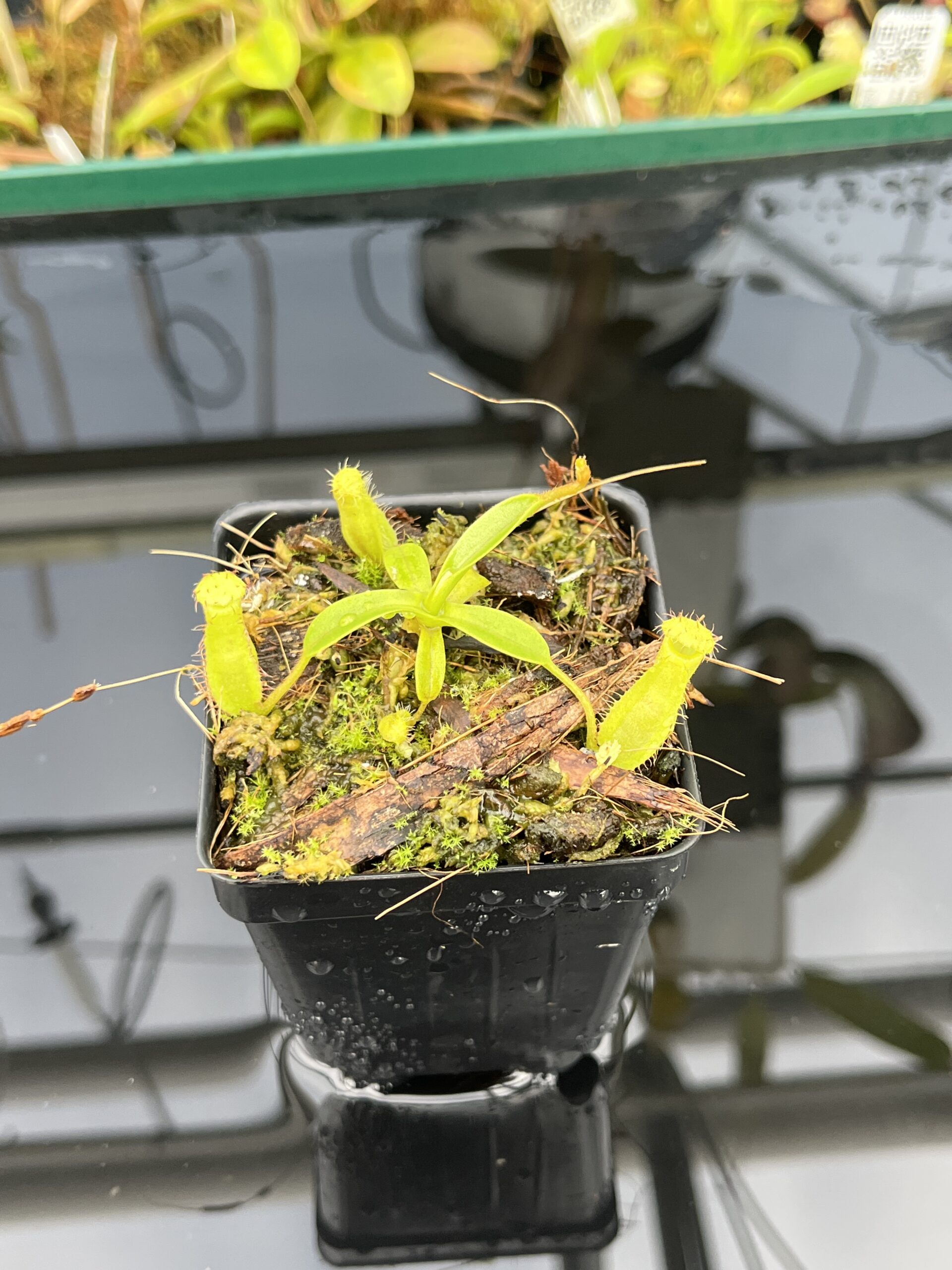
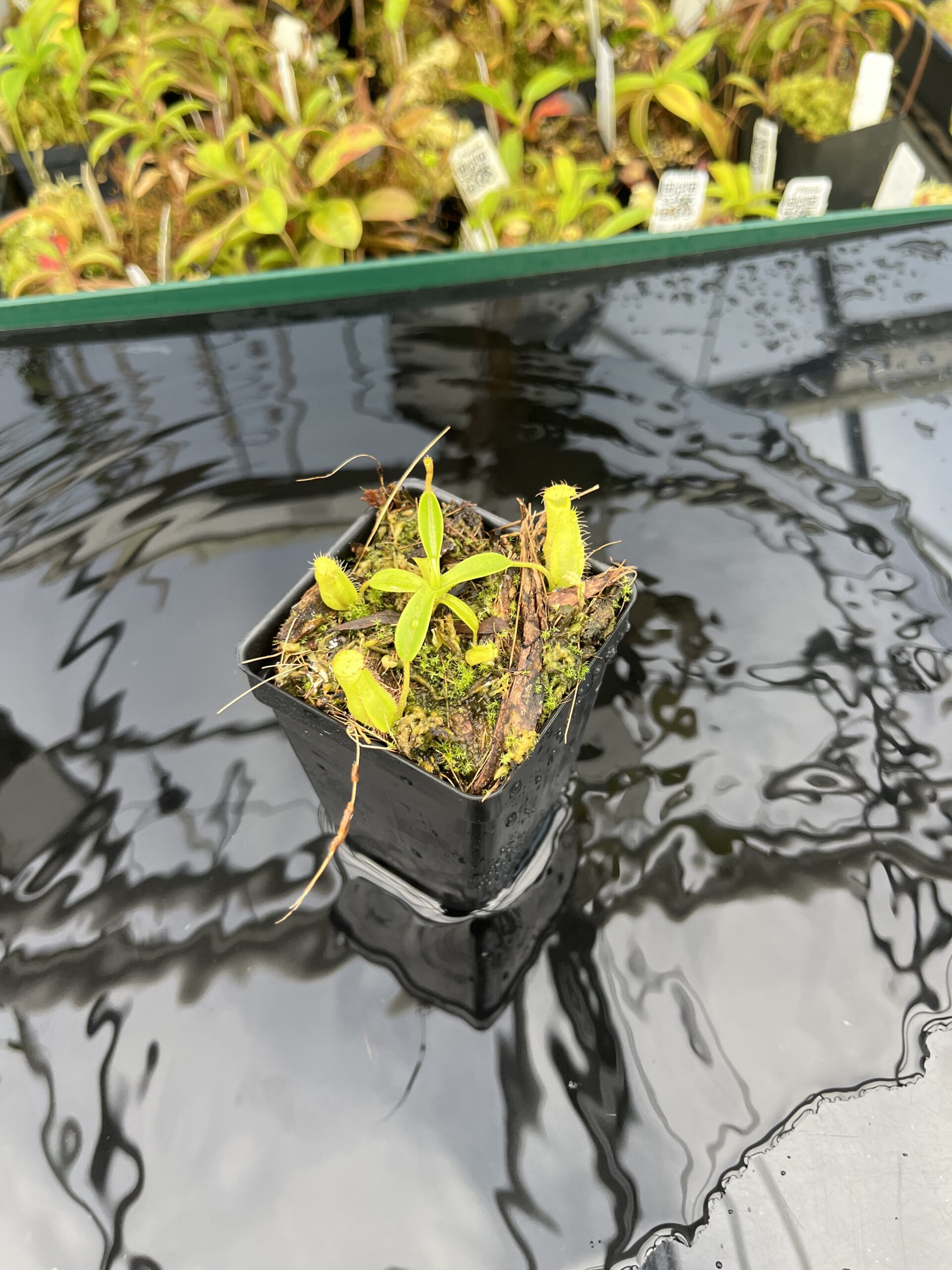
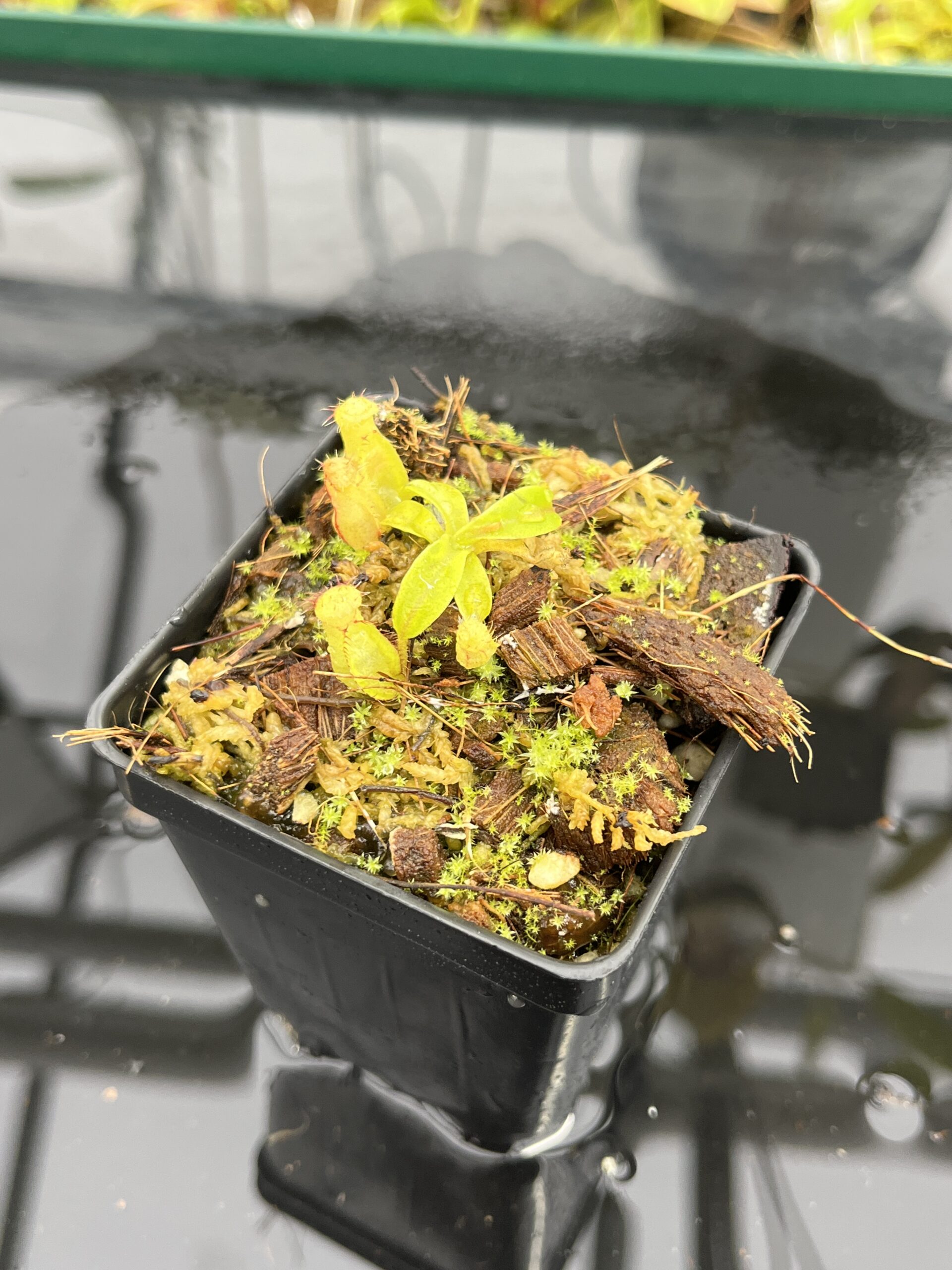
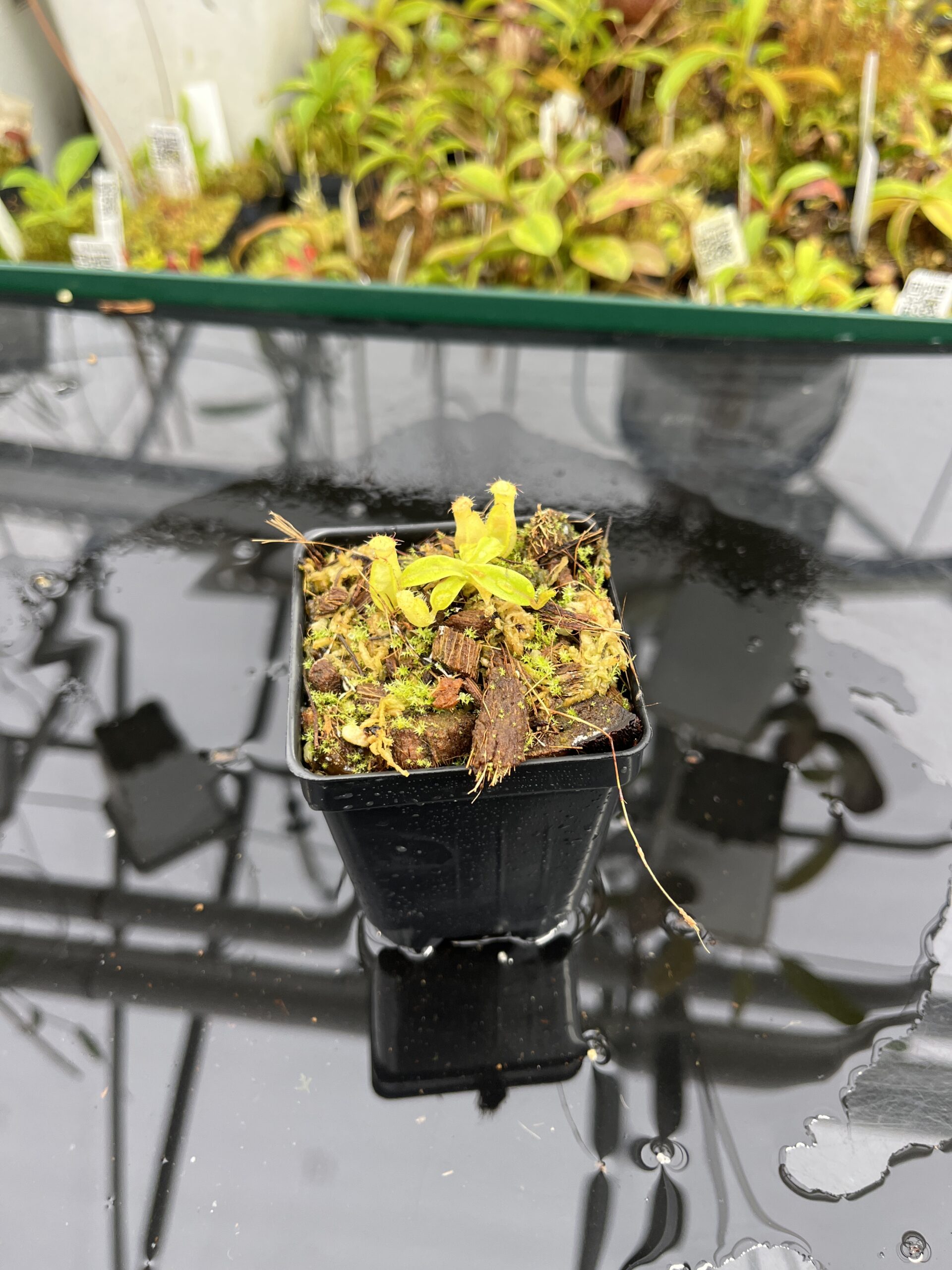
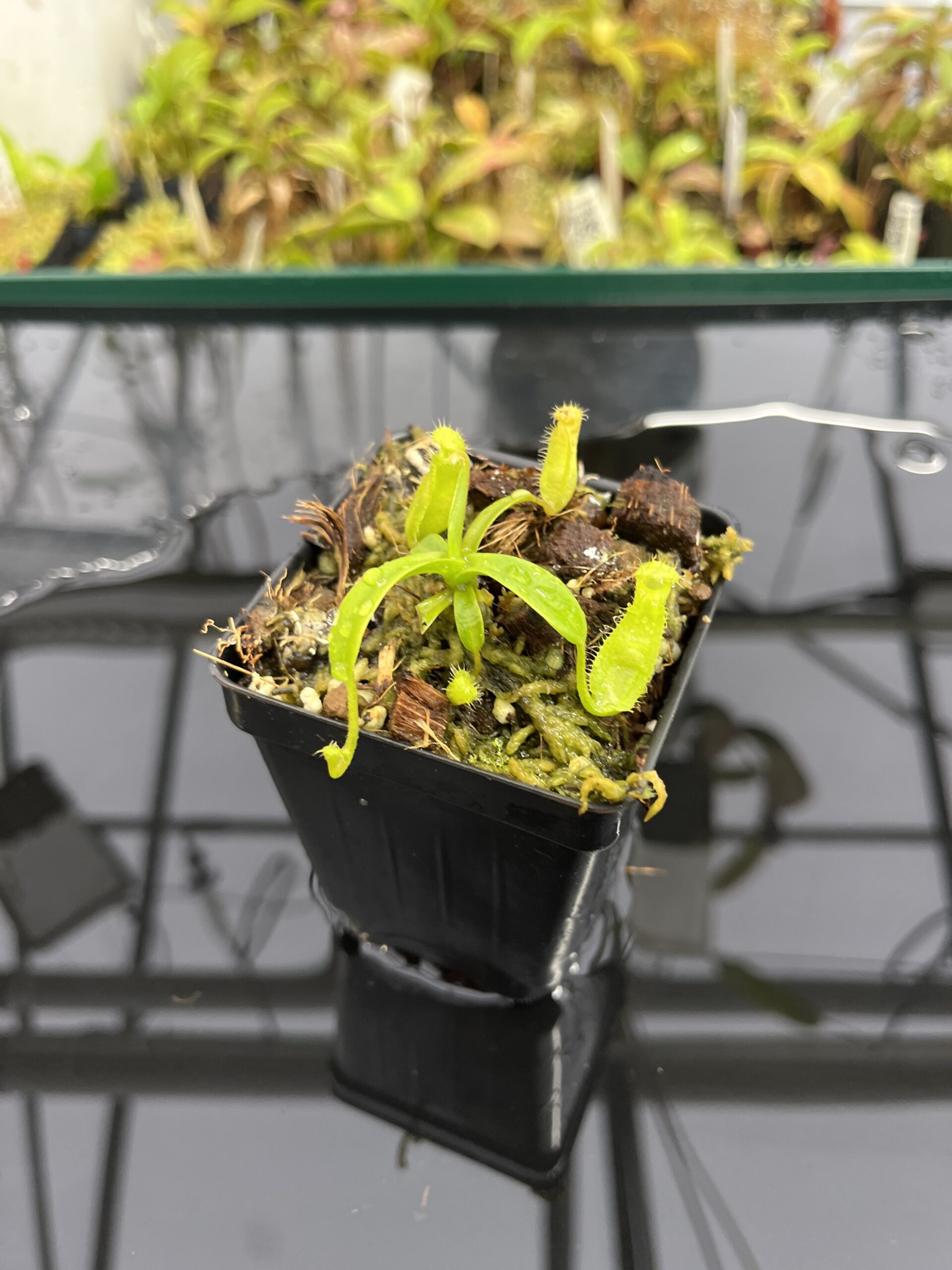
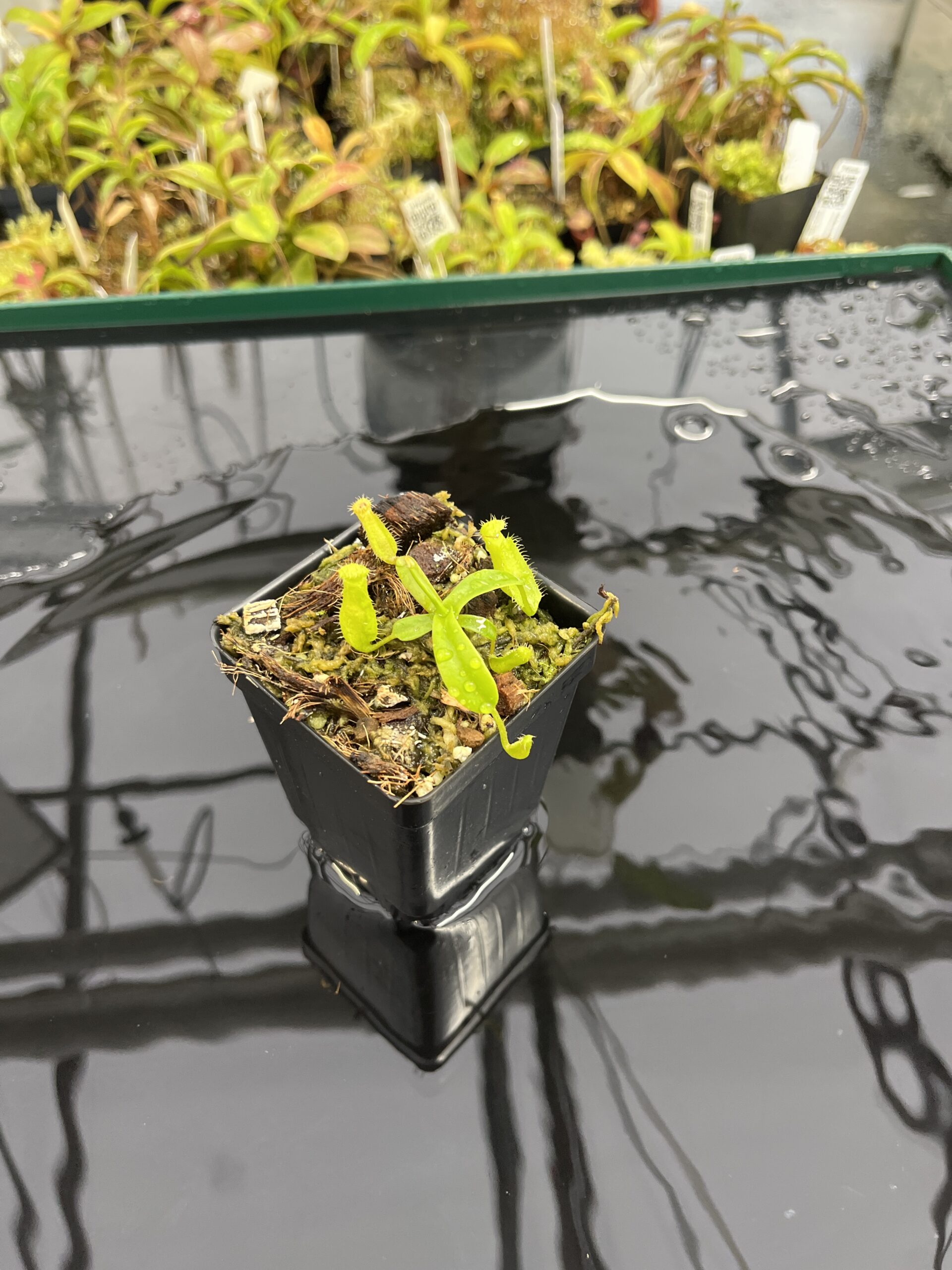
Nepenthes (diabolica × hamata) × eymae

G. Tambusisi pod #2

9 specimens in stock, $36.99 to $46.74. Each photo shows the exact plant you receive.

Nepenthes (diabolica × hamata) × eymae, G. Tambusisi pod #2, specimen H28011
Small · Michael Kevin Smith
Choose a specimen

$36.99

Size
Small
Locality
N/A
Breeder
Michael Kevin Smith
Producer code
MKS-436
Conditions
Highland
Propagation
Tissue Culture
Specimen
H28011

Nepenthes (diabolica × hamata) × eymae

An all-Sulawesi highland cross: N. 'Smilodon' (diabolica × hamata) with N. eymae, whose upper pitchers are mostly yellow with a glossy peristome.

All three species come from Sulawesi. One side is N. diabolica × hamata, the cross known in cultivation as N. 'Smilodon'; the other parent is N. eymae. N. hamata is endemic to Sulawesi, mostly in Central Sulawesi at 1,400 to 2,500 m. N. diabolica, described in 2020, is known from a single Central Sulawesi mountain at about 2,200 to 2,300 m. N. eymae grows in Central and West Sulawesi at 1,000 to 2,000 m, usually above 1,400 m.

N. hamata has what may be the most developed peristome in the genus, with sickle-shaped teeth. N. diabolica pairs an elaborately flanged peristome with a rufous, woolly coat. N. eymae makes mostly yellow upper pitchers with a flattened, glossy peristome; in the wild they can narrow just below the mouth into a wine-glass shape. Documentation on this cross is limited, so expect individual character.

Specimens available now

Learn more about this plant

Parents

Nepenthes eymae

A Sulawesi highland species from 1,000 to over 2,000 m, best known for its yellow, wine-glass-shaped upper pitchers and dark peristome.

Care

Growing highland Nepenthes

Cool nights, mild days, high humidity and steady airflow, the mountain cloud forest that most of our Nepenthes come from.

Highland Nepenthes grow in montane forest where nights cool down sharply after mild days. Aim for nights about 50 to 55 F (10 to 13 C), days 70 to 78 F (21 to 26 C), humidity above 70 to 80 percent, bright filtered light and constant airflow. The night drop is what highland plants need most; a warm room at night slows them down.

Grow them in an open, airy mix that drains fast, such as long-fiber sphagnum with perlite or bark, and keep it evenly moist with pure water (rain, distilled or reverse osmosis). Never let the pot sit in water for long.

New plants settle in over a few weeks; keep conditions steady while they do. The pitchers catch their own food, so fertilizer, if any, should be light and occasional.