
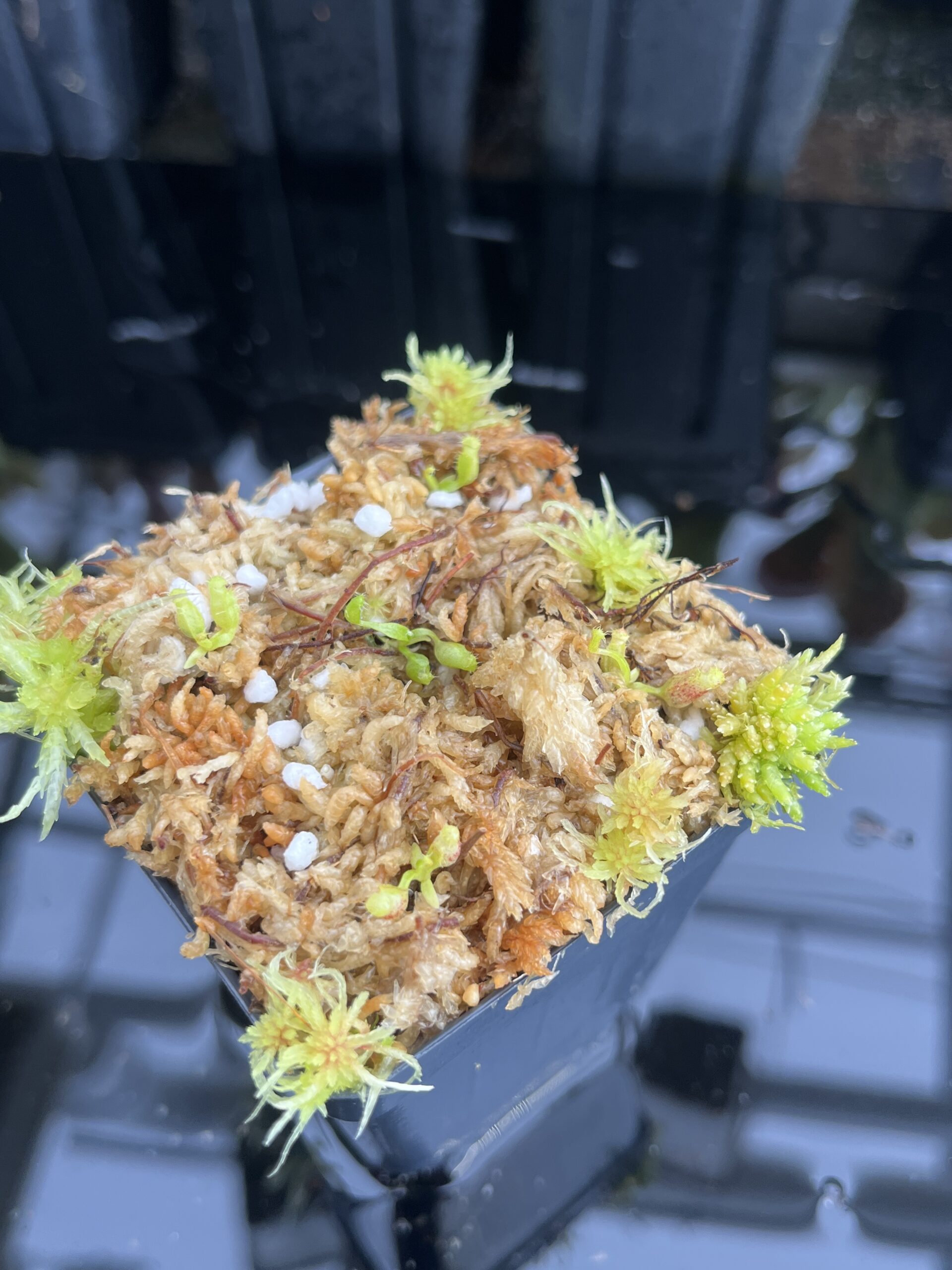
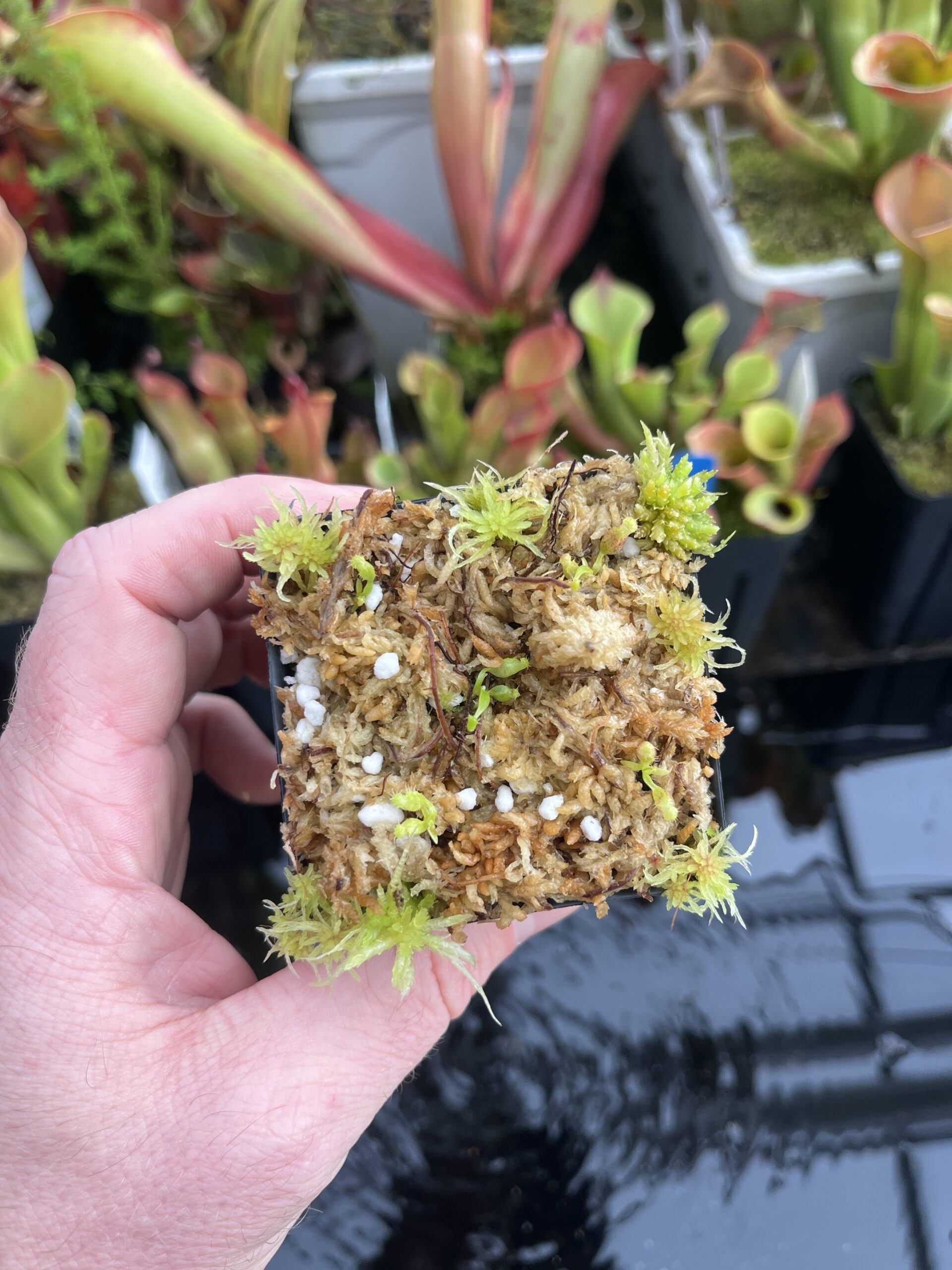
Nepenthes kinabaluensis × lowii

1 specimen in stock, $529.99. Each photo shows the exact plant you receive.

Nepenthes kinabaluensis × lowii, specimen H28206
Extra Small · Michael Kevin Smith
Choose a specimen

$529.99

Size
Extra Small
Locality
N/A
Breeder
Michael Kevin Smith
Producer code
MKS-722.00
Conditions
Highland
Propagation
Seed Grown
Specimen
H28206

Nepenthes kinabaluensis × lowii

N. ×kinabaluensis, Kinabalu's natural hybrid of N. rajah and N. villosa, crossed with N. lowii, the Bornean highland species with rigid, waisted upper pitchers.

N. ×kinabaluensis is the natural cross of N. rajah and N. villosa. It grows only on Mount Kinabalu and nearby Mount Tambuyukon, in open areas of cloud forest at 2,420 to 3,030 m. N. lowii grows on isolated peaks in Sabah, northern Sarawak and Brunei, among them Kinabalu, Trus Madi, Murud and Mulu, at 1,650 to 2,600 m, in mossy forest and stunted ridge-top vegetation. Hugh Low found it in 1851 on his first ascent of Kinabalu, and Joseph Dalton Hooker named it after him in 1859.

N. ×kinabaluensis is intermediate between its parents, with larger pitchers than N. villosa, a peristome whose ribs end in elongated teeth, and colour from yellow to scarlet. The upper pitchers of N. lowii are rigid, almost woody, round at the base, strongly constricted in the middle and widely flared above, up to 28 cm high. They have almost no peristome, and the underside of the lid carries bristles up to 2 cm long with white secretions. Mountain tree shrews feed there and leave their droppings in the pitcher; a 2009 study found these supply 57 to 100% of the nitrogen in a mature plant's leaves. Documentation on the cross itself is limited, so expect individual character.

Specimens available now

Learn more about this plant

Parents

Nepenthes kinabaluensis

The natural hybrid of N. rajah and N. villosa on Mount Kinabalu, Sabah, unusual among Nepenthes hybrids for forming large wild populations that sustain themselves.

Nepenthes lowii

A northern Borneo highland species whose waisted, flaring upper pitchers and bristly lid are built to feed tree shrews rather than to catch insects.

Care

Growing highland Nepenthes

Cool nights, mild days, high humidity and steady airflow, the mountain cloud forest that most of our Nepenthes come from.

Highland Nepenthes grow in montane forest where nights cool down sharply after mild days. Aim for nights about 50 to 55 F (10 to 13 C), days 70 to 78 F (21 to 26 C), humidity above 70 to 80 percent, bright filtered light and constant airflow. The night drop is what highland plants need most; a warm room at night slows them down.

Grow them in an open, airy mix that drains fast, such as long-fiber sphagnum with perlite or bark, and keep it evenly moist with pure water (rain, distilled or reverse osmosis). Never let the pot sit in water for long.

New plants settle in over a few weeks; keep conditions steady while they do. The pitchers catch their own food, so fertilizer, if any, should be light and occasional.