
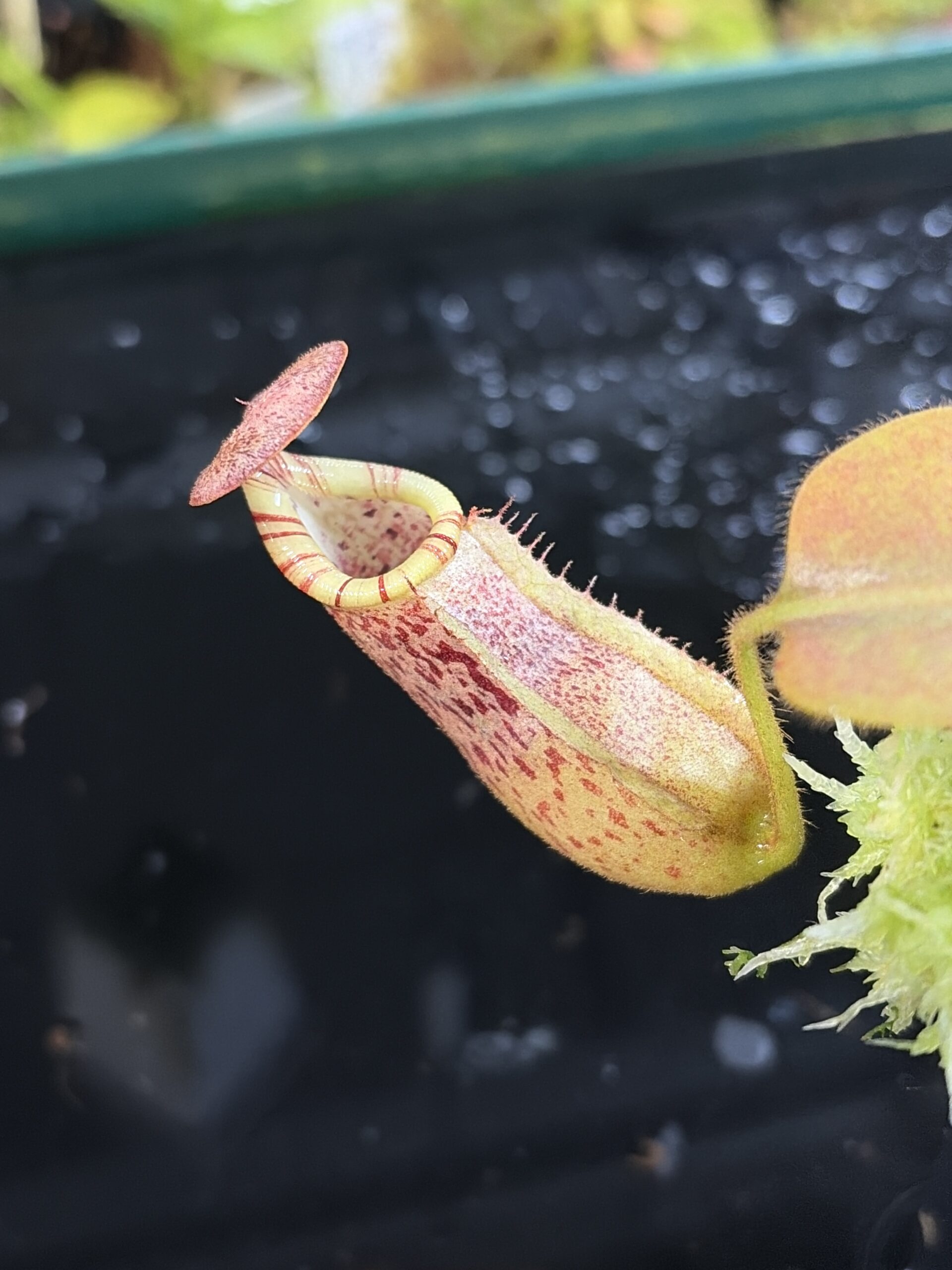
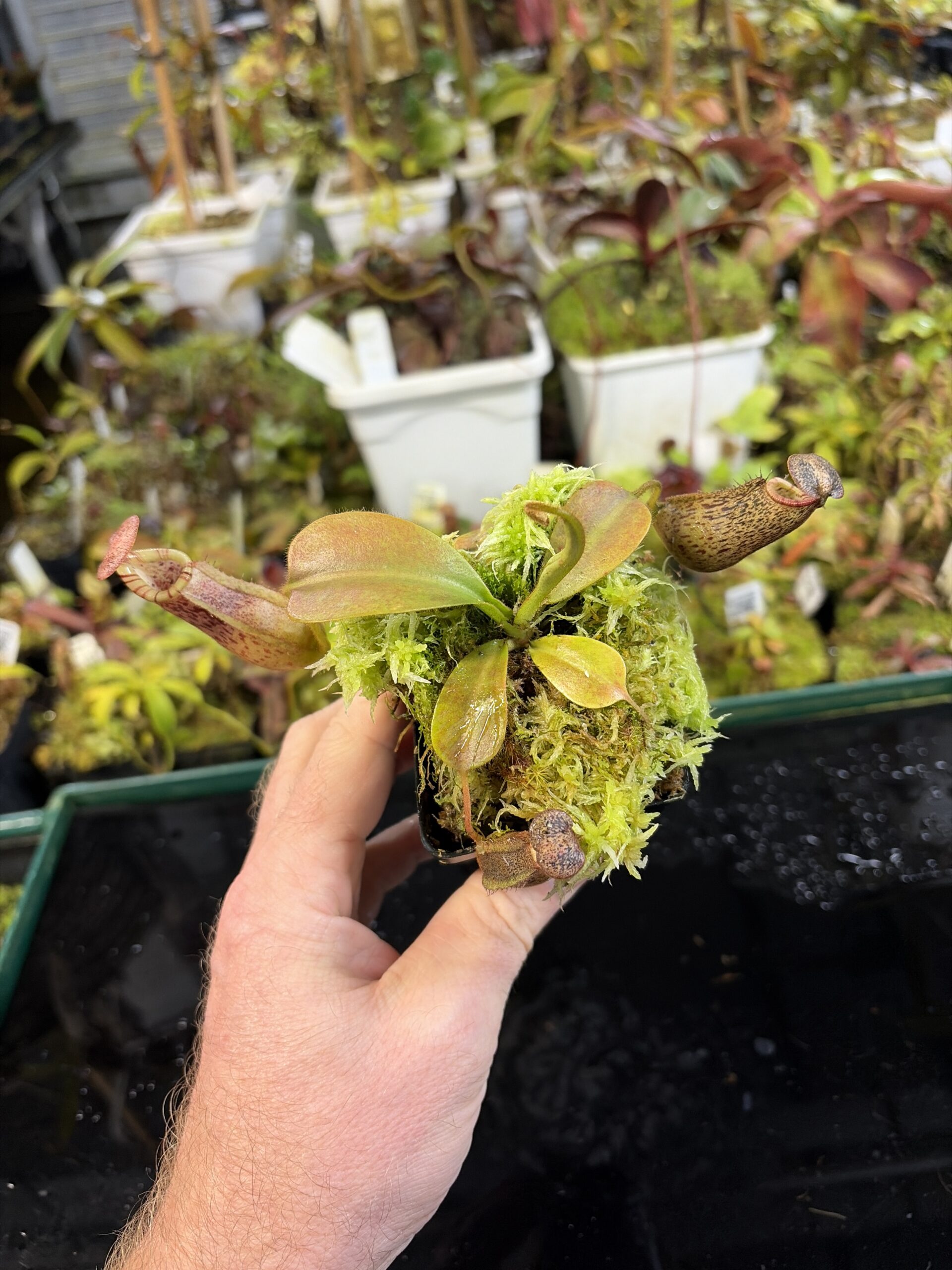
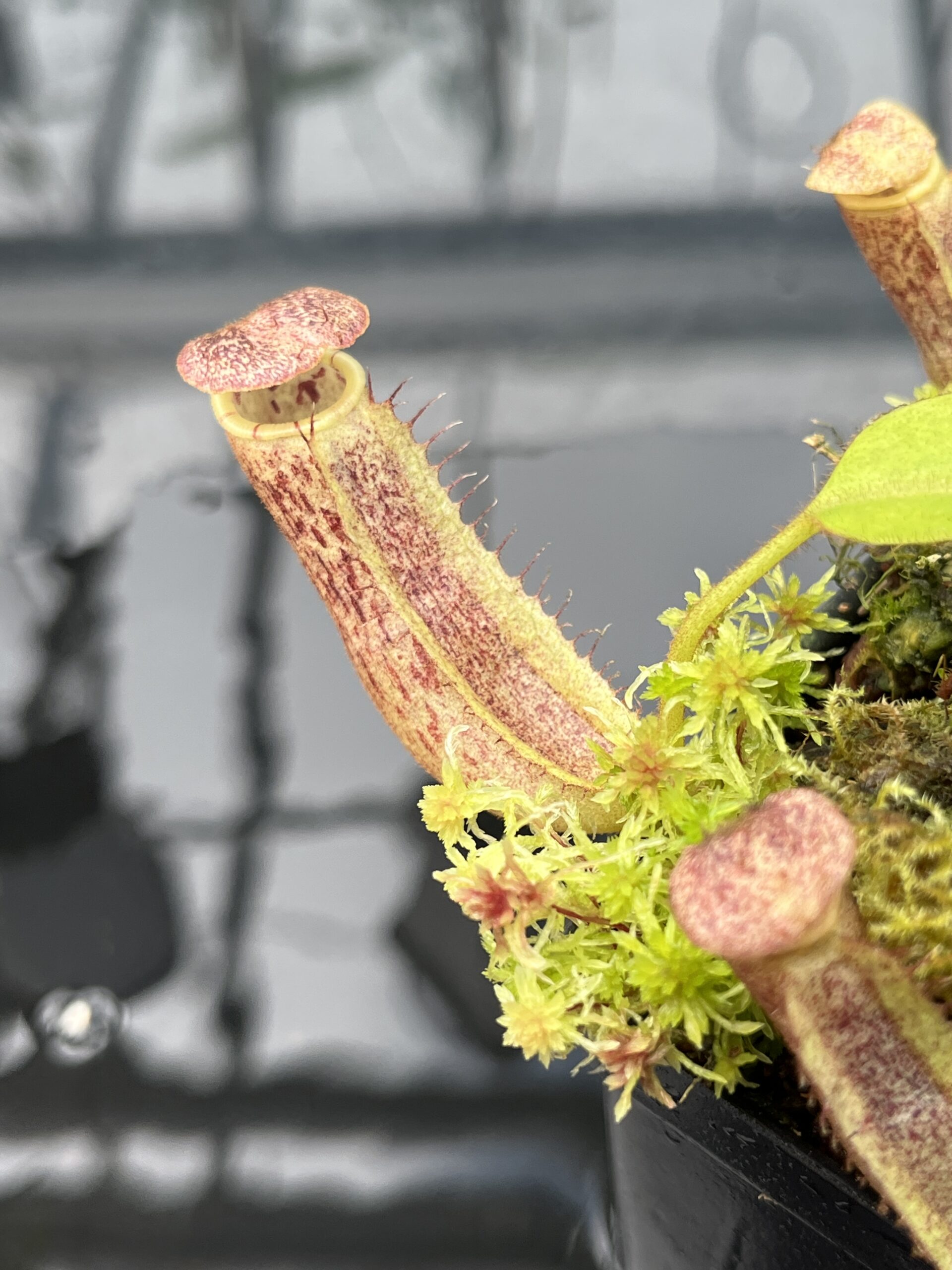
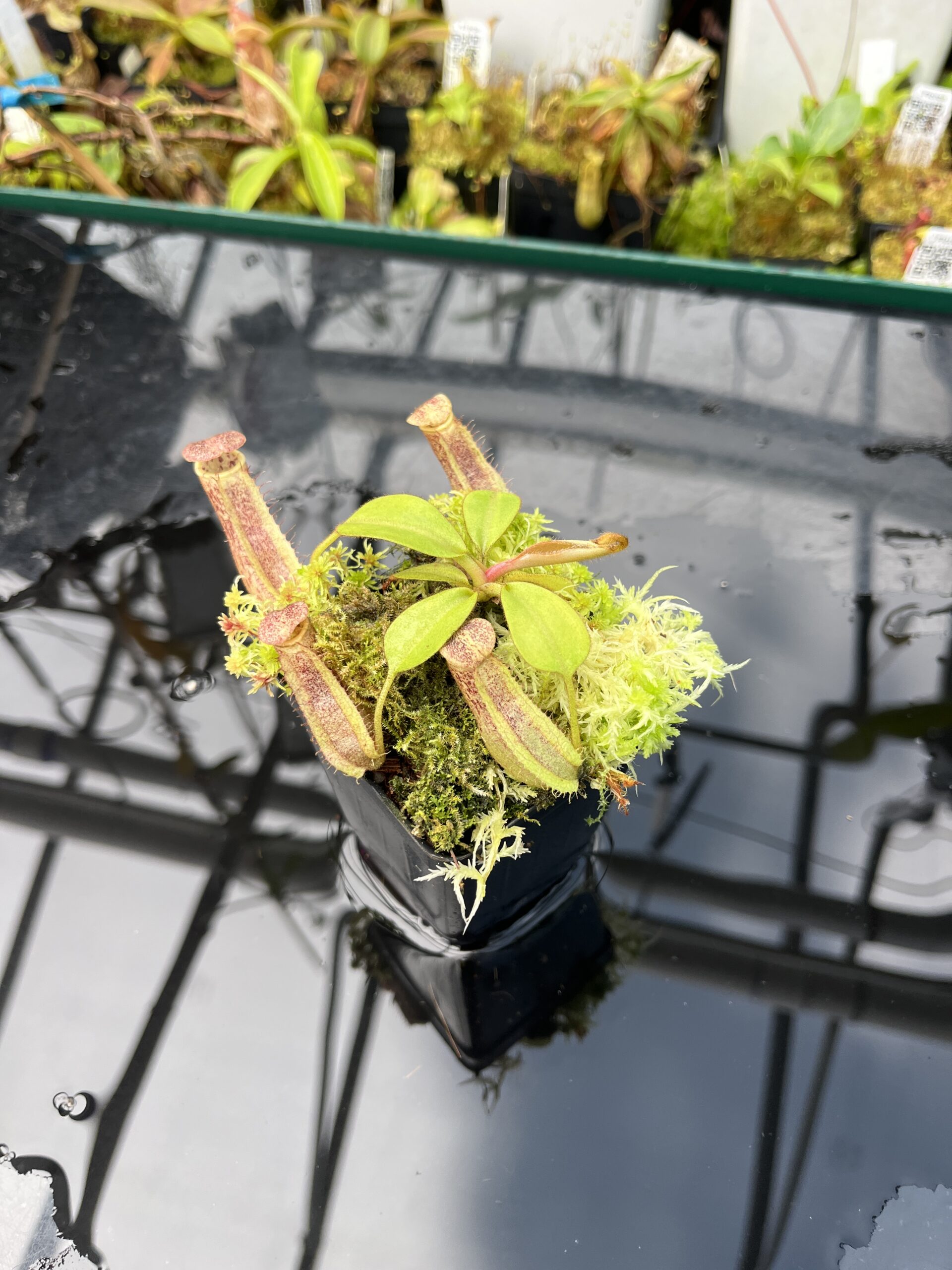
Nepenthes [(lowii × veitchii) red × burbidgeae] × veitchii (k) #18 ep

2 specimens in stock, $42.49 to $49.99. Each photo shows the exact plant you receive.

Nepenthes [(lowii × veitchii) red × burbidgeae] × veitchii (k) #18 ep, specimen IN27907
Medium · Florae
Choose a specimen

$49.99

Size
Medium
Locality
N/A
Breeder
Florae
Conditions
Intermediate
Propagation
Seed Grown
Specimen
IN27907

Nepenthes [(lowii × veitchii) red × burbidgeae] × veitchii (k) #18 ep

A Florae cross of N. lowii, N. burbidgeae and a double dose of N. veitchii, three Bornean species, leaning toward veitchii's flared peristome.

Three Bornean species are involved, with N. veitchii on both sides. Nepenthes veitchii is widespread in northwestern Borneo from near sea level to about 1,600 m, usually as an epiphyte. N. lowii, on the seed side, grows in mossy ridge-top forest across the highlands of northern Borneo at 1,650 to 2,600 m. N. burbidgeae, also on the seed side, grows around Mount Kinabalu and Mount Tambuyukon in Sabah at about 1,200 to 1,800 m, often in low scrub and on exposed ridges over ultramafic soils.

N. veitchii brings its broad, flared peristome and reddish hairs, and with two doses it should set the tone. N. lowii adds its waisted pitchers and bristled lid. N. burbidgeae, the painted pitcher plant, has white, semi-translucent pitchers blotched with crimson. Documentation on this cross is limited, so expect individual character.

Specimens available now

Learn more about this plant

Care

Growing intermediate Nepenthes

Warm days, mild nights and high humidity: forgiving conditions that suit hybrids with both highland and lowland parents.

Intermediate Nepenthes sit between the cool highland and the warm lowland plants, and many hybrids with parents from both are happiest here. Aim for days about 70 to 80 F (21 to 27 C) and nights about 55 to 65 F (13 to 18 C), with humidity above 70 percent, bright filtered light and good airflow. A modest drop at night helps, but these plants tolerate more warmth than strict highlanders.

Use an open mix that drains fast, such as long-fiber sphagnum with perlite or bark, and keep it evenly moist with pure water (rain, distilled or reverse osmosis).

Give larger plants room to climb or trail as they mature. The pitchers feed the plant; fertilizer, if any, should be light and occasional.