
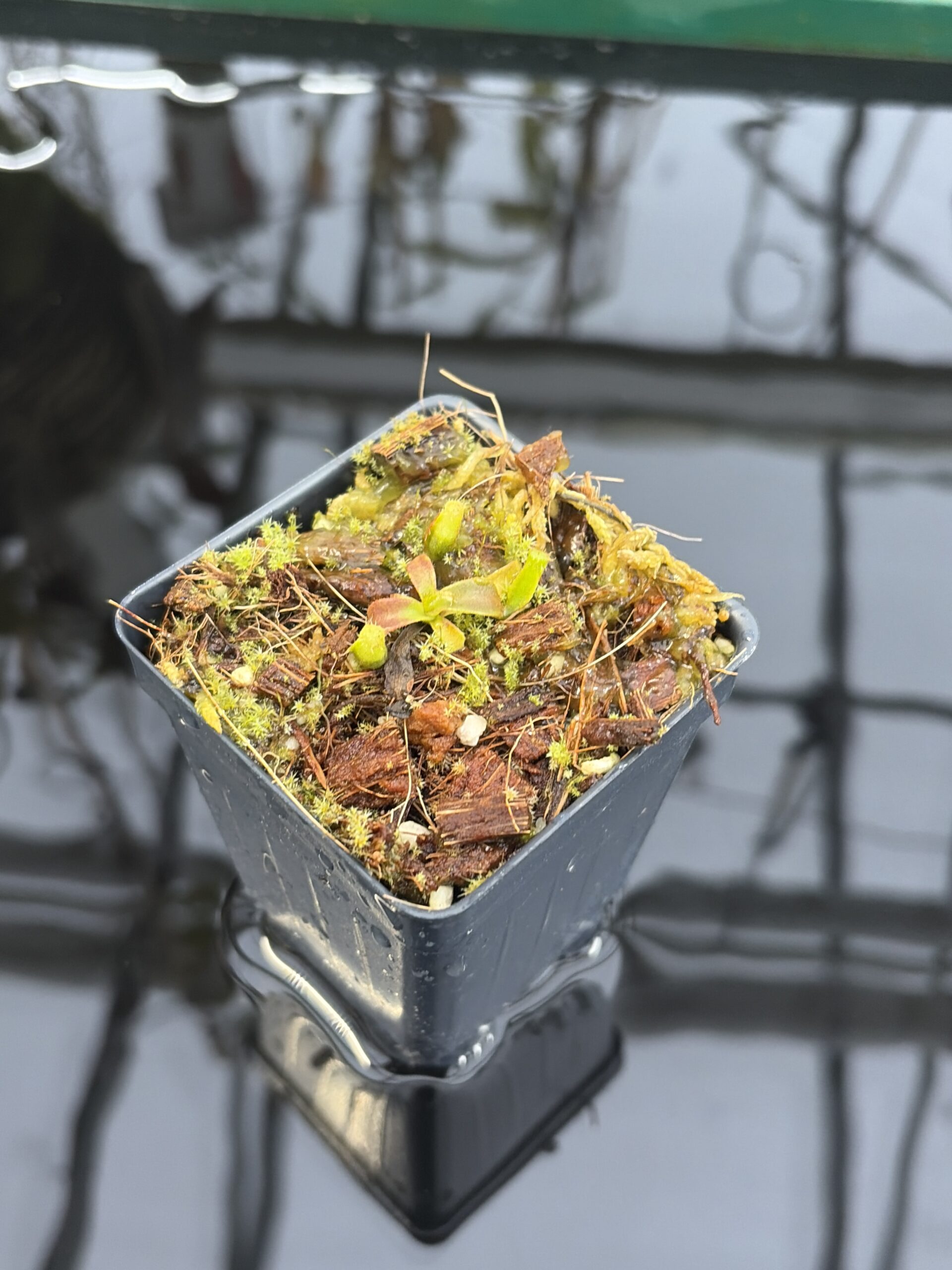
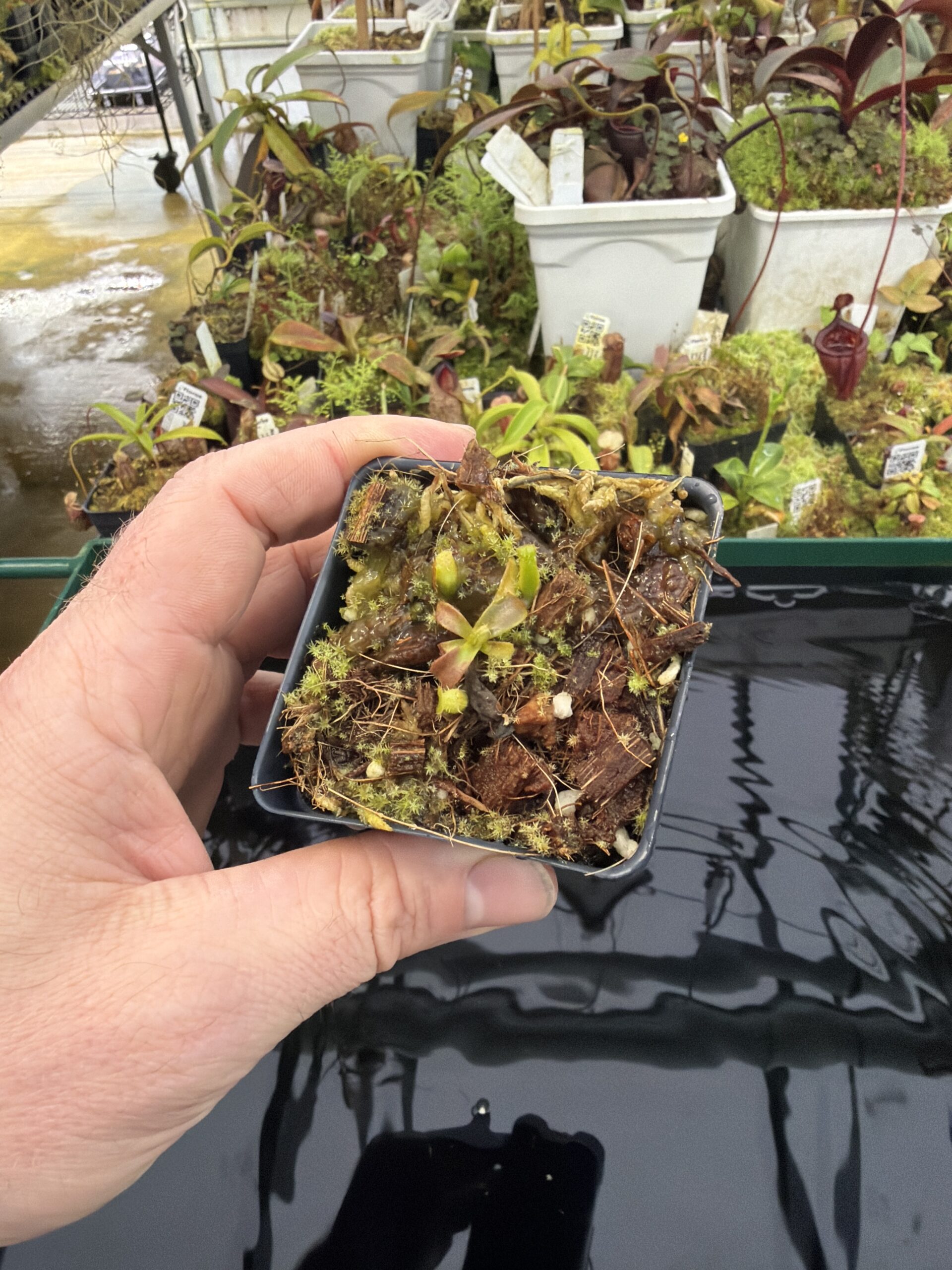
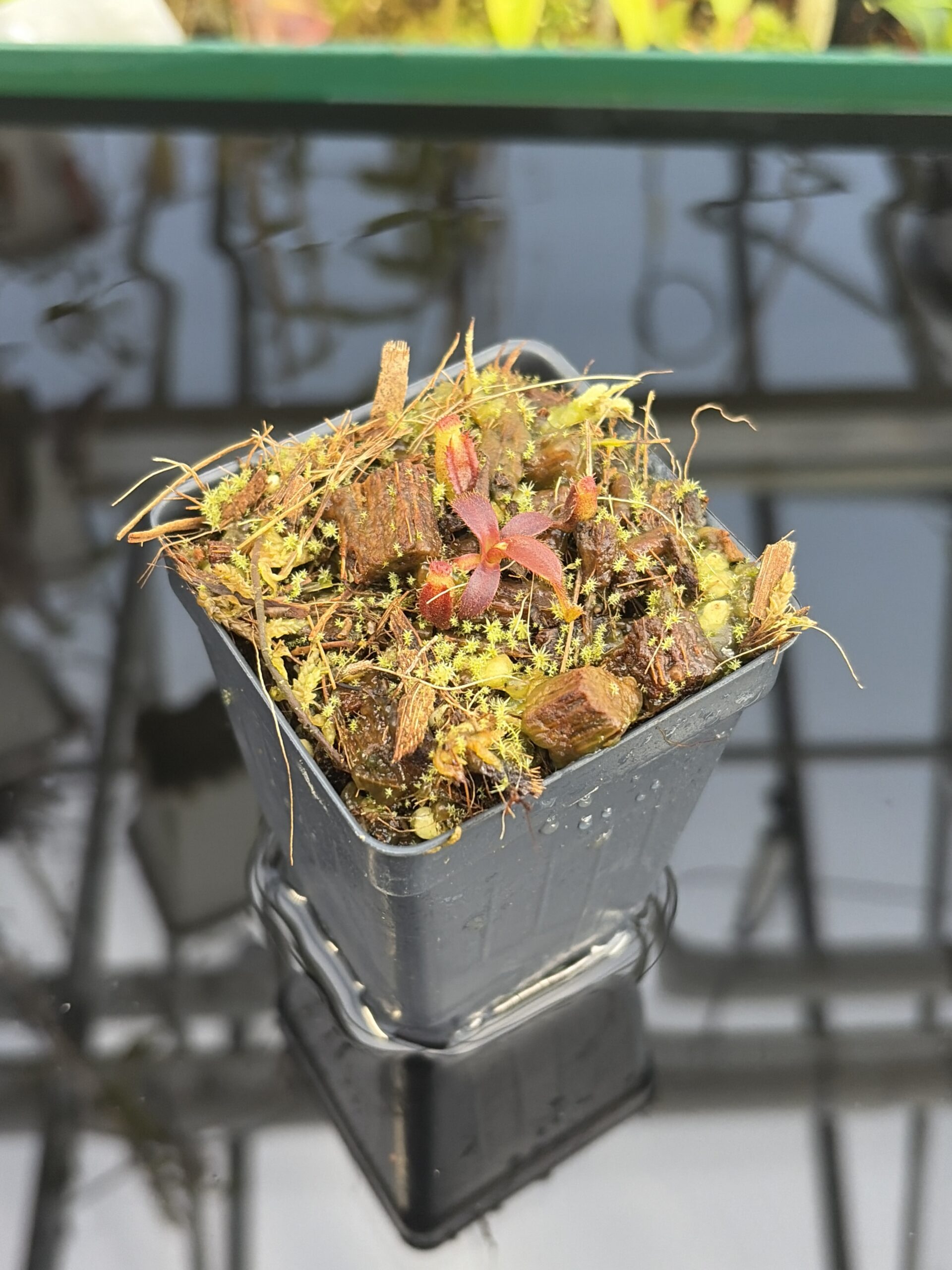
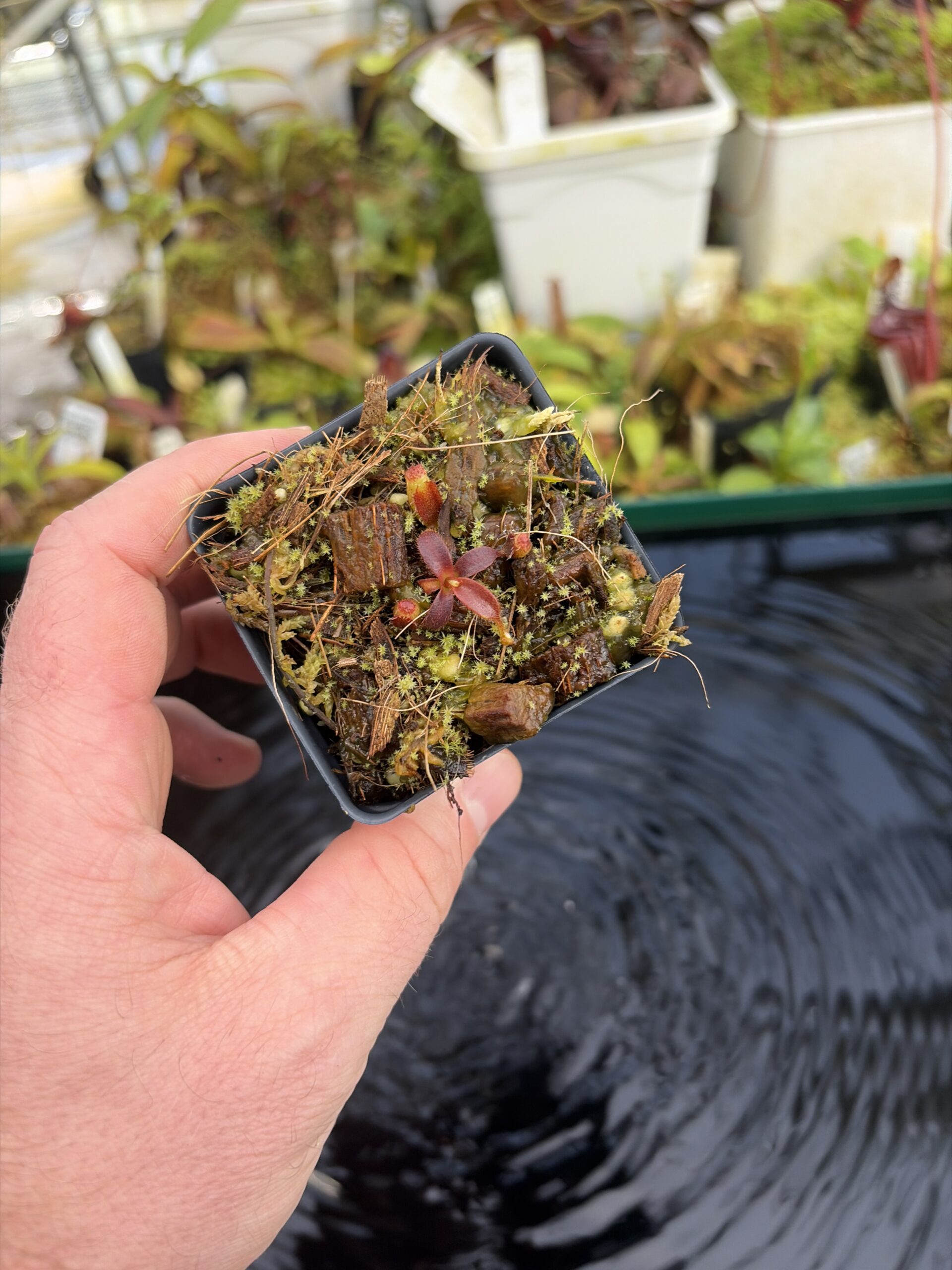
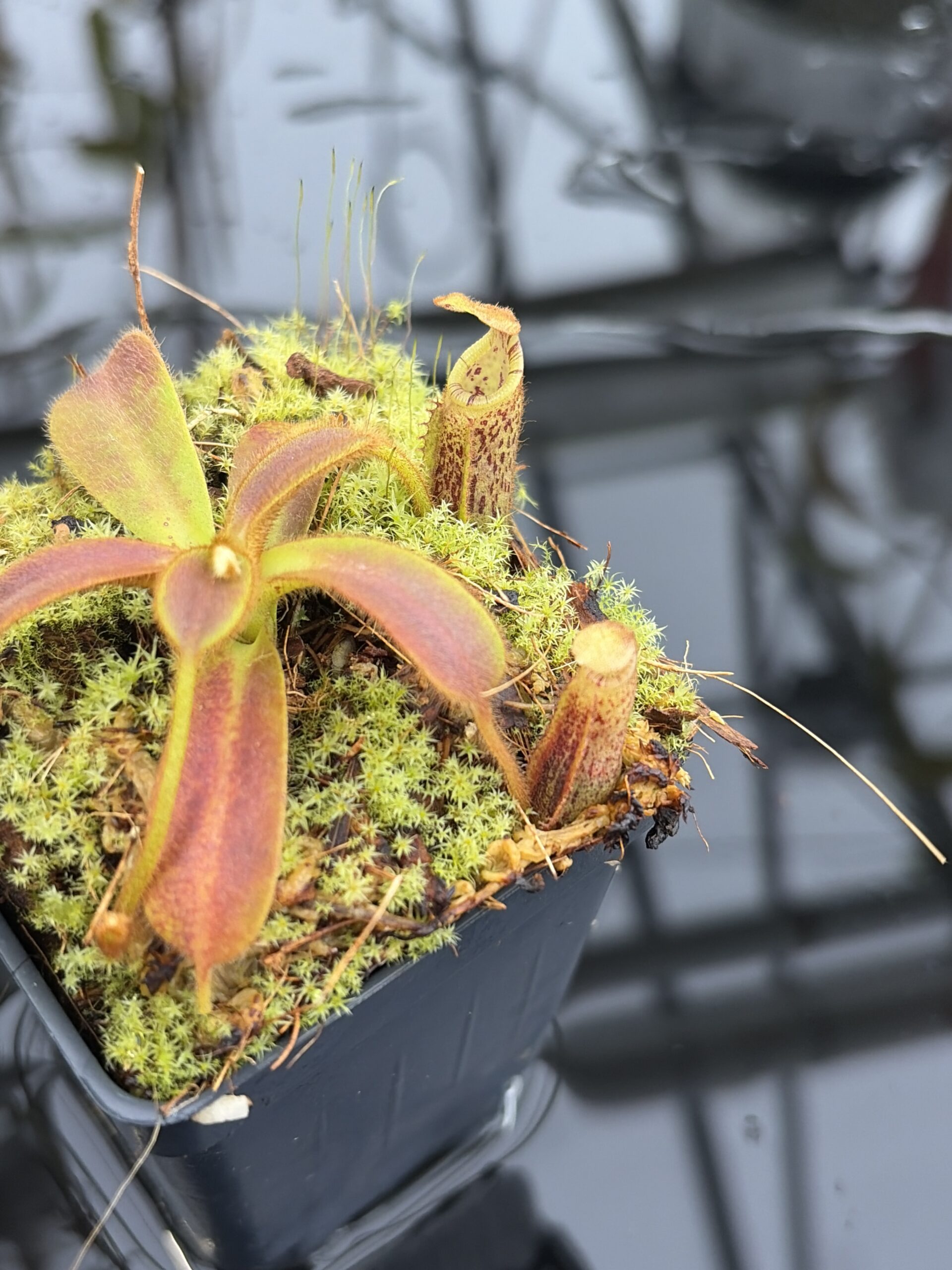
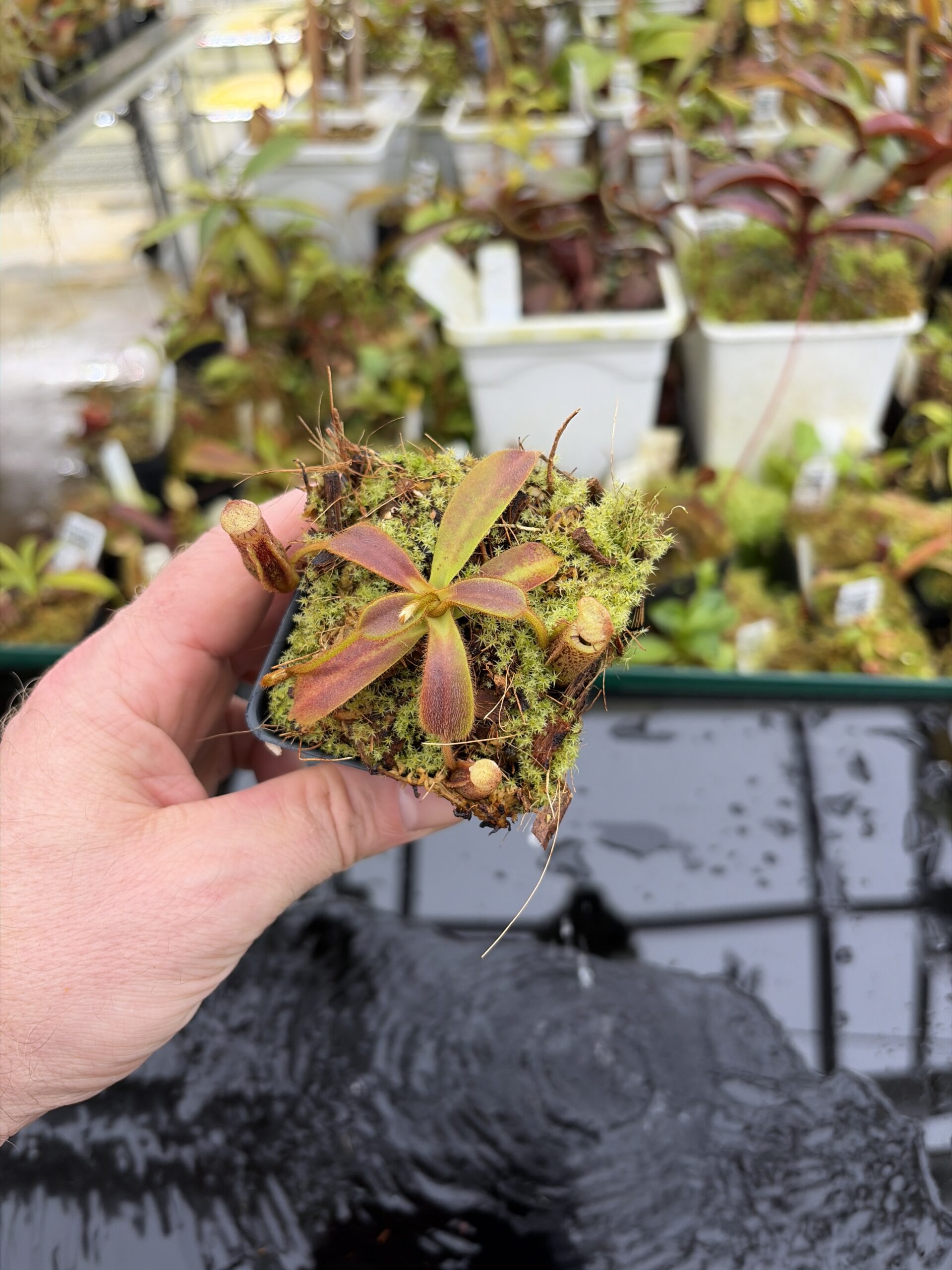
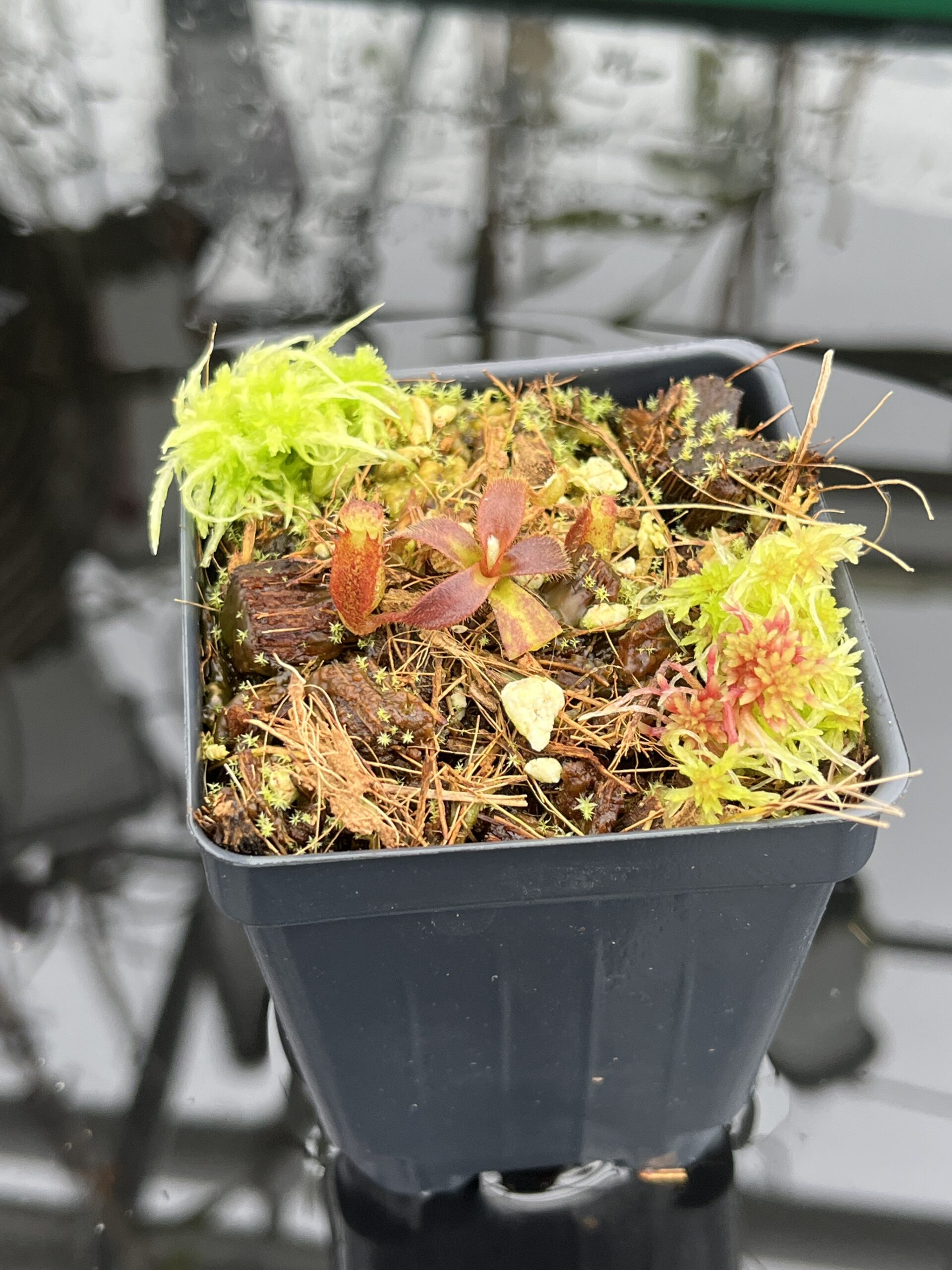
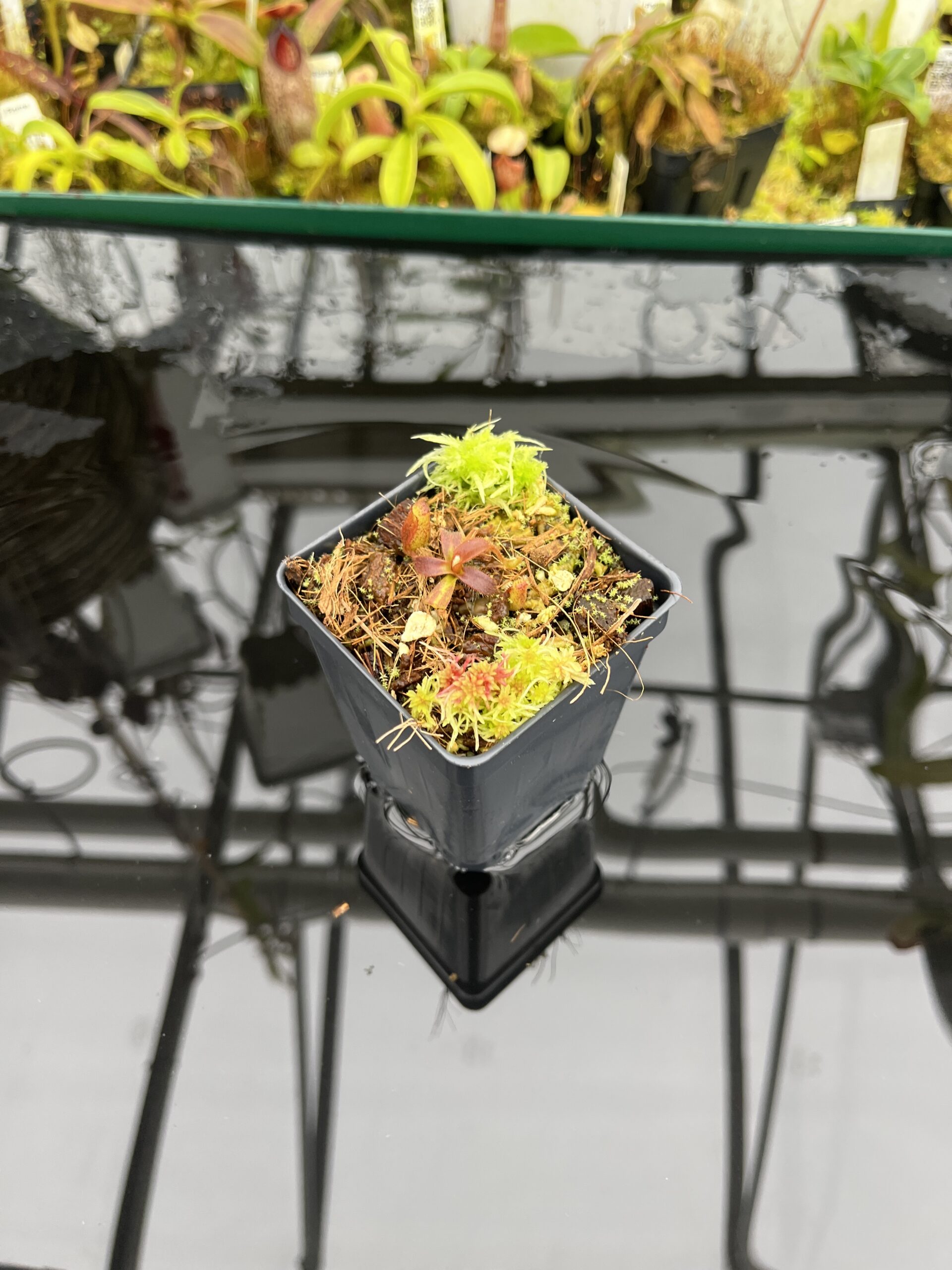


Nepenthes mollis
A velvet-coated highland Nepenthes of northern Borneo, described in 1928 without pitchers and matched to N. hurrelliana after Endert's site was finally revisited in 2018.
Frederik Endert collected it exactly once, on 17 October 1925, on the flanks of Mount Kemul in East Kalimantan at about 1,800 m. B. H. Danser described it in 1928 from that single specimen, a stem with leaves and a male inflorescence but no pitchers. For decades its pitchers remained unknown. Meanwhile, in 2003, a heavily furred, largely epiphytic species from northern Sarawak, southwestern Sabah and Brunei was described as N. hurrelliana; Bruce Salmon had suggested in 1999 that the two might be the same plant. In 2018 an expedition reached Endert's population, the plants matched, and a 2019 revision made N. hurrelliana a synonym of the older name. N. mollis is now understood to range across highland northern Borneo, mostly at about 1,300 to 2,400 m, in tall mossy and upper montane forest.
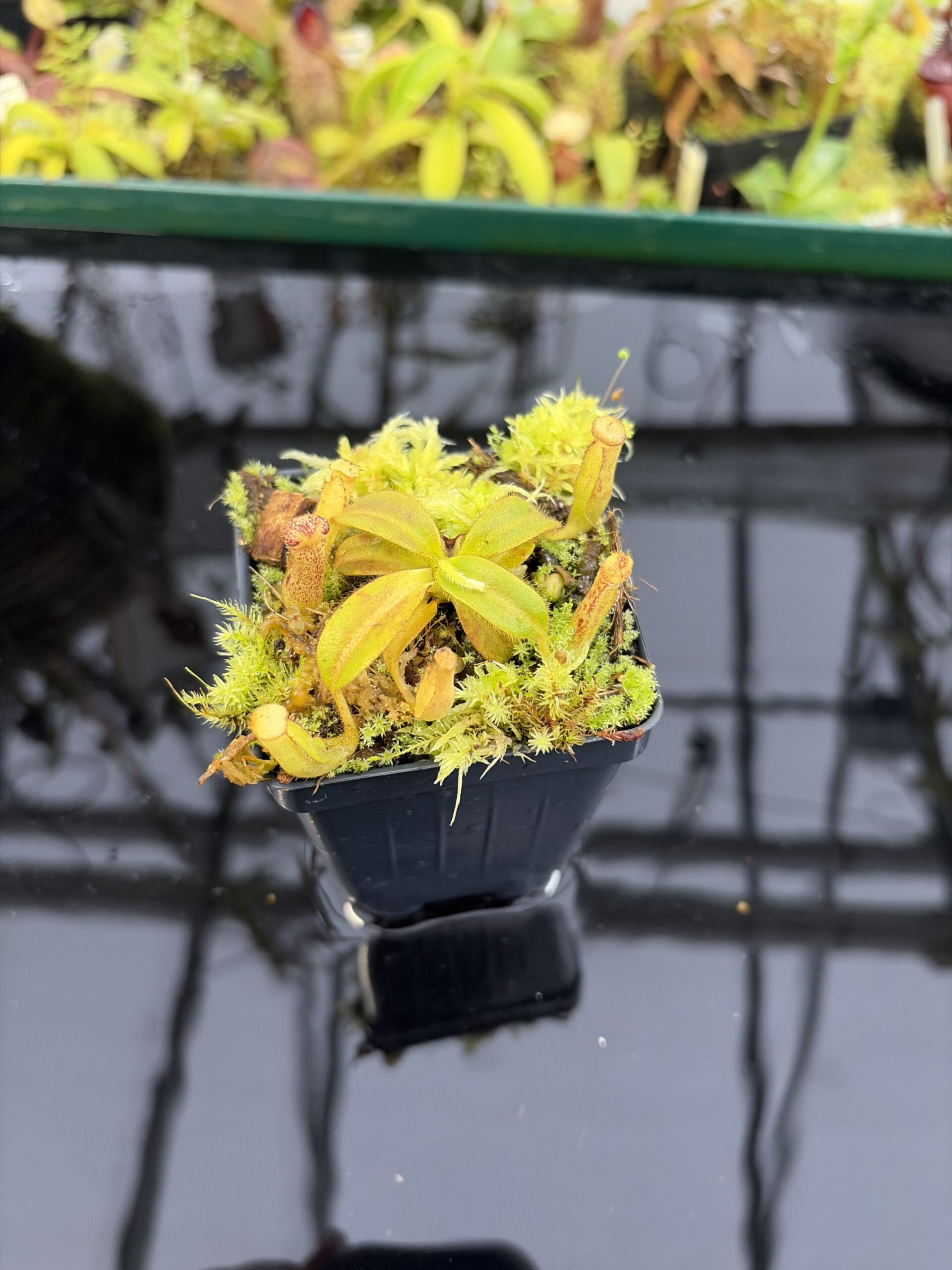
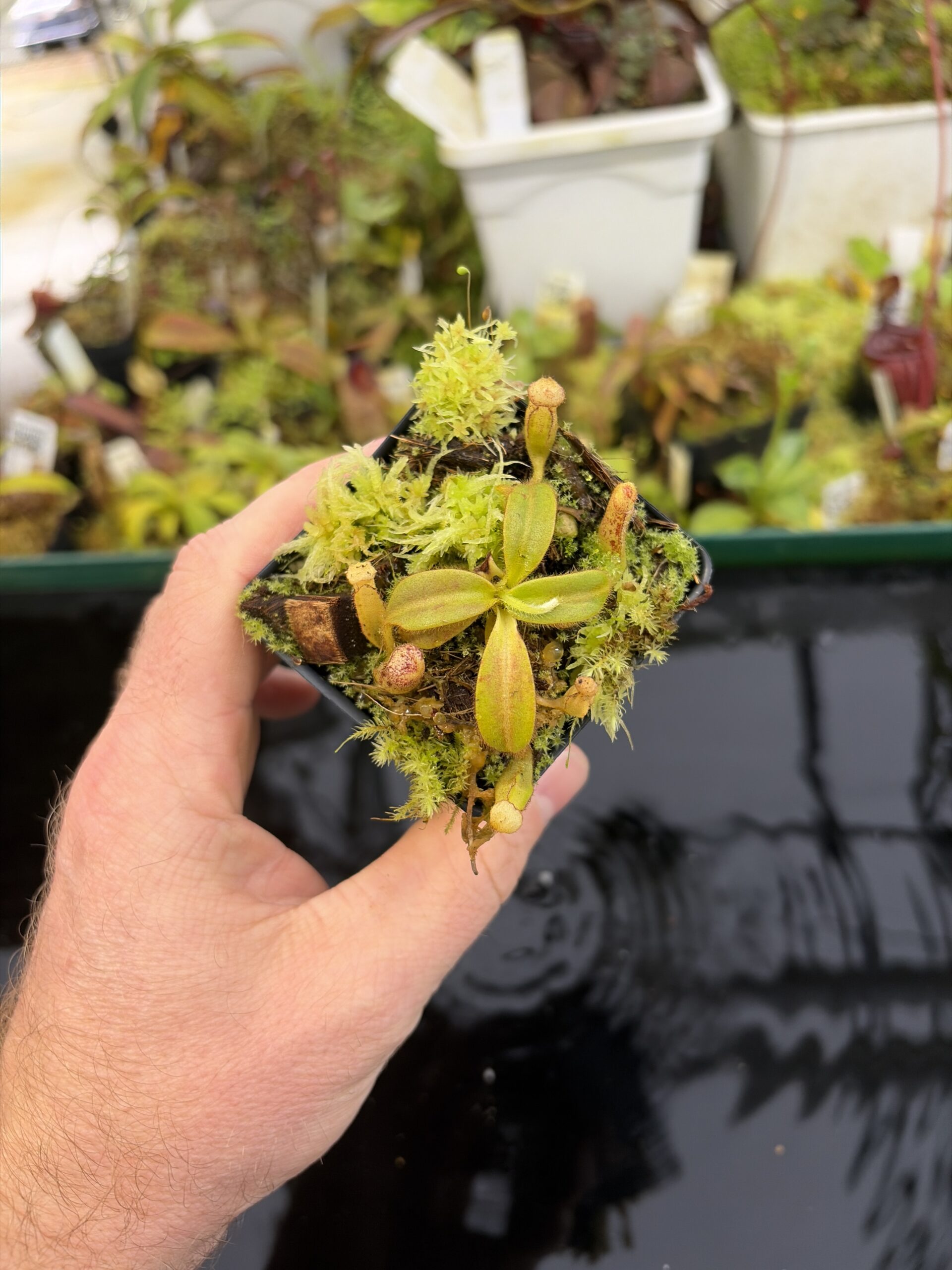
Mollis means soft. The plant is coated in dense red-brown hair across the stems, leaves and pitchers. Both lower and upper pitchers carry a notably tall, extended neck at the back, and the uppers have a hooked crest at the base of the lid. Growers describe the peristome as striped in yellow and brown.