Nepenthes platychila

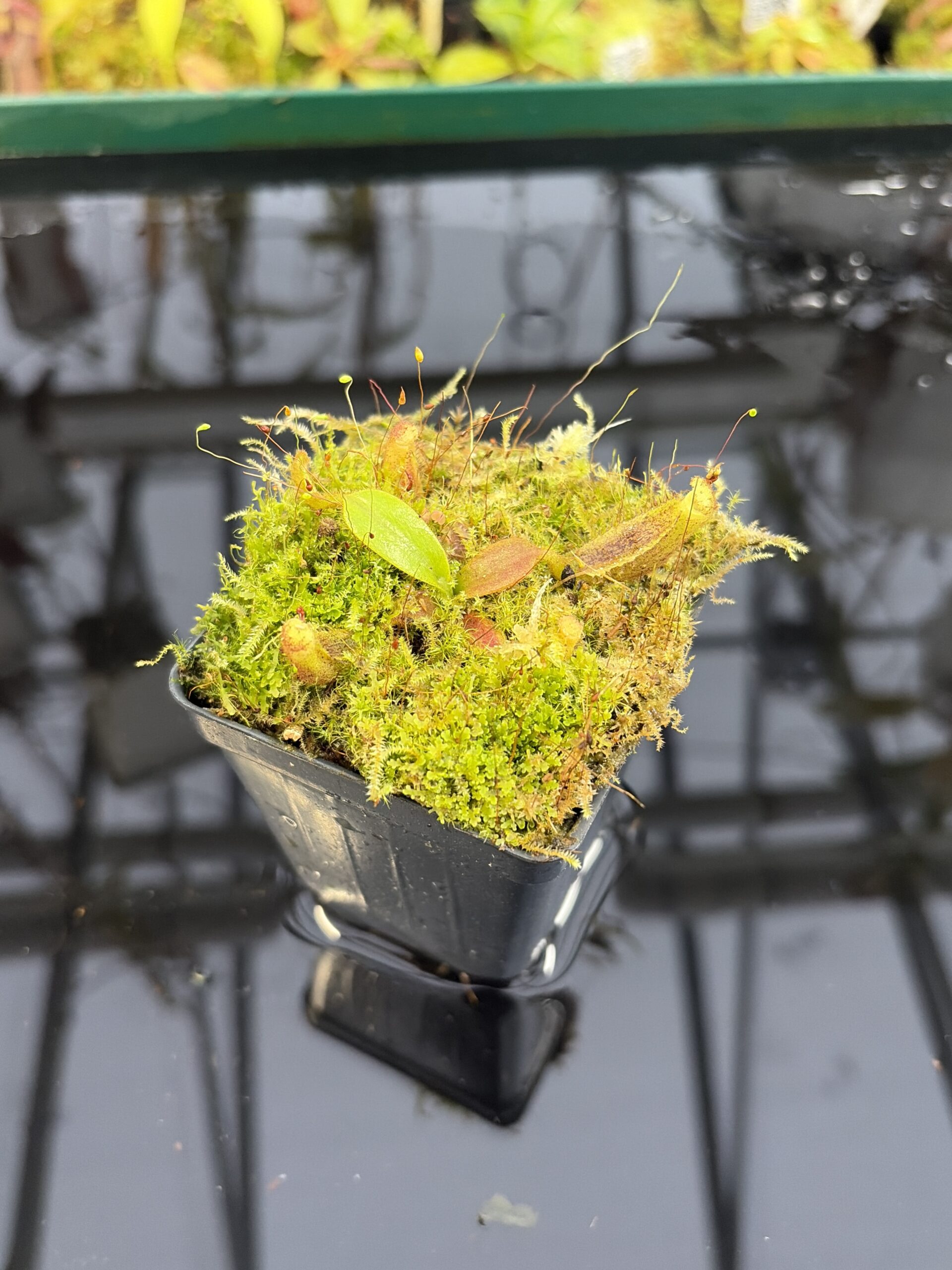
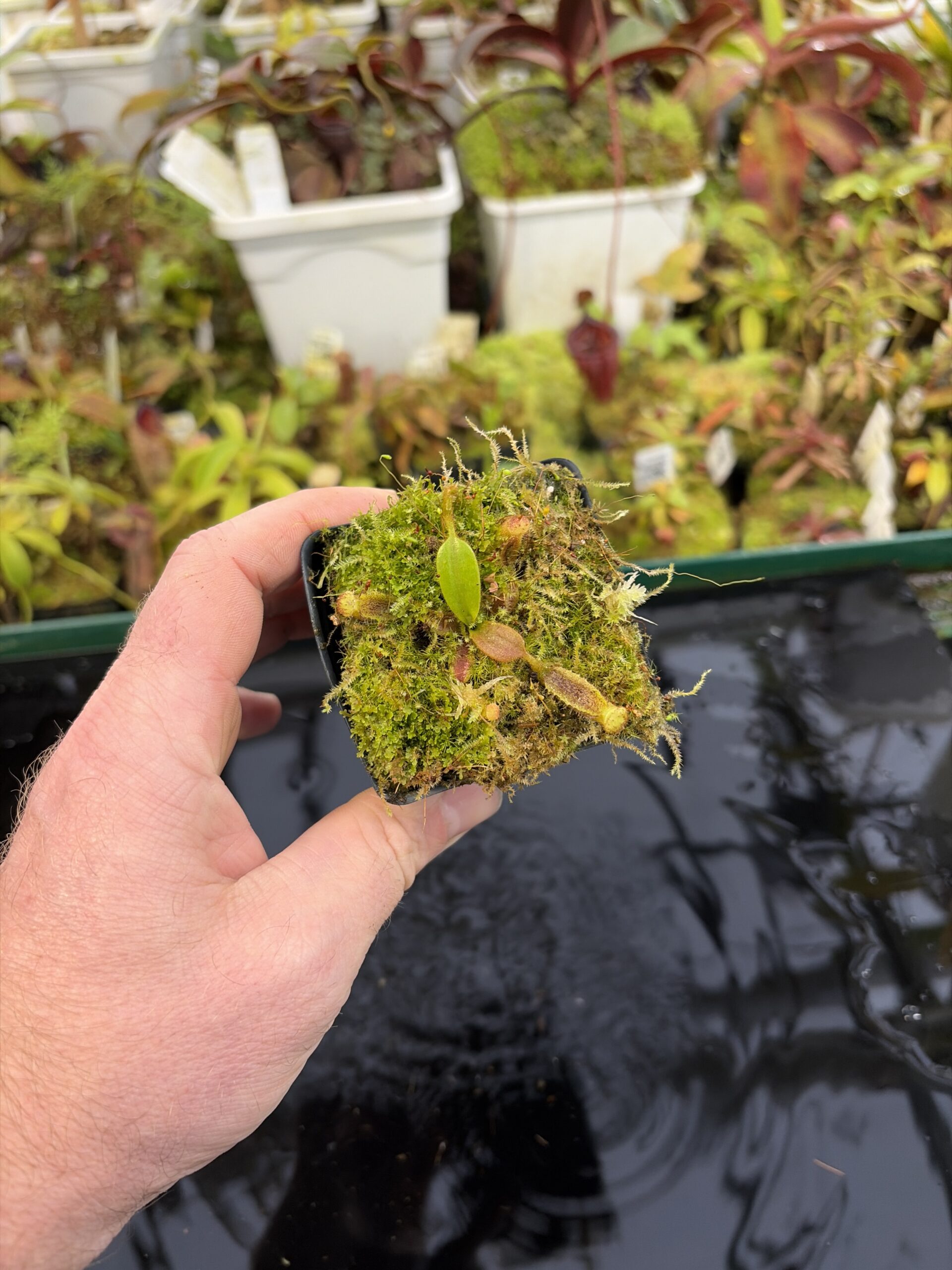
3 specimens in stock, $34.99 to $59.49. Each photo shows the exact plant you receive.

Nepenthes platychila, Clone 04, specimen H27731
Extra Small · Clone 04 · Parker Tyler
Choose a specimen

$34.99

Size
Extra Small
Clone
Clone 04
Locality
N/A
Breeder
Parker Tyler
Conditions
Highland
Propagation
Tissue Culture
Specimen
H27731

Nepenthes platychila

A Hose Mountains endemic from central Sarawak, described in 2002 and named 'flat-lipped' for its broad, smooth peristome on funnel-shaped upper pitchers.

Nepenthes platychila is endemic to the Hose Mountains of central Sarawak, Borneo. Ch'ien Lee described it in 2002 in the Gardens' Bulletin Singapore. Earlier the same year it had appeared in a report on the Nepenthes of the Hose Mountains under the placeholder name Nepenthes sp. 'B'.

The name is Greek for 'flat-lipped', and its peristome is smooth. The upper pitchers are funnel-shaped. It belongs to the loosely defined N. maxima complex, alongside species such as N. fusca, N. stenophylla, N. klossii and N. maxima itself, and a natural hybrid with N. fusca has been recorded.

Specimens available now

Learn more about this plant

Care

Growing highland Nepenthes

Cool nights, mild days, high humidity and steady airflow, the mountain cloud forest that most of our Nepenthes come from.

Highland Nepenthes grow in montane forest where nights cool down sharply after mild days. Aim for nights about 50 to 55 F (10 to 13 C), days 70 to 78 F (21 to 26 C), humidity above 70 to 80 percent, bright filtered light and constant airflow. The night drop is what highland plants need most; a warm room at night slows them down.

Grow them in an open, airy mix that drains fast, such as long-fiber sphagnum with perlite or bark, and keep it evenly moist with pure water (rain, distilled or reverse osmosis). Never let the pot sit in water for long.

New plants settle in over a few weeks; keep conditions steady while they do. The pitchers catch their own food, so fertilizer, if any, should be light and occasional.