
Nepenthes spectabilis
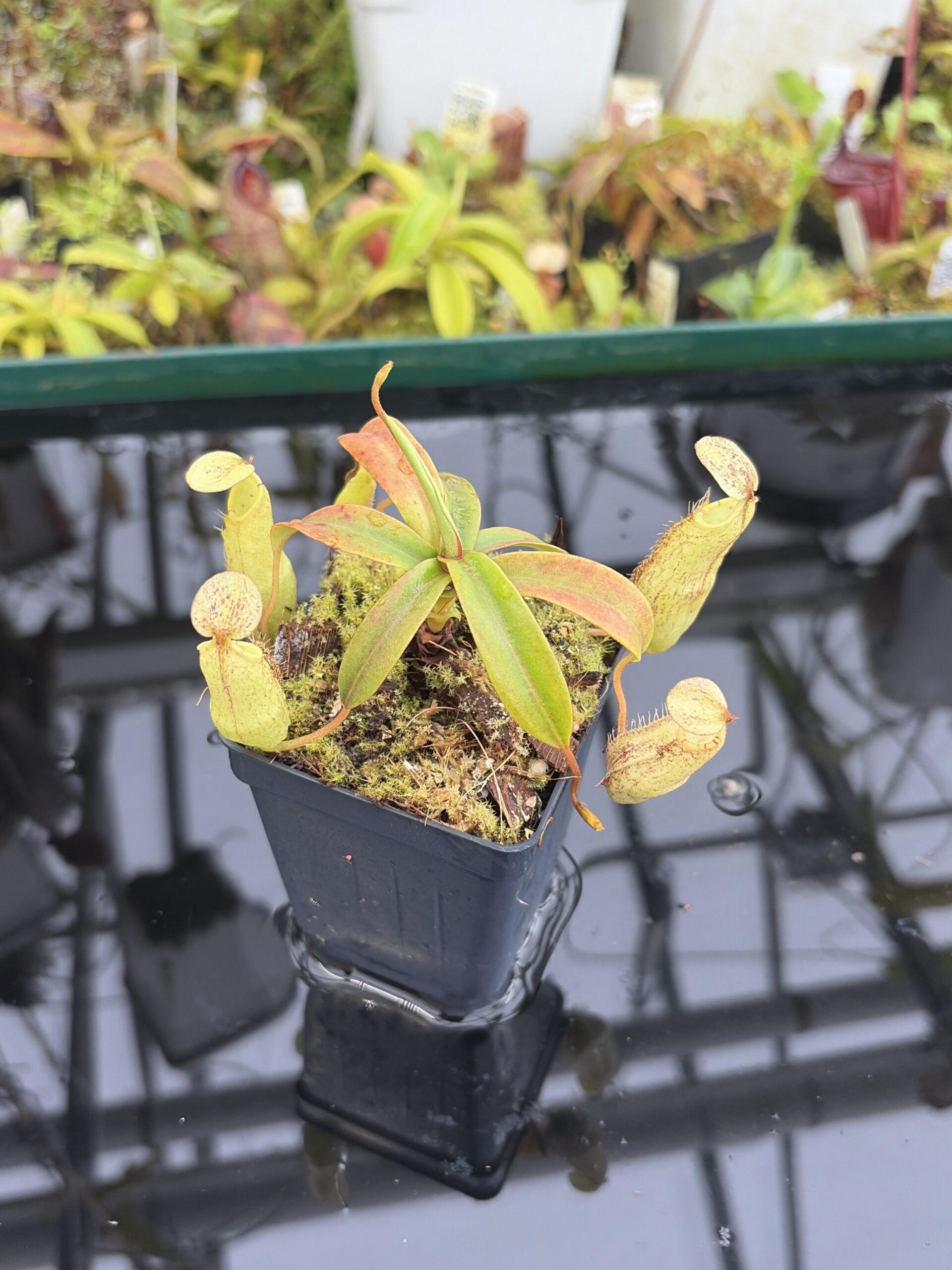
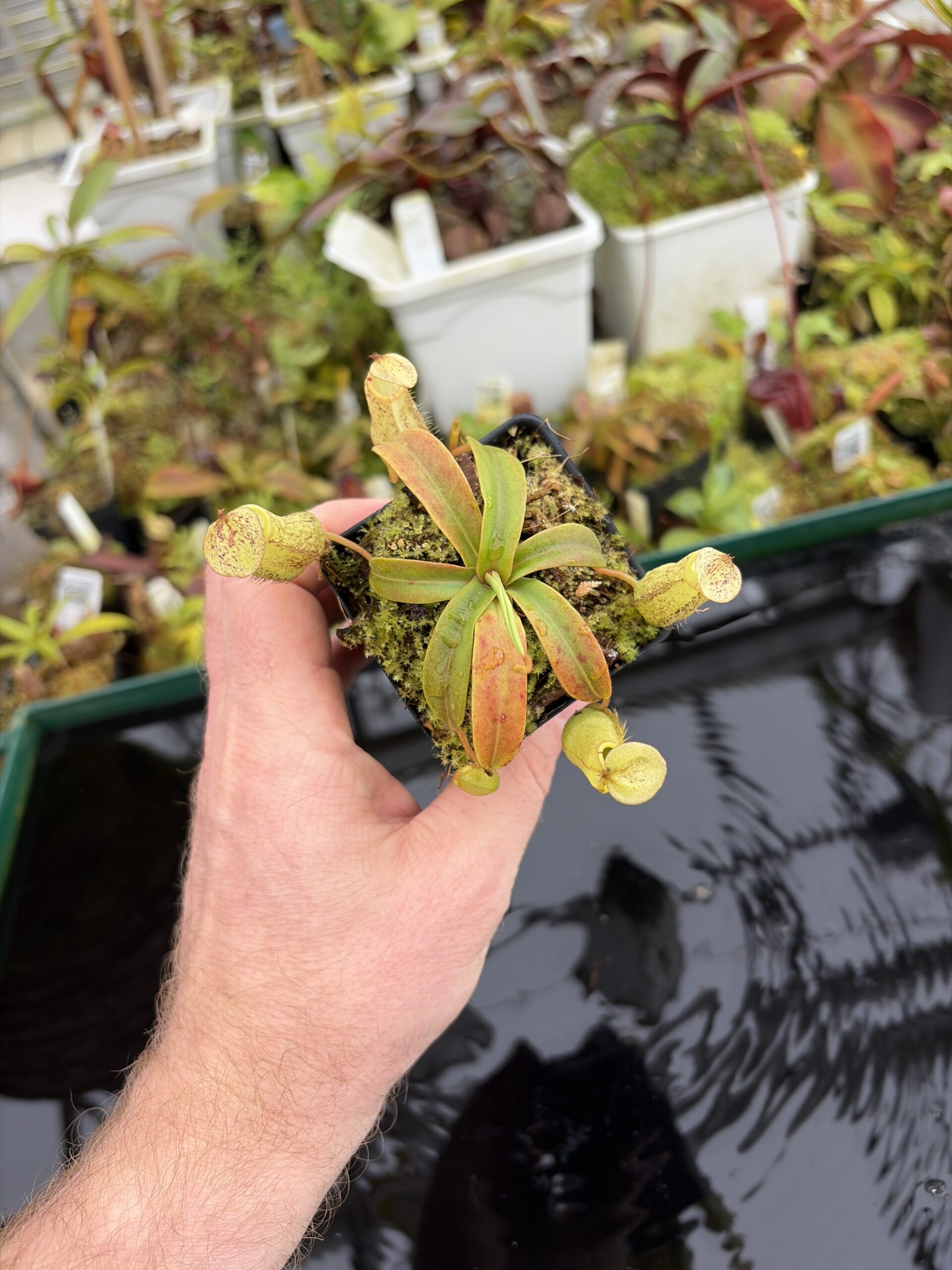
A North Sumatran highland species with slender, brown-speckled upper pitchers, a striped toothed peristome and a long spur under the lid.
Nepenthes spectabilis is endemic to Sumatra, found only in North Sumatra and Aceh, from the Lake Toba region in the south to Mount Kemiri in the north. It grows at about 1,400 to 2,200 m in mossy forest and stunted upper montane forest, usually on the ground and sometimes as an epiphyte, and one population on Mount Bandahara grows in Sphagnum. Julius August Lörzing first collected it on 5 June 1920 on Mount Sibajak, and B. H. Danser described it in 1928. It is listed as Vulnerable because of its patchy distribution, and Charles Clarke noted signs of collecting pressure on Mount Pangulubao.
The epithet is Latin for notable, and the upper pitchers earn it: up to about 26 cm tall, cylindrical to narrowly funnel-shaped above a hip, usually ribbed rather than winged, and light green with dark brown speckles. The peristome is often yellowish green striped with brown and carries small, distinct teeth on its inner edge. The lid is roughly round with a strongly heart-shaped base, and the spur behind it is very long, up to about 30 mm. It resembles N. rigidifolia in coloring, and a natural hybrid between the two grows near the type locality of N. rigidifolia.