
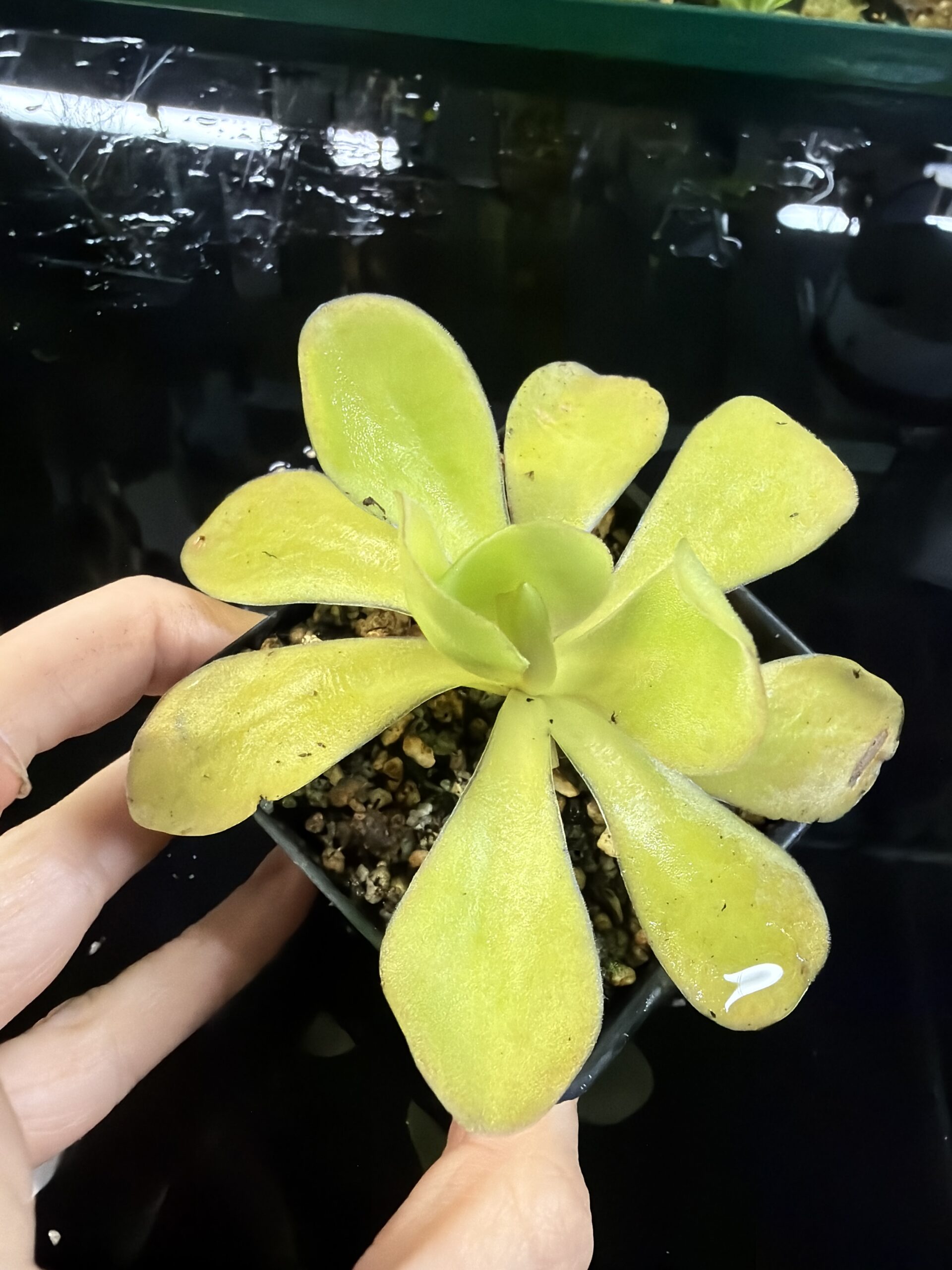
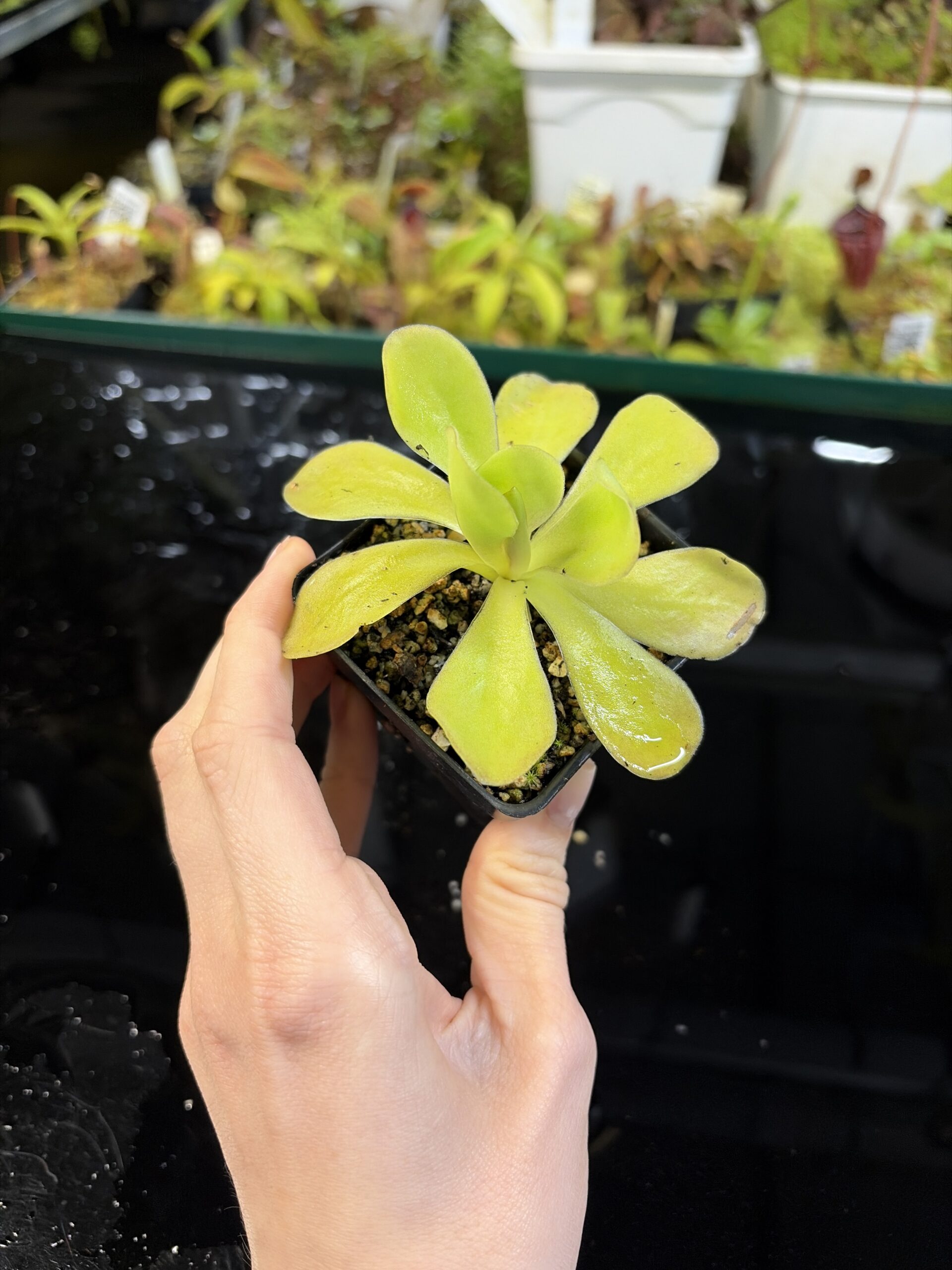
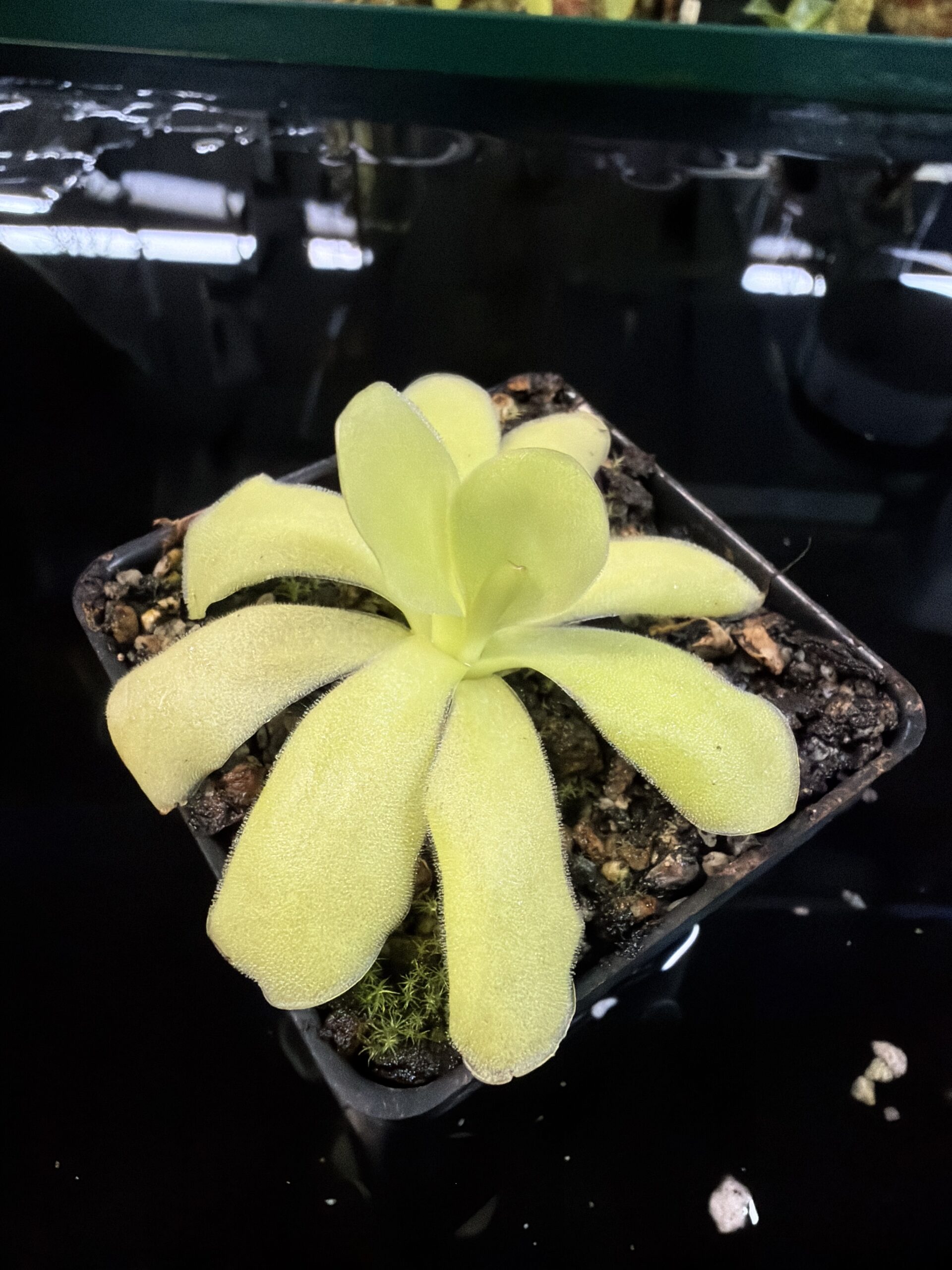
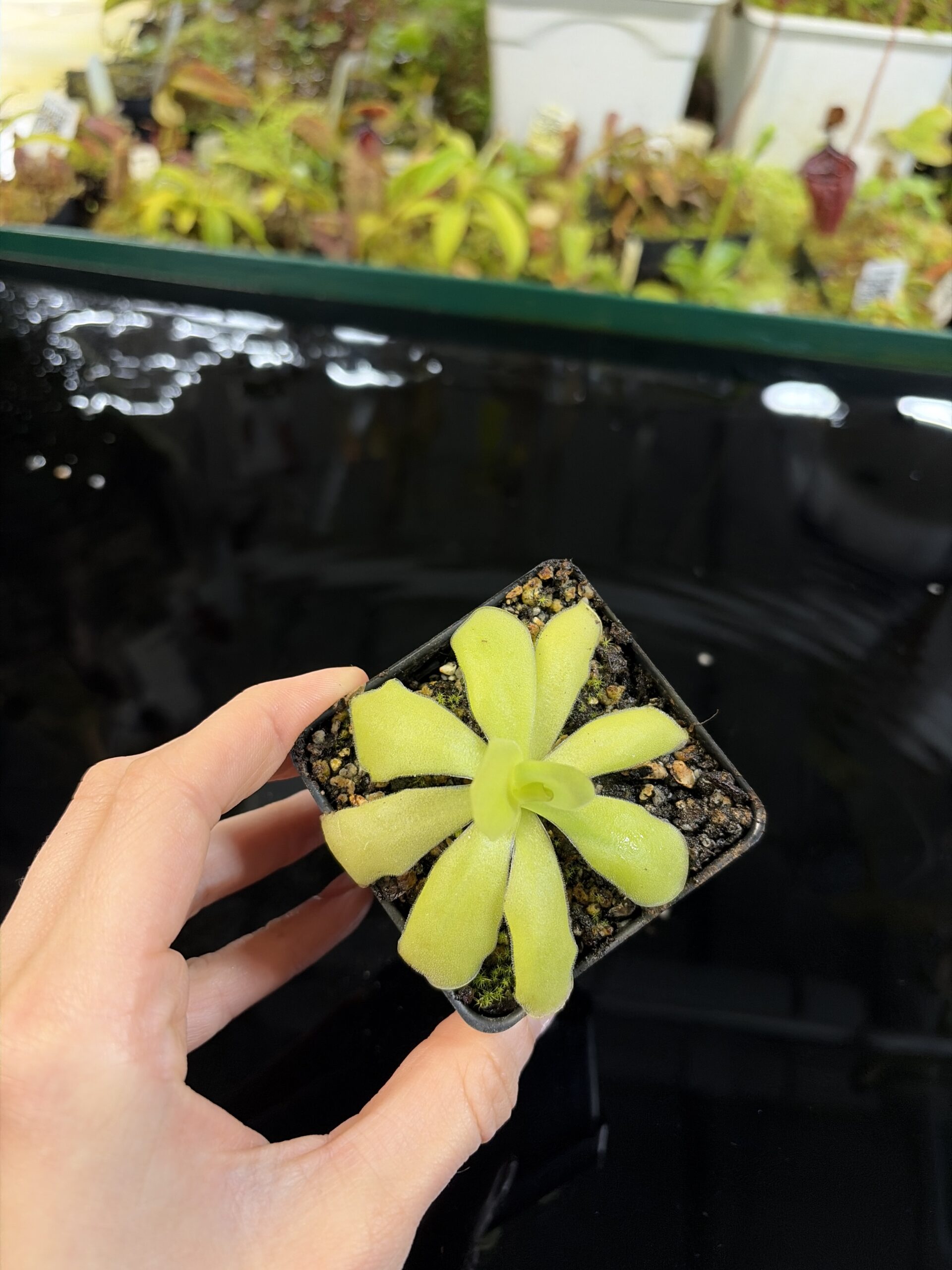
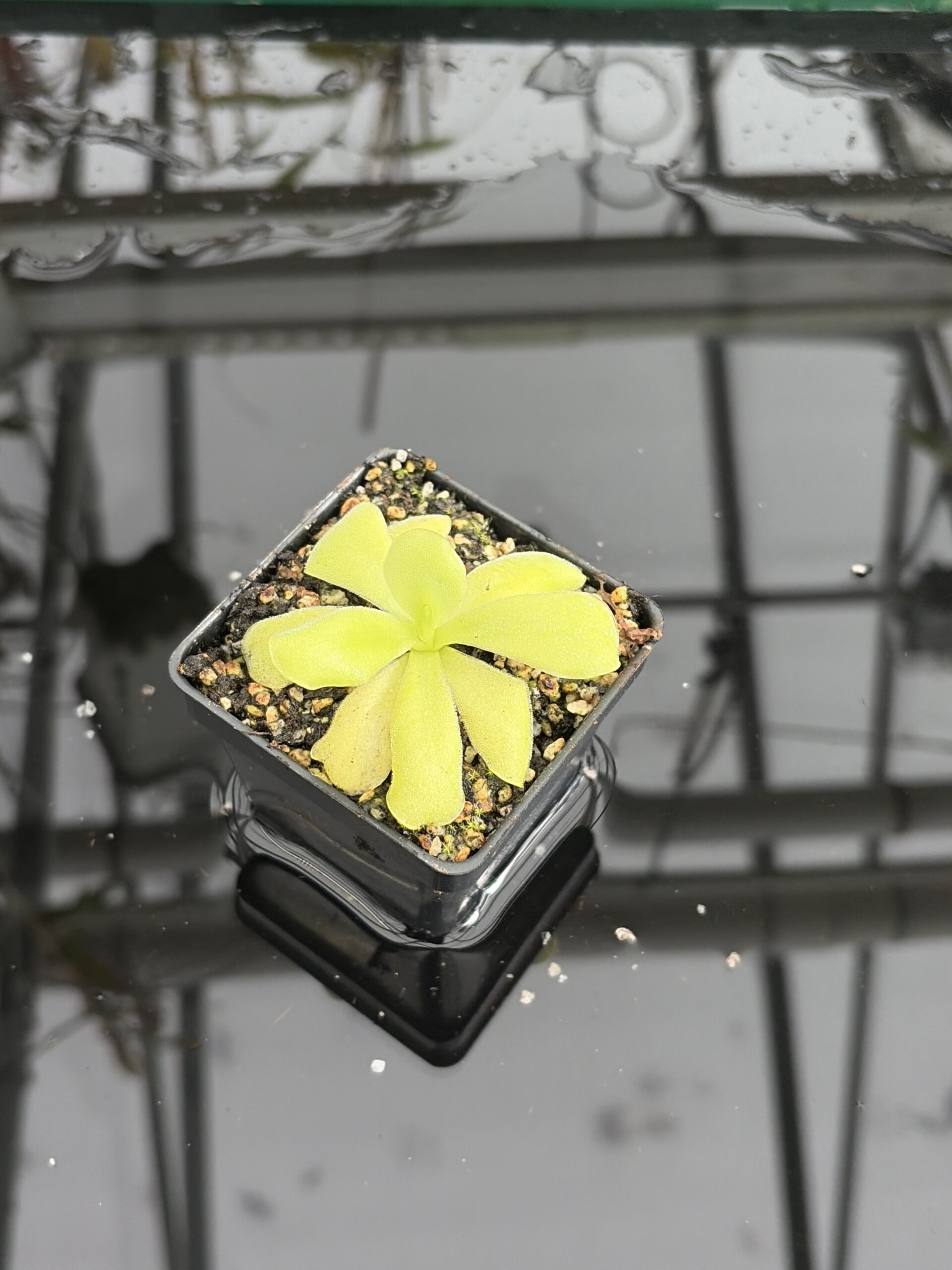
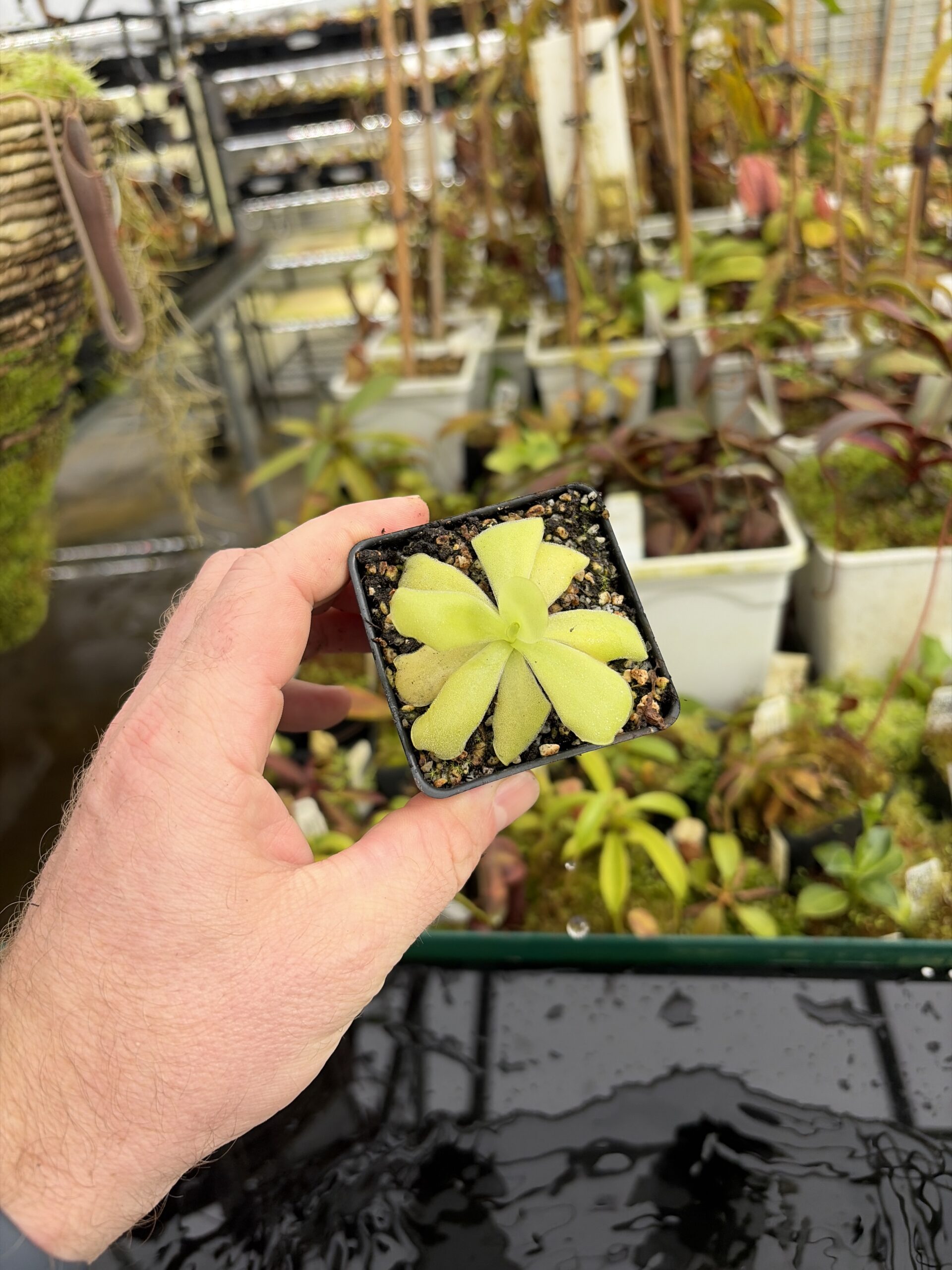
Pinguicula agnata
A Mexican cliff-dwelling butterwort from Hidalgo and Querétaro, with salmon-red winter rosettes and nearly white to violet flowers in the dry season.
Pinguicula agnata is a Mexican butterwort known from the states of Hidalgo and Querétaro. Siegfried Jost Casper described it in 1963 from plants collected above the Barranca de Tolimán, north of Zimapán in Hidalgo, where the type population grows on steep, near-vertical limestone cliffs. It lives in crevices in the rock or on mats of moss, mostly at around 1,300 to 1,600 m, and in Querétaro it grows close to P. moranensis. In 2025 it was one of several Mexican butterworts in which researchers reported weak, drought-induced CAM photosynthesis, the water-saving metabolism of succulents, and the first evidence of it in any carnivorous plant.
Like many Mexican butterworts it changes form with the seasons. In the dry winter it makes a compact rosette of short, succulent leaves, red to salmon in color and densely covered with white hairs on the upper surface. In the wet season it switches to looser rosettes of longer, broader carnivorous leaves, green to red-brown. Growers report flowering mainly in the dry season, from about November to March. The petals are nearly white with pale violet dots at the base, or washed deep violet on the outer lobes, over a white to yellow-green tube.