
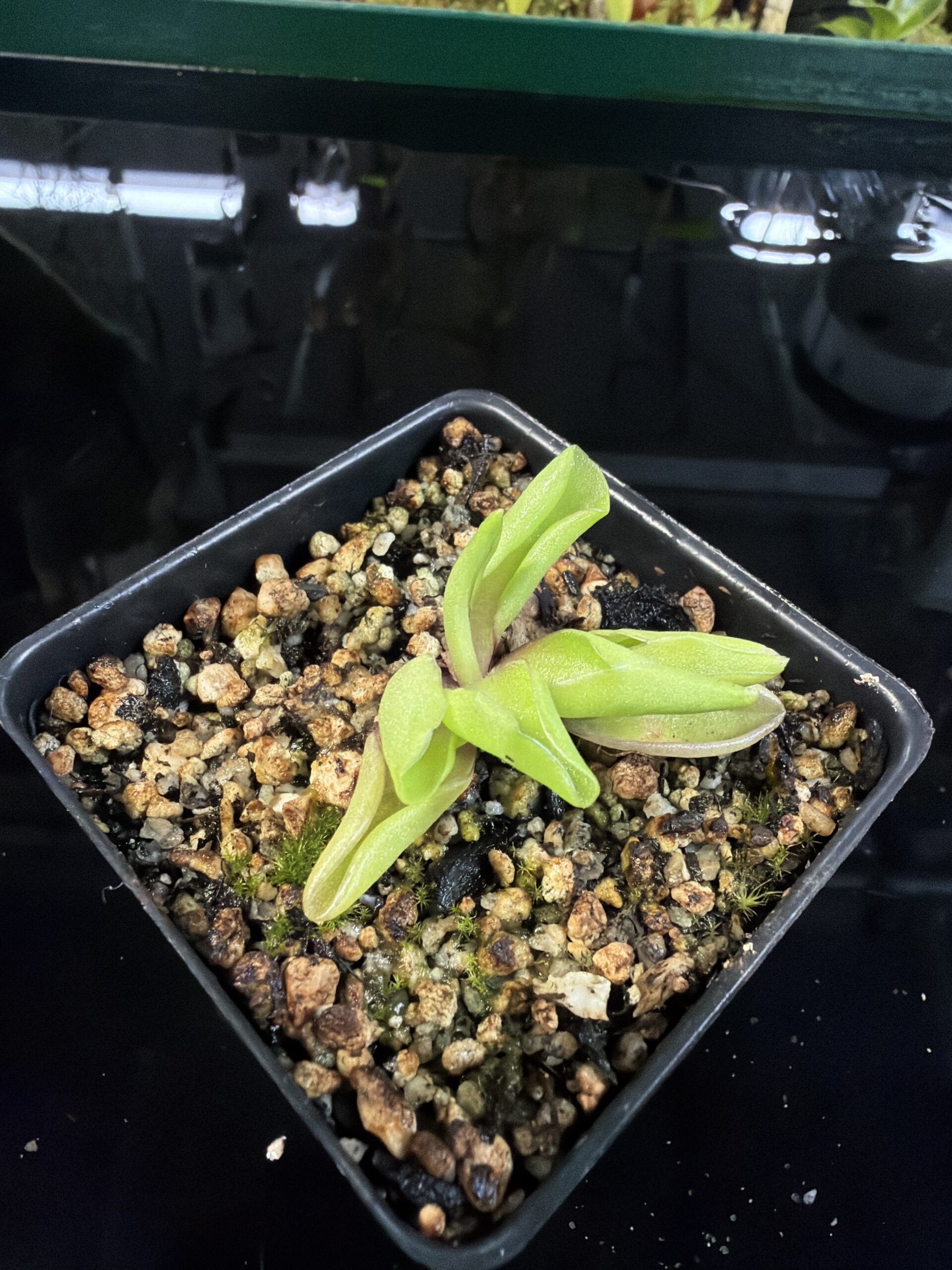
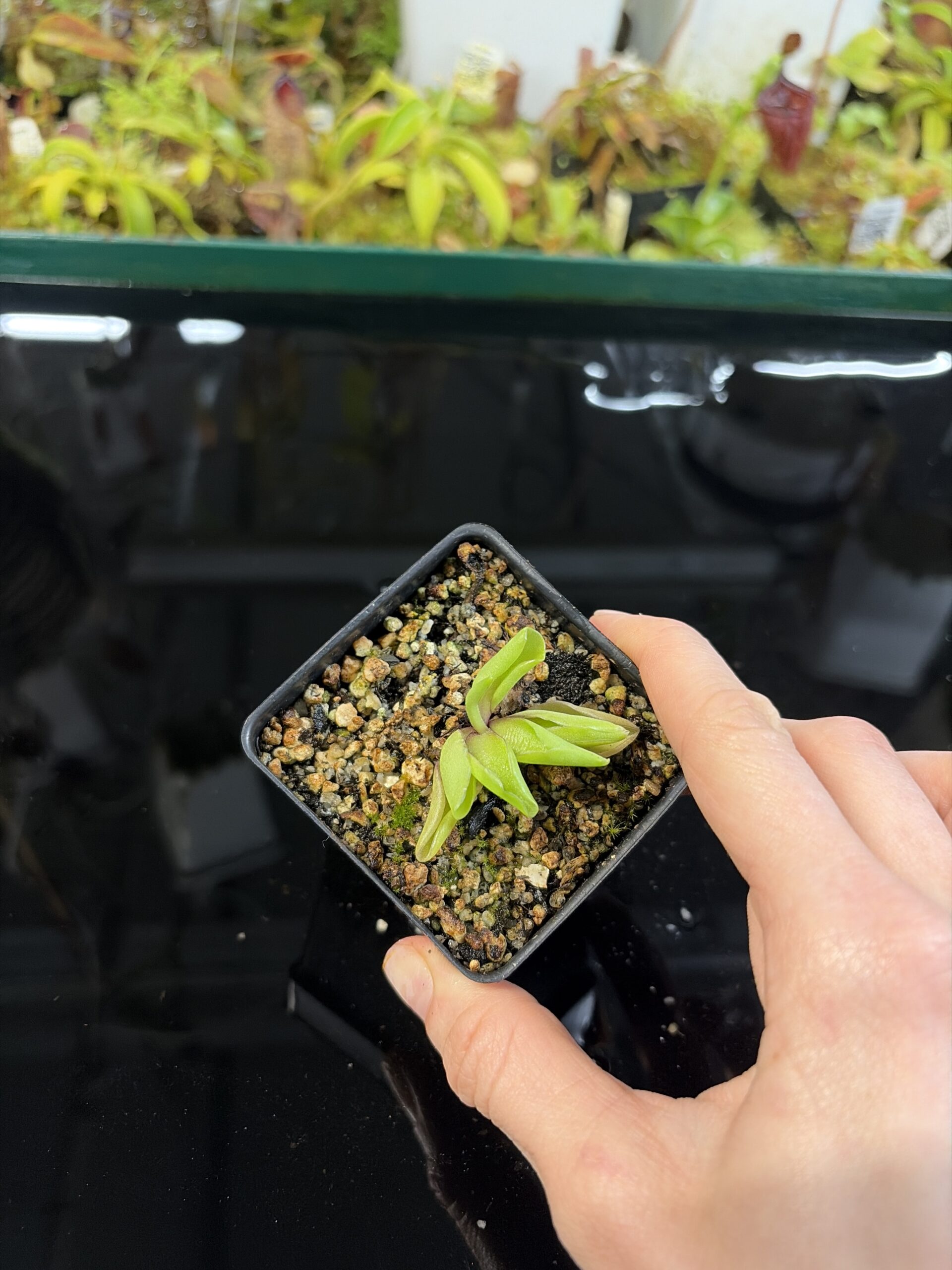
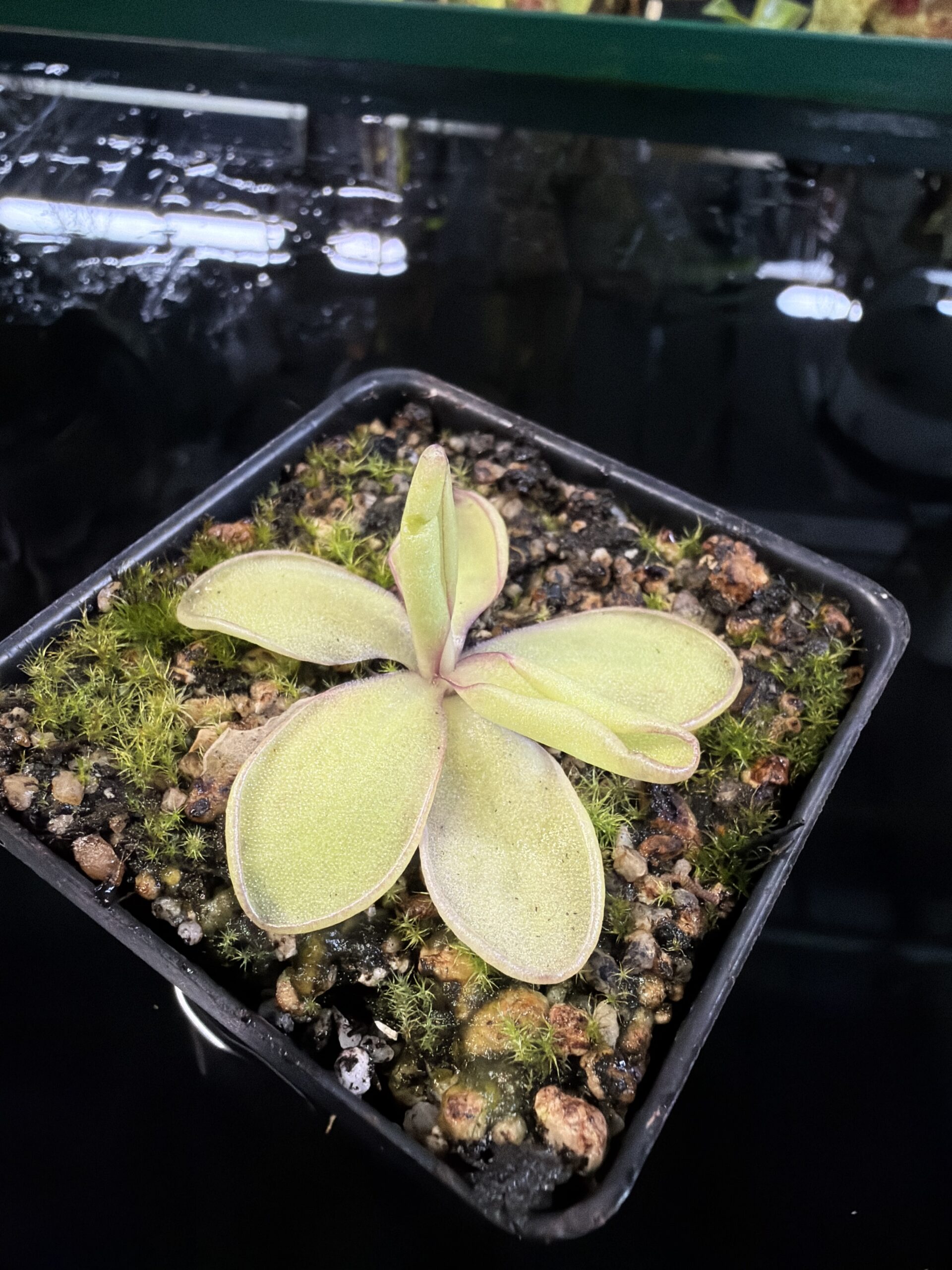
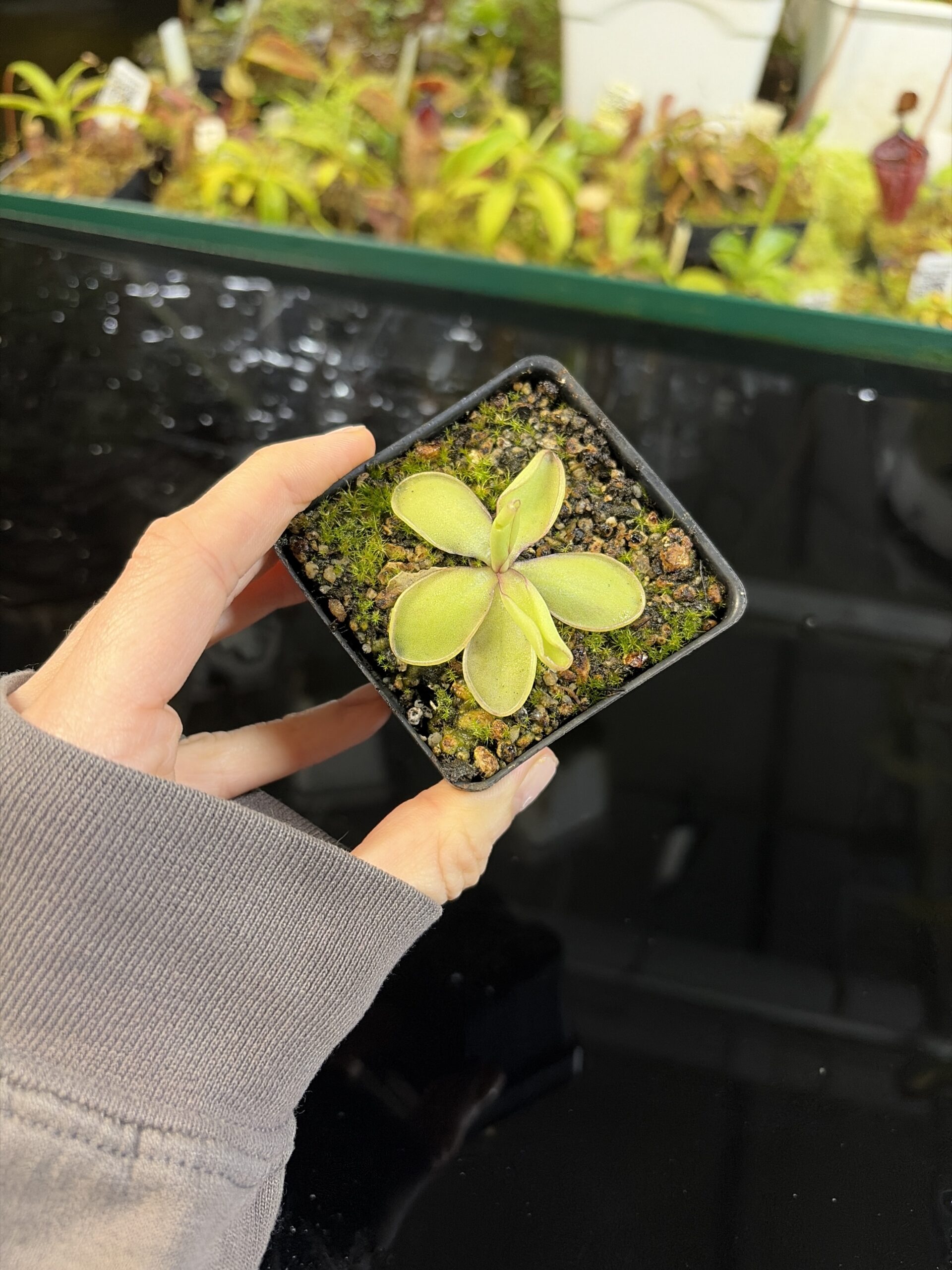
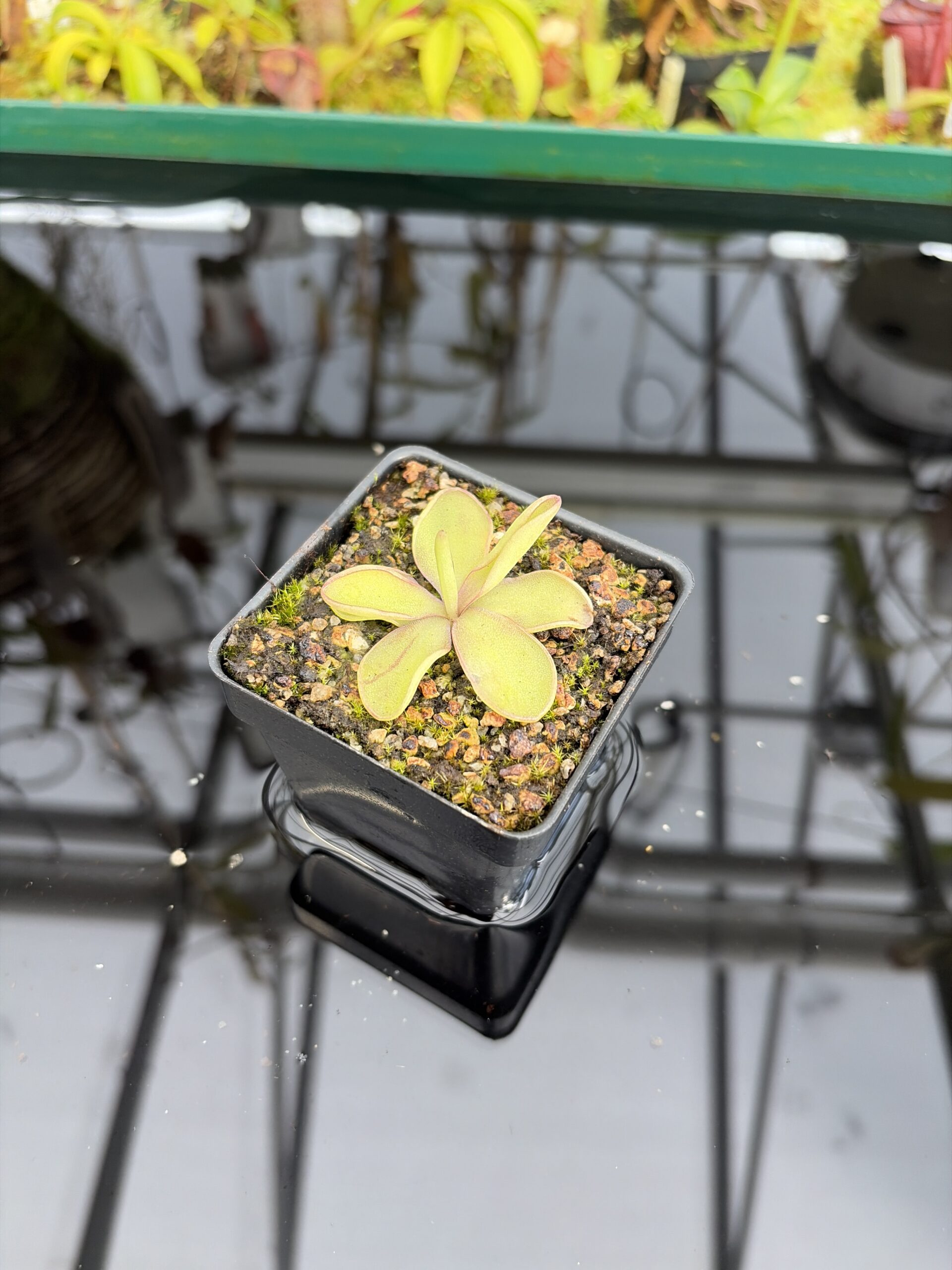
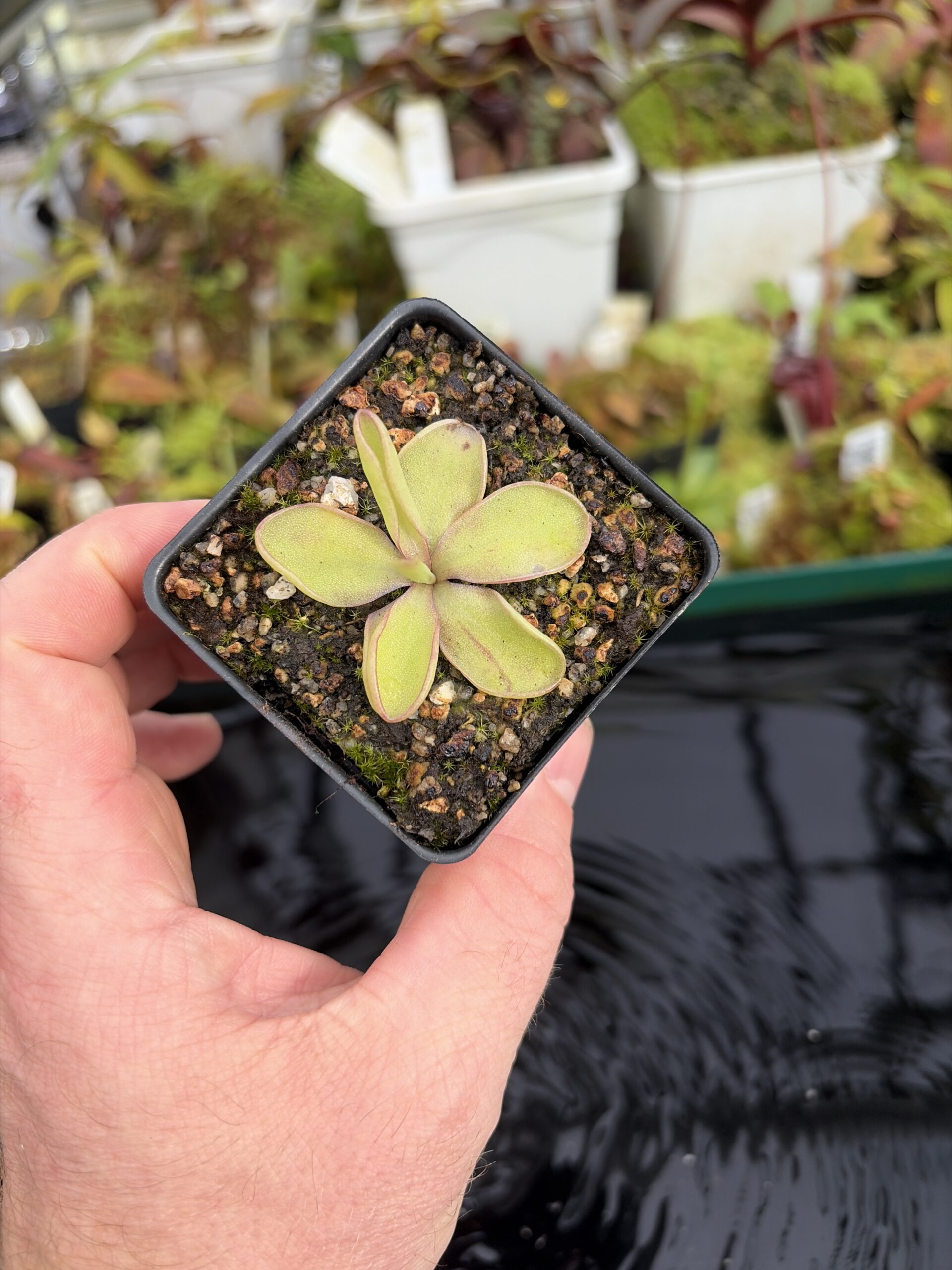
Pinguicula sp. pachuca × agnata

3 specimens in stock, $19.99. Each photo shows the exact plant you receive.

Pinguicula sp. pachuca × agnata, specimen IN27768
Small · Florae
Choose a specimen

$19.99

Size
Small
Locality
N/A
Breeder
Florae
Conditions
Intermediate
Propagation
Tissue Culture
Specimen
IN27768

Pinguicula sp. pachuca × agnata

A Florae cross of an unnamed Mexican butterwort grown as Pinguicula sp. Pachuca with P. agnata, the succulent-leaved species of Hidalgo's calcareous cliffs.

Both parents are Mexican butterworts. Pinguicula sp. Pachuca is a cultivated plant without a published name, also grown as P. moranensis 'Pachuca'. Its exact origin is not documented; the name suggests the Sierra de Pachuca in Hidalgo, and it is reported not to be true P. moranensis. Its species has not been identified. Pinguicula agnata was described by Casper in 1963 from Hidalgo, where the type grows on a near-vertical, north-facing calcareous cliff in dry, rocky country among cacti and agaves, at about 1,500 m.

P. sp. Pachuca follows the wet and dry seasons, forming a small succulent rosette of non-carnivorous leaves in winter and carnivorous leaves through spring and summer, and it flowers freely. P. agnata also alternates rosettes: bright green, sticky summer leaves up to about 7 cm, and a compact winter rosette of small, hairy, succulent leaves. Its flowers vary from pure white to purple. Documentation on this cross is limited, so expect individual character.

Specimens available now

Learn more about this plant

Parents

Pinguicula agnata

A Mexican cliff-dwelling butterwort from Hidalgo and Querétaro, with salmon-red winter rosettes and nearly white to violet flowers in the dry season.

Care

Growing Mexican butterworts

Bright light and a lean, open mix; most rest drier in winter, while the year-round growers stay moist.

Most of our Pinguicula are Mexican butterworts. Many grow sticky, carnivorous leaves through the warm, wet season, then form a tight rosette of small, succulent leaves for a drier winter. Others, such as P. gigantea and P. emarginata, keep their carnivorous leaves all year. We grow them intermediate, in bright light with steady airflow.

Most do best in a lean, open mix that drains fast, such as perlite, pumice or gypsum sand with a little peat. Through the summer, water with pure water and keep the mix moist. When a plant forms its winter rosette, water much less, just enough to stop it shriveling; year-round growers stay evenly moist. Keep water off the leaves.

The leaves catch small insects such as fungus gnats on their own. No fertilizer is needed.