
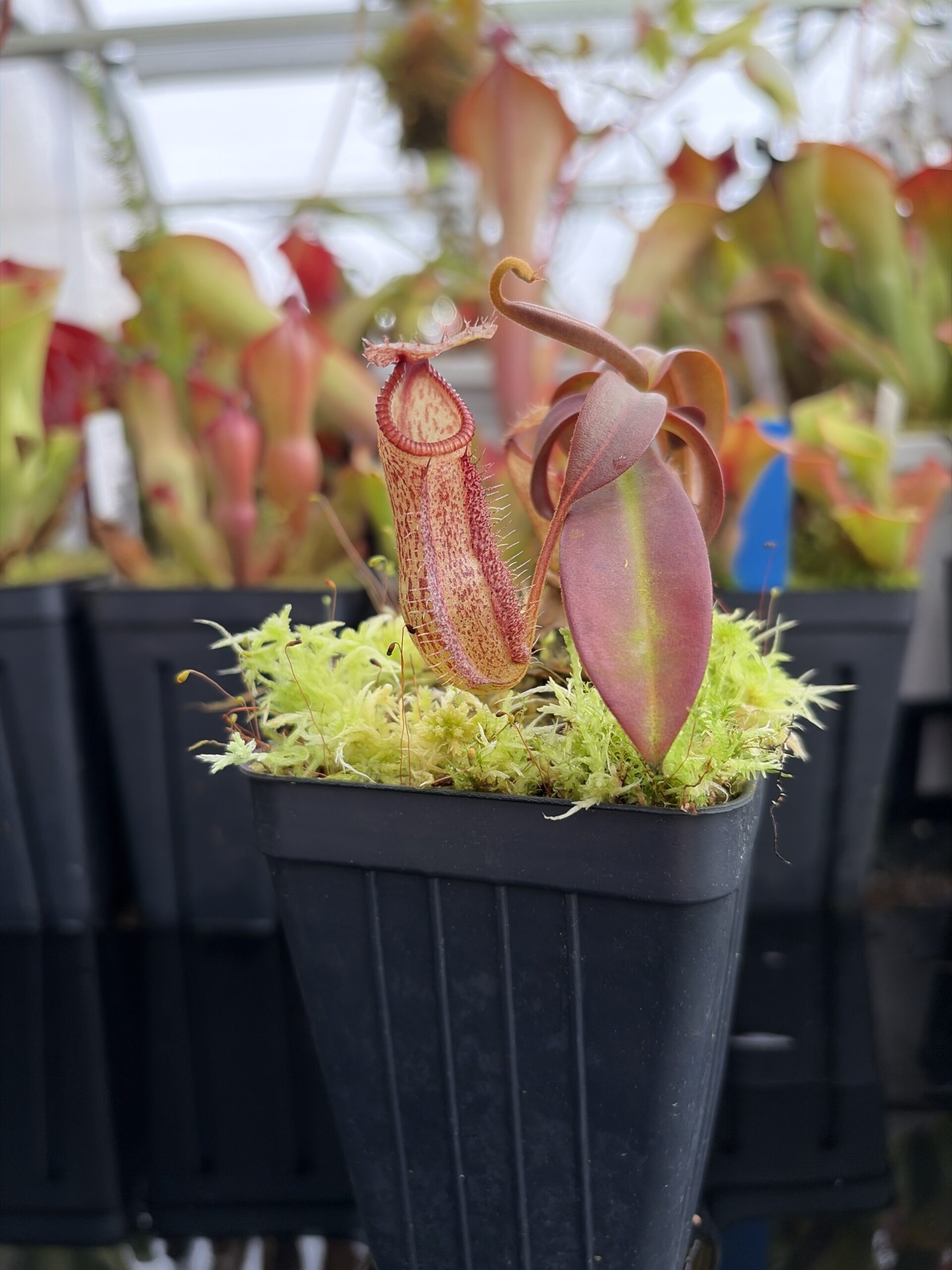
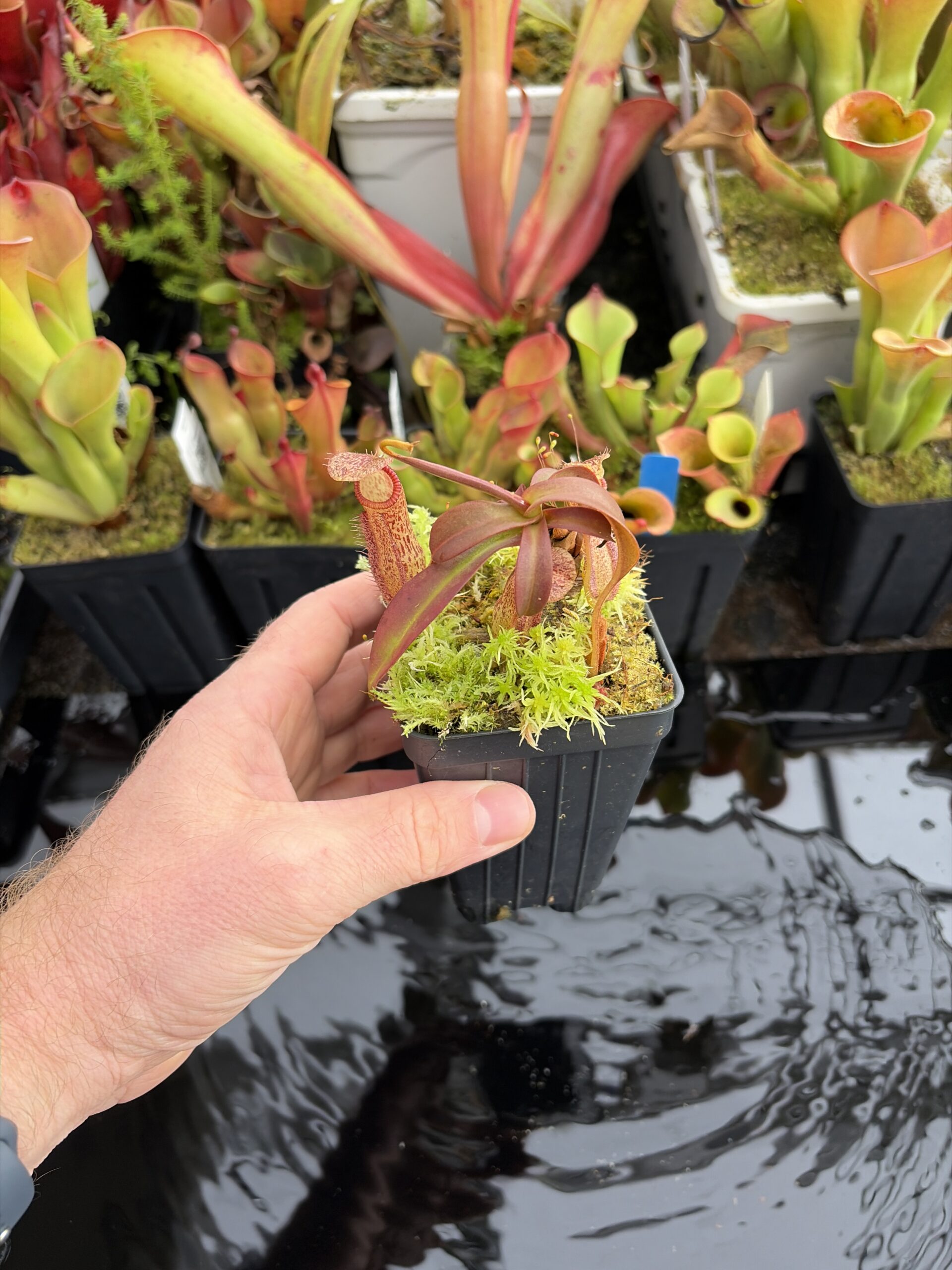
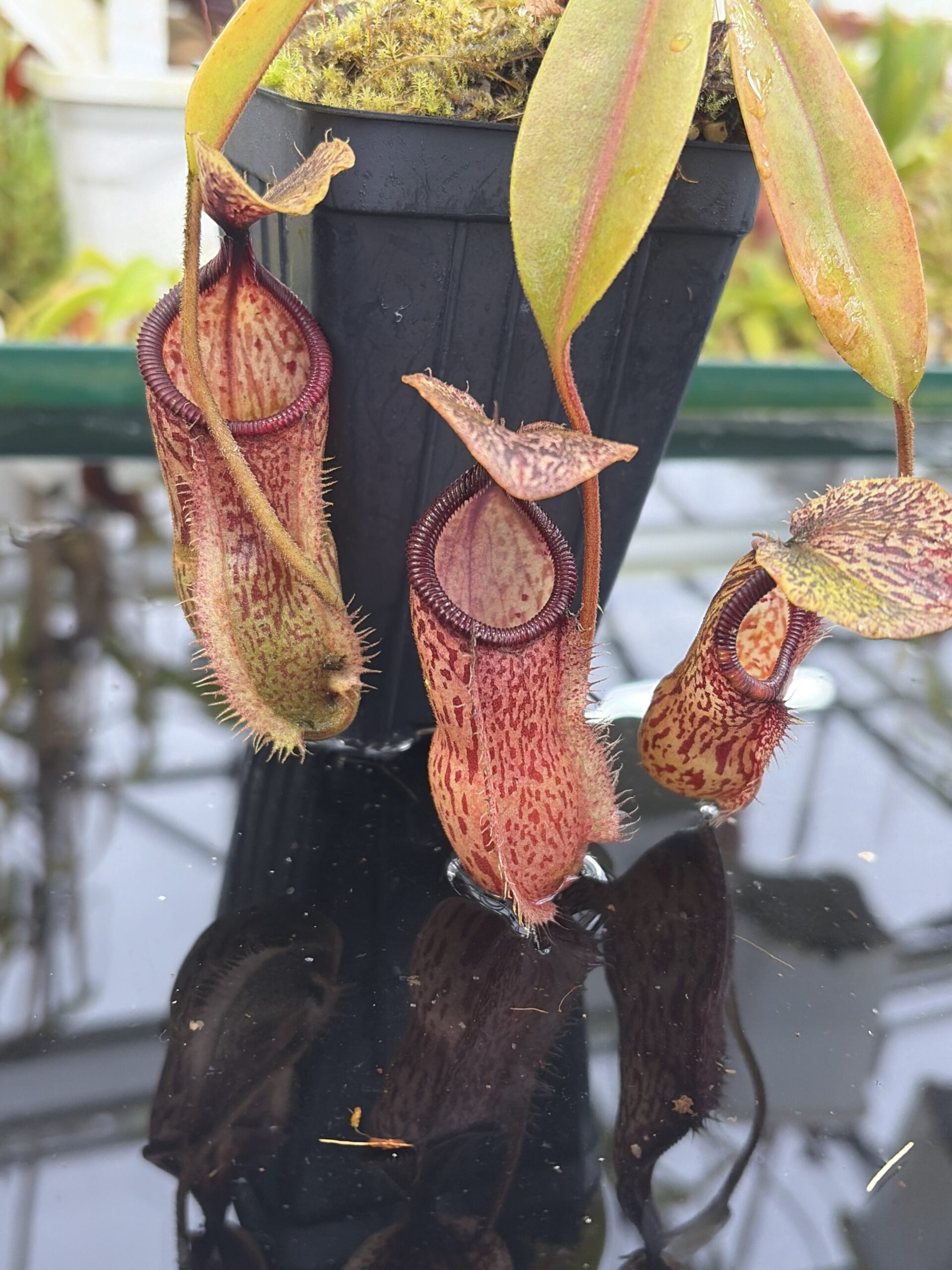
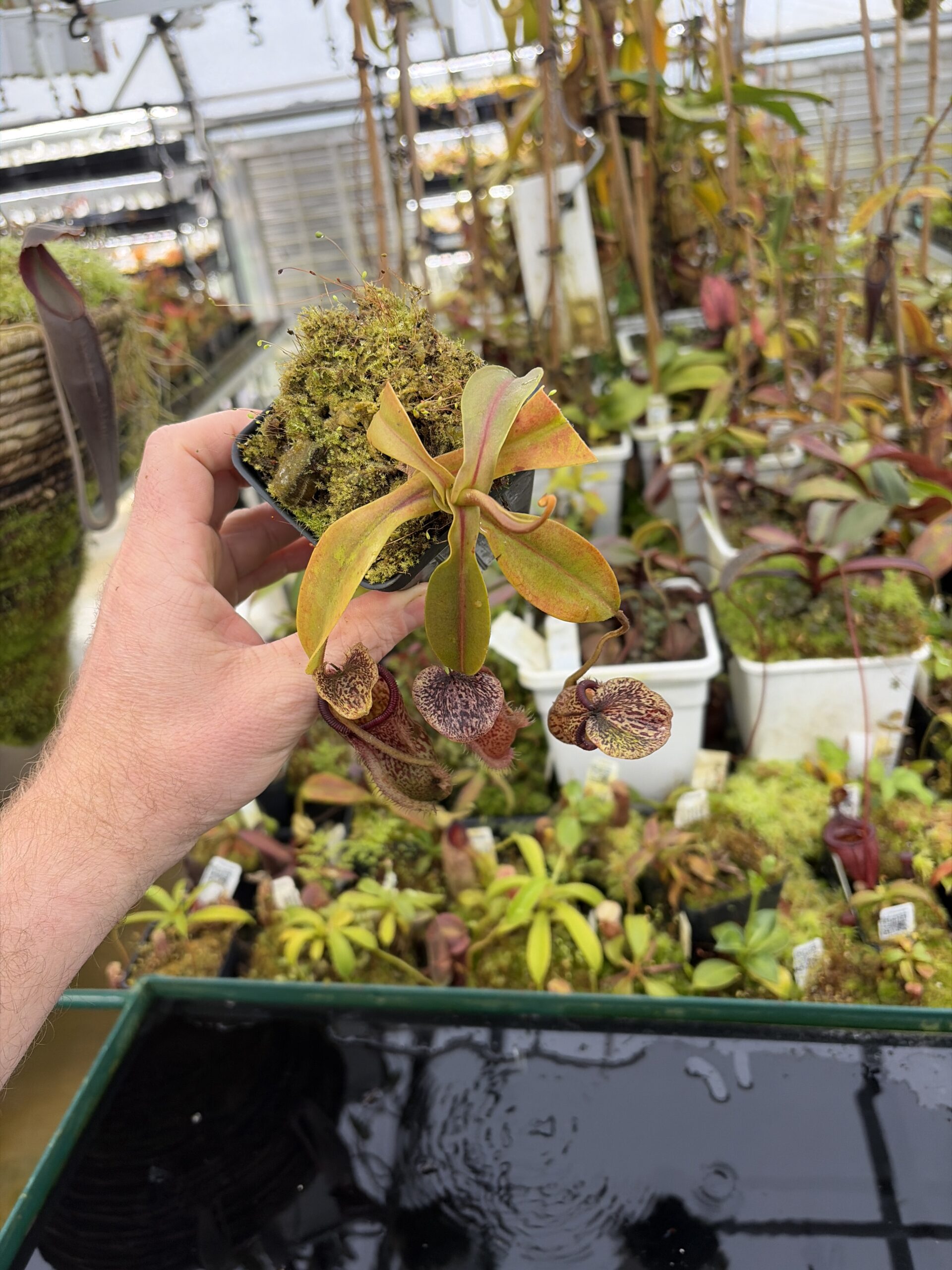
Nepenthes hamata × burbidgeae

2 specimens in stock, $39.99 to $69.99. Each photo shows the exact plant you receive.

Nepenthes hamata × burbidgeae, specimen H27564
Medium · Borneo Exotics
Choose a specimen

$69.99

Size
Medium
Locality
N/A
Breeder
Borneo Exotics
Producer code
BE-4567
Conditions
Highland
Propagation
Tissue Culture
Specimen
H27564

Nepenthes hamata × burbidgeae

Sulawesi meets Kinabalu: the hook-toothed N. hamata crossed with the white, crimson-blotched N. burbidgeae.

Central Sulawesi meets Mount Kinabalu. Nepenthes hamata is endemic to Sulawesi, mostly the eastern part of Central Sulawesi, in mossy forest and scrub on ridges and summits at 1,400 to 2,500 m. Nepenthes burbidgeae has a patchy range around Mount Kinabalu and Mount Tambuyukon, most often quoted at 1,200 to 1,800 m, in montane scrub and exposed ridge tops on ultramafic soils.

N. hamata has what may be the most developed peristome in the genus, with sickle-shaped teeth reaching about 7 mm into the pitcher. The name means hooked. N. burbidgeae brings white pitchers blotched in crimson or rose, a flattened peristome up to 30 mm wide with small teeth, and a hooked appendage under the lid. The cross pairs N. hamata's armature with N. burbidgeae's color and broad rim. Documentation on it is limited, so expect individual character.

Specimens available now

Learn more about this plant

Breeders

Borneo Exotics

The Nepenthes nursery in Sri Lanka that Rob Cantley founded in 1997.

Borneo Exotics is a Nepenthes nursery in the central highlands of Sri Lanka. Rob Cantley founded it in 1997, and he runs it with his wife and business partner, Diana. It built its own tissue culture laboratory because cuttings proved inconsistent and prone to disease, and it now offers micropropagation services to breeders and nurseries around the world.

Its plants are sold under BE numbers, and other sellers keep those numbers on their listings. Cantley also found a new species in January 1997, on a trip to Mindanao to look for N. truncata seed. It was described in 2011 as N. robcantleyi in his honor, and nearly all plants in cultivation descend from a small batch of seedlings from that one trip.

Parents

Nepenthes hamata

A Sulawesi highland species from 1,400 to 2,500 m with what may be the most developed peristome in the genus, armed with long, hooked teeth.

Nepenthes burbidgeae

The painted pitcher plant of Kinabalu Park: white pitchers splashed with crimson, a wide flat peristome, and a strict preference for ultramafic soils.

Care

Growing highland Nepenthes

Cool nights, mild days, high humidity and steady airflow, the mountain cloud forest that most of our Nepenthes come from.

Highland Nepenthes grow in montane forest where nights cool down sharply after mild days. Aim for nights about 50 to 55 F (10 to 13 C), days 70 to 78 F (21 to 26 C), humidity above 70 to 80 percent, bright filtered light and constant airflow. The night drop is what highland plants need most; a warm room at night slows them down.

Grow them in an open, airy mix that drains fast, such as long-fiber sphagnum with perlite or bark, and keep it evenly moist with pure water (rain, distilled or reverse osmosis). Never let the pot sit in water for long.

New plants settle in over a few weeks; keep conditions steady while they do. The pitchers catch their own food, so fertilizer, if any, should be light and occasional.

Growing intermediate Nepenthes

Warm days, mild nights and high humidity: forgiving conditions that suit hybrids with both highland and lowland parents.

Intermediate Nepenthes sit between the cool highland and the warm lowland plants, and many hybrids with parents from both are happiest here. Aim for days about 70 to 80 F (21 to 27 C) and nights about 55 to 65 F (13 to 18 C), with humidity above 70 percent, bright filtered light and good airflow. A modest drop at night helps, but these plants tolerate more warmth than strict highlanders.

Use an open mix that drains fast, such as long-fiber sphagnum with perlite or bark, and keep it evenly moist with pure water (rain, distilled or reverse osmosis).

Give larger plants room to climb or trail as they mature. The pitchers feed the plant; fertilizer, if any, should be light and occasional.